Managing security for a growing website can feel like a game of whack-a-mole. Just when you secure your main domain, a new marketing landing page or a customer portal pops up on a subdomain, demanding its own protection. Buying and installing individual certificates for blog.yoursite.com, shop.yoursite.com, and mail.yoursite.com quickly becomes expensive and tedious.
This is where wildcard SSL certificates shine. They offer a powerful solution for webmasters and businesses that need flexibility without the administrative headache. Instead of juggling a dozen different expiration dates and validation processes, you can secure your main domain and an unlimited number of accompanying subdomains with a single certificate.
In this guide, we will break down exactly what these certificates are, how they function, and why they might be the smartest investment for your web infrastructure.
What Are Wildcard SSL Certificates?
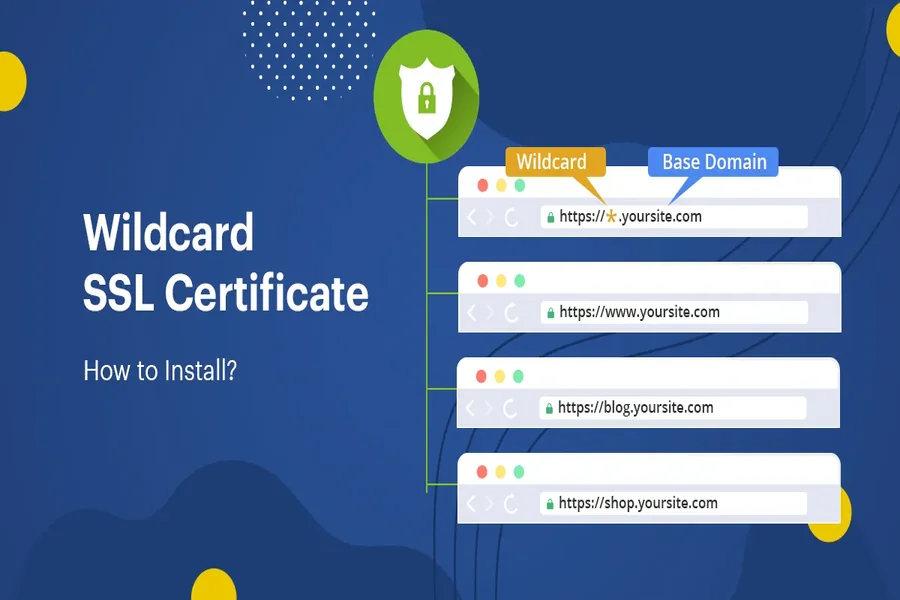
A wildcard SSL certificate is a digital certificate that applies SSL/TLS encryption to a main domain and all its first-level subdomains. While a standard SSL certificate protects a single specific host name (like www.example.com), a wildcard certificate uses a special character—the asterisk (*)—to cover everything at that specific level.
When you purchase a wildcard certificate for *.example.com, you are automatically protecting:
- www.example.com
- mail.example.com
- login.example.com
- shop.example.com
- anything-else.example.com
The asterisk acts as a variable. It tells the browser that any valid subdomain sitting in that position is trusted and secured by the same certificate. This flexibility eliminates the need to specify every single subdomain at the time of purchase. You can add new ones later, and they will be secured instantly without reissuing the certificate.
How Do They Work?
At a technical level, wildcard SSL certificates function similarly to standard certificates. They use Public Key Infrastructure (PKI) to encrypt data transmitted between a user’s browser and your server. This ensures that sensitive information, such as login credentials or credit card numbers, cannot be intercepted by hackers.
The primary difference lies in the “Common Name” (CN) or the Subject Alternative Name (SAN) field of the certificate. During the Certificate Signing Request (CSR) generation process, you simply enter an asterisk before your domain name (e.g., *.yourdomain.com).
When a user visits blog.yourdomain.com, their browser checks the certificate. It sees the wildcard character and verifies that blog fits the * criteria. Once verified, the secure padlock icon appears in the browser bar, signaling a safe connection. It is important to note that most wildcard certificates only cover one level of subdomains. For example, *.example.com will protect login.example.com, but it typically will not protect user.login.example.com (a second-level subdomain).
Key Benefits of Choosing a Wildcard SSL
Switching to a wildcard model offers distinct advantages, particularly for businesses that are scaling their online presence.
Cost-Effectiveness
If you have five or more subdomains, purchasing individual Single Domain SSL certificates adds up quickly. A single wildcard SSL certificate might have a higher upfront price tag than one basic certificate, but it is often cheaper than buying multiple separate ones. It effectively caps your SSL spending, regardless of how many new subdomains you launch during the certificate’s lifespan.
Simplified Certificate Management
Administrative overhead is a silent killer of productivity. Tracking expiration dates for 20 different certificates increases the risk of human error. If one certificate expires unnoticed, your users will see a scary security warning, which damages trust. With a wildcard certificate, you have one expiration date to track and one renewal process to handle. This streamlines your workflow and frees up your IT team for more critical tasks.
Instant Scalability
Business moves fast. You might need to spin up a new subdomain for a seasonal promotion or a client project overnight. With a standard approach, you would need to buy a new certificate, go through the validation process, and wait for issuance. With wildcard SSL certificates, the protection is already waiting for you. You just configure the server, and the encryption is live immediately.
Wildcard vs. Standard SSL: What’s the Difference?
Understanding the distinction between these two options helps you make the right choice for your specific needs.
Standard (Single Domain) SSL:
- Scope: Protects one specific fully qualified domain name (FQDN).
- Flexibility: Low. You cannot change the domain name once issued.
- Best For: Small blogs, personal portfolios, or businesses with a single website and no subdomains.
Wildcard SSL:
- Scope: Protects the main domain and infinite subdomains at a specific level.
- Flexibility: High. You can add subdomains anytime without reissuing.
- Best For: E-commerce sites, agencies, large organizations, and developers managing complex environments.
Who Should Use Wildcard SSL Certificates?
While powerful, these certificates aren’t necessary for everyone. You should consider investing in one if:
- You run a SaaS platform: If you create customer-specific portals like client1.app.com and client2.app.com, a wildcard is essential.
- You have a complex site structure: E-commerce businesses often separate checkout, account management, and blog sections onto different subdomains for better organization.
- You are a development agency: Developers often use subdomains for testing environments (e.g., dev.client-site.com or staging.client-site.com). A wildcard allows you to secure these test environments easily.
Security Considerations and Best Practices
While wildcard SSL certificates simplify management, they introduce a unique security dynamic that administrators must respect.
Because you use the same private key across all your subdomains, that key becomes a single point of failure. If a hacker manages to compromise the private key on one of your subdomains—perhaps a neglected test server with weaker security—they could theoretically impersonate any of your other subdomains.
To mitigate this risk:
- Monitor your servers: Ensure every server using the wildcard certificate is patched and secured.
- Limit distribution: Don’t share the private key across too many different physical servers if possible.
- Use specific certificates for high-value targets: If you have a highly sensitive payment gateway subdomain, some security experts recommend giving it its own unique certificate (and unique private key) to isolate the risk.
Conclusion
Wildcard SSL certificates act as a versatile tool for modern web security. They provide a balance of strong encryption, cost savings, and administrative ease that is hard to beat for growing websites. By securing unlimited subdomains under one roof, you future-proof your project and ensure that whatever new direction your business takes, your security is ready to move with you.