
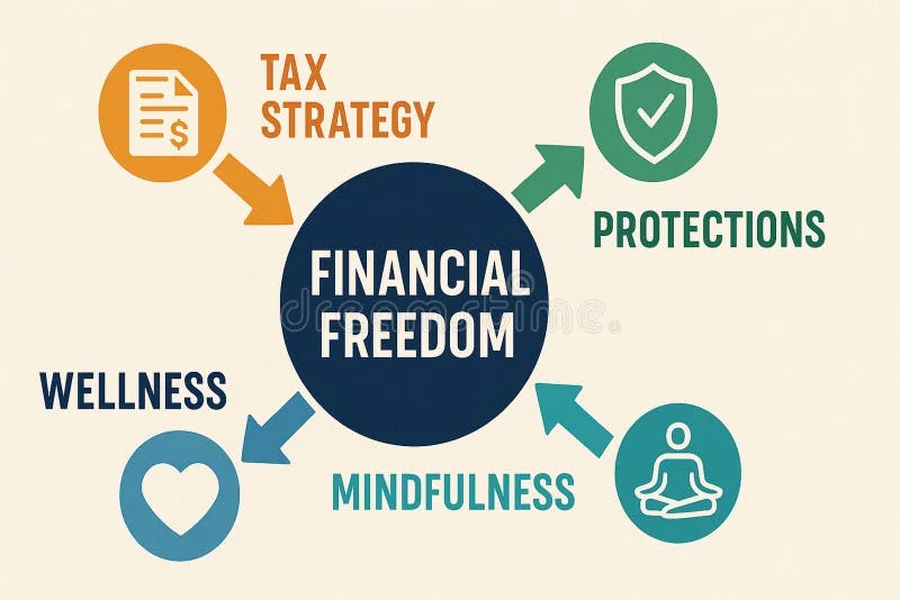
The Link Between Mindfulness And Financial Well Being
Money problems are often treated like math problems. Spend less, save more, pay down debt, repeat. That advice is not wrong, but it misses something important. A lot of financial stress is really about attention. It is about how easily your mind gets pulled into urgency, comparison, impulse, and fear. That is where mindfulness becomes surprisingly useful. It does not magically raise your income, but it can change the way you experience money and the way you respond to it.
When people feel financially stretched, it is easy to slip into autopilot. You spend to feel better, avoid checking your balance, or make fast choices because slowing down feels uncomfortable. Helpful resources like debt relief in California can support people who need a clearer path forward, but financial well being is also shaped by what happens in everyday moments. Mindfulness helps in those moments because it creates a pause between feeling pressure and reacting to it.
That pause matters more than people think. It is often the difference between intentional spending and emotional spending. It is the difference between seeing money as a constant threat and seeing it as something you can manage with more clarity. In that way, mindfulness is not just a wellness trend. It is a practical skill for handling financial life with less noise and more steadiness.
Mindfulness Helps You Notice What Money Stress Is Doing To You
A lot of financial decisions are made in a fog. You are tired, anxious, frustrated, or trying to get through the week, and your money choices start reflecting your mood more than your priorities. Mindfulness can interrupt that pattern by helping you notice what is going on internally before you act on it.
The American Psychological Association describes mindfulness as awareness of your internal states and surroundings, and notes that it can help people avoid destructive or automatic habits and responses. That matters financially because many expensive decisions begin as automatic reactions rather than thoughtful choices.
Once you start noticing your triggers, money becomes less mysterious. You may realize that you overspend when you feel underappreciated, that you ignore bills when you feel ashamed, or that you buy convenience constantly when you are mentally drained. None of that makes you irresponsible. It makes you human. Mindfulness simply gives you a better chance to catch those patterns before they run the show.
Financial Well Being Is About More Than Income
One of the most interesting things about mindfulness is that it can soften the grip income has on satisfaction. Income matters, of course. It affects housing, food, safety, health care, and basic stability. But beyond those essentials, the emotional relationship between money and well being gets more complicated.
A study indexed by PubMed found that mindfulness moderated the relationship between income and well being, suggesting that people with higher mindfulness may experience greater life satisfaction and psychological well being regardless of earnings level. In simple terms, mindfulness appears to reduce the extent to which satisfaction rises or falls with income alone. (PubMed)
That does not mean money stops mattering. It means the mind you bring to your financial life matters too. Two people can earn the same amount and experience very different levels of peace, satisfaction, and stress depending on how reactive, aware, or intentional they are with money. That is a big reason mindfulness belongs in the financial conversation.
Mindfulness Makes Spending More Intentional
Most unnecessary spending is not about greed. It is about relief. You want a break, a reward, a distraction, or a quick sense of control. The purchase itself may be small, but the emotional pattern behind it can become expensive over time.
Mindfulness changes this by slowing the sequence down. Instead of moving straight from urge to purchase, you begin to ask better questions. Am I buying this because I need it, or because I feel overwhelmed? Am I solving a problem, or just soothing a feeling for a few minutes? That kind of awareness can improve spending without turning you into a joyless accountant.
This is one reason mindfulness can support financial well being so effectively. It does not rely only on restriction. It helps you understand your own behavior. When you understand why you spend, it becomes easier to spend in ways that actually line up with your values.
For readers who want a deeper look at the broader psychological effects of mindfulness, the American Psychological Association has a helpful overview of mindfulness and meditation, especially its role in improving emotional regulation and stress management. Those same benefits often spill over into financial decision making.
It Reduces The Feeling That Every Dollar Is An Emergency
One hidden benefit of mindfulness is that it changes the emotional temperature of money. Without it, finances can feel urgent all the time. Every expense feels personal. Every unexpected bill feels like proof that life is out of control. Even normal choices, like grocery spending or comparing insurance plans, can start to feel mentally exhausting.
Mindfulness helps lower that intensity. It brings you back to what is actually happening right now instead of letting your thoughts race ahead into worst case scenarios. That can make budgeting, planning, and even difficult financial conversations feel more manageable. You are still dealing with reality, but you are not piling extra panic on top of it.
That shift can improve financial well being in a very practical sense. When you feel less flooded, you are more likely to open the statement, review the numbers, make the call, and adjust the plan. Calm does not solve every problem, but it makes problems easier to face.
Mindfulness Supports Better Habits Without Constant Force
A lot of financial advice depends on willpower. Set the budget. Stick to the plan. Stop buying things you do not need. But pure force is exhausting. It works for a while, then fades when life gets busy or emotions run high.
Mindfulness offers a more sustainable route. Instead of trying to overpower every impulse, you learn to observe it without instantly obeying it. That tiny gap is where better habits begin. Saving becomes easier because you can tolerate the discomfort of not getting what you want right away. Paying off debt becomes easier because you can stay with a long term goal without needing constant excitement. Even saying no to lifestyle inflation becomes easier because you are less hooked by comparison and more anchored in your own values.
For a research based look at how mindfulness relates to income, resilience, and quality of life, this study on mindfulness, income, and well being offers a useful perspective. It reinforces the idea that mindfulness can help people maintain stronger well being even when financial circumstances vary.
Financial Well Being Also Means Feeling Less Controlled By Money
People often define financial well being by external markers like income, savings, debt levels, or credit scores. Those things matter. But there is also an internal side to financial well being that is just as important. Do you feel trapped by money? Do you feel constantly hijacked by stress? Do you feel able to make choices instead of just reacting?
Mindfulness improves that internal side. It helps you step out of automatic survival mode and into something more deliberate. You may still have financial goals to work on, but your relationship to money becomes less frantic. You feel less pushed around by every craving, every fear, and every comparison.
That might be the most valuable link between mindfulness and financial well being. Mindfulness does not promise instant wealth. What it offers is steadiness. And steadiness is often what allows better financial decisions to compound over time.
In the end, financial well being is not only about how much money you have. It is also about how clearly you can think, how intentionally you can act, and how much peace you can keep while managing real world responsibilities. Mindfulness strengthens all three. That is why its impact on money is deeper than it first appears.