
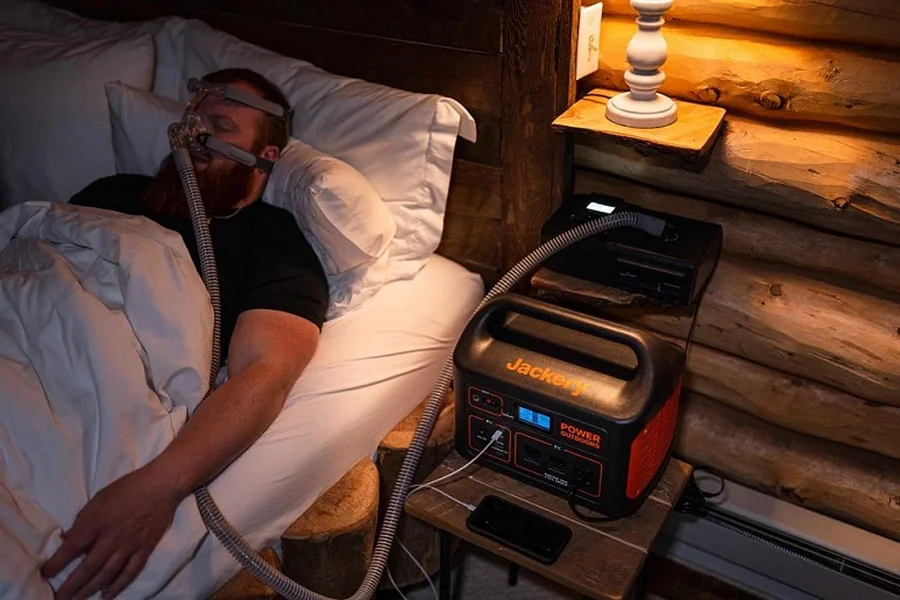
Power cuts aren’t unusual in the UK, particularly in winter or in rural areas where ageing lines and bad weather can cause interruptions. For most households, they’re a brief inconvenience. For anyone relying on medical equipment such as CPAP machines or oxygen concentrators, even a short loss of electricity can break airflow and disturb sleep.
Many people plan for lighting or heating during a power outage, yet a stable supply for essential health devices matters just as much. A CPAP stops the moment the mains fails and may take time to restart when electricity returns. The real challenge isn’t getting power back later — it’s keeping it running smoothly from the outset.
That’s where a dependable portable power station helps. It’s not only about coping with storms; it’s about maintaining calm, uninterrupted rest.
Why CPAP Machines Need an Uninterrupted Power Supply
A CPAP (Continuous Positive Airway Pressure) machine keeps airways open during sleep, helping people with sleep apnoea breathe more steadily through the night. Power demand is modest, but the device is sensitive to interruptions. Even a brief cut can:
- Break breathing rhythm and lower oxygen levels
- Trigger sudden wake-ups or restlessness
- Stop humidification, which may lead to dryness or irritation
Conventional backup options can take seconds — or longer — to switch over. For CPAP use, that’s often too slow. A practical approach is a UPS power supply that reacts in milliseconds so airflow continues even if the mains drops unexpectedly.
Jackery Explorer 1000 v2: Dependable Power for Quiet Nights
The Jackery Explorer 1000 v2 Portable Power Station combines quick switching, solid performance and very low noise — making it a sensible option for medical or household use when the power goes out.
-
<20 ms Seamless Switching (UPS/EPS function)
When plugged into the mains, the Explorer 1000 v2 stays in standby. If there’s a sudden cut in supply, it switches to battery power in under 20 milliseconds. This short switchover helps many CPAP setups avoid a full restart, though tolerance varies by model and settings.
-
1, 500 W Output Power for Everyday Essentials
With 1, 500 W rated output (3, 000 W surge) — around 50% higher than the previous model — the Explorer 1000 v2 can comfortably run multiple household essentials during a power cut.
| Device | Power | Approximate Runtime |
| Electric kettle | 600 W | About 6 boils |
| Coffee maker | 550 W | Around 1.5 hours |
| Microwave | 1, 160 W | 0.8 hours |
| Ice maker | 500 W | 1.8 hours |
| Projector | 100 W | 8 hours |
When the mains goes down, there’s still power for your CPAP, lighting, a small fridge, or even a morning coffee.
-
Long-Lasting, Durable LiFePO₄ Battery
Inside is a 1070 Wh LiFePO₄ battery, recognised for stability and service life. It can handle over 4,000 charge cycles while maintaining roughly 70% capacity — supporting dependable use over many years.
Runtime will vary with CPAP settings — for example, whether the humidifier or heated tube is on — but the 1000 v2 can typically cover several nights. Pairing it with Jackery solar panels also allows convenient daytime charging during longer outages.
-
Quiet and Safe for Indoor Use
Any power source used near a bed should keep noise low. The Jackery 1000 v2 runs at under 22 dB, helping to maintain a quiet room. It also includes ChargeShield 2.0™ technology, which provides 62 protection mechanisms, 12 types of battery management system protection, and 4 layers of physical safety. Certified to IEC 60068 standards, the fire-resistant casing and robust build support safe indoor use.
- Multiple Charging Options
You can recharge the power station quickly before or during an emergency:
- Emergency Charge Mode (via app): full in about 1 hour
- Wall charging: 1.7 hours
- Solar charging (100W × 2): around 7–8 hours
- Car charging: about 12 hours
Even with little notice, the Explorer can be topped up quickly so you’re ready when a storm or outage hits.
-
Compact and Easy to Move
Weighing 10.8 kg (23.8 lbs) and 18% smaller than the previous version, the Explorer 1000 v2 fits neatly in a corner, under a desk or on a bedside table. The foldable handle makes it easy to move, and there’s no fuel or fumes — just clean, quiet electricity when needed.
Practical Use and Safety Tips
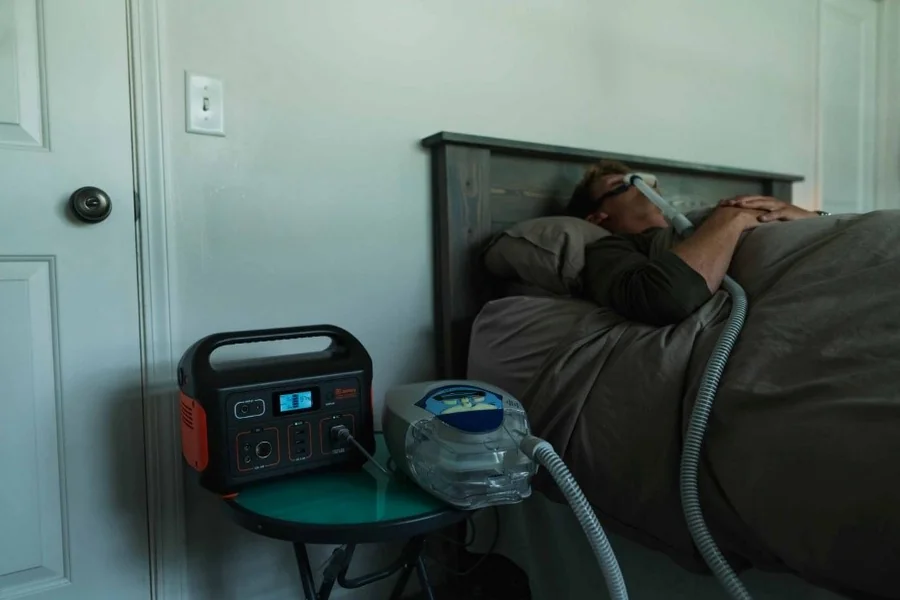
- Check compatibility: confirm your CPAP model supports connection to an external supply.
- Ventilation: place the power station on a firm, dry surface with good airflow.
- Storage: keep it at about 50–60% charge and top up every 2–3 months.
- Medical advice: suitable for home medical devices, but not intended for life-support systems.
FAQs
What’s the best way to store it for emergencies?
Keep it around 50–60% charged in a cool, dry place, and top it up every few months so it’s ready when needed.
Is the Jackery 1000 v2 suitable for overnight charging of other medical devices?
Yes, it can power or charge most low-wattage medical aids such as oxygen concentrators or nebulisers, provided total output stays within its 1500W limit.
Conclusion
A portable power station is more than a travel extra. It’s a practical backup for households that can’t afford to lose power unexpectedly. With fast UPS switching, low noise and built-in safety features, it helps maintain comfort and confidence through any power outage. When the lights go off, breathing shouldn’t have to stop.
Add the Jackery Explorer 1000 v2 to your home emergency plan — a measured step towards uninterrupted sleep and peace of mind through the night.