
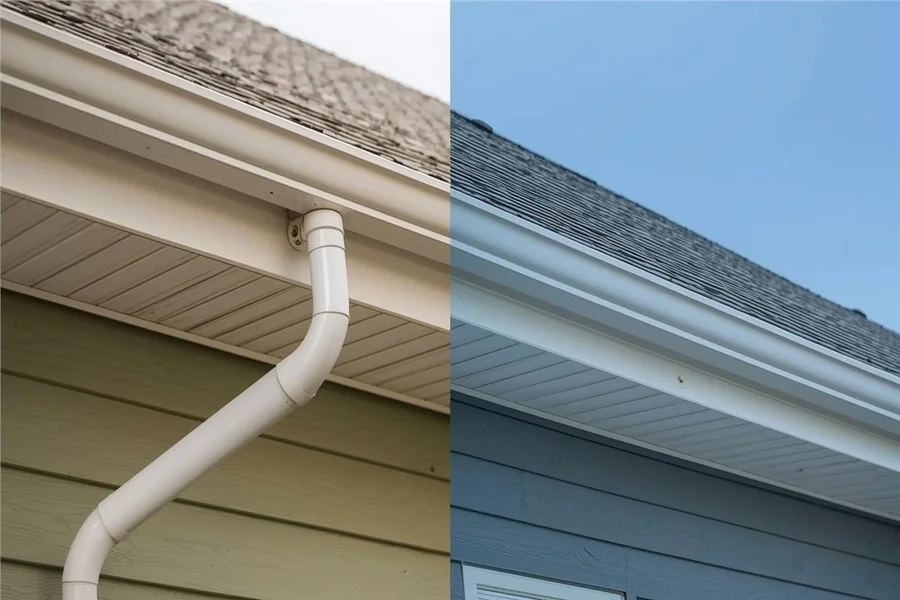
Gutters don’t get much attention—until they fail. A small drip at a seam can turn into peeling paint, rotted fascia, stained stucco, or soil erosion near the foundation. And once water starts going where it shouldn’t, repair costs can climb quickly. That’s why choosing the right gutter type is less about aesthetics and more about long-term risk reduction.
For rain gutters Las Vegas homeowners and property owners, this choice can matter even more. Desert climates may feel “low-rain,” but storms can hit hard and fast. When a sudden downpour meets a system with weak joints or poor alignment, the result is often overflow, leakage, and repeated water exposure in the same spots.
So what’s actually better: seamless vs sectional gutters? The answer depends on your priorities, roof layout, and long-term maintenance habits. Below is an educational breakdown of how each system works, how they compare for durability and leak prevention, and what to consider if your goal is the best gutters for home protection.
Understanding the Two Options
What are seamless gutters?
Seamless gutters are formed from a single continuous piece of material for each run along your roofline (with joints mainly at corners and downspouts). They are typically made on-site to fit the exact length needed.
What are sectional gutter systems?
Sectional gutter systems are made of multiple pre-cut pieces joined together. Each joint is sealed and fastened, creating multiple connection points along the run.
Both options can work, but the difference in seams and joints plays a major role in performance over time.
Why Seams Matter for Leak Prevention
Gutters expand and contract with temperature changes. They also carry weight from water, debris, and occasional ladder pressure. Every seam is a potential weak point, especially as sealants age.
That’s why one of the biggest long-term considerations is your ability to prevent gutter leaks. Leaks rarely start as a dramatic failure. They start as a small gap at a joint, a slightly separated seam, or a sealant line that breaks down over time.
Key takeaway:
More seams = more places that can leak.
This doesn’t automatically mean sectional gutters are “bad.” It means they have more joints to monitor and maintain.
Seamless Gutter Benefits for Long-Term Protection
Many homeowners choose seamless systems because they reduce the number of seams along straight runs. That can translate to fewer leak points and less routine resealing over time.
Here are common seamless gutter benefits related to protection and durability:
- Fewer joints along the run, which helps reduce leak risk
- Cleaner water flow with fewer interruption points
- Better fit for homes with long rooflines
- Lower maintenance of seams (corners still require inspection)
- Improved long-term appearance (less joint separation over time)
If your priority is long-term gutter durability, seamless often performs well because it reduces the number of “maintenance-critical” connection points.
For a helpful overview of how gutter systems work and what affects performance (pitch, downspouts, runoff patterns), this educational resource is a good reference: rain gutter solutions.
When Sectional Gutter Systems Make Sense
Sectional systems are widely available and can be practical in certain situations—especially when a property owner is comfortable with ongoing maintenance or needs a solution that’s easier to repair in small sections.
Pros of sectional gutters
- Easier to replace a single damaged piece without redoing a full run
- Widely available materials and parts
- Can be a workable option for short runs with fewer joints
The tradeoff
The main downside is that each connection point is a future maintenance point. Over time, sealants can crack, fasteners can loosen, and tiny misalignments can lead to dripping.
In climates with strong sun and large temperature swings (like the Southwest), expansion and contraction can put extra stress on joints—making regular checks more important.
Cost vs Value: The Real Comparison
Many people compare seamless and sectional gutters using upfront price alone. But if your goal is the best gutters for home protection, you also want to think about the cost of water damage and repairs caused by failures.
A small leak can lead to:
- fascia and soffit deterioration
- paint failure and exterior staining
- soil erosion near the home perimeter
- moisture issues in lower walls or crawlspaces
In that sense, the best value is often the system that reduces failure points and stays stable with fewer repairs.
Practical Checklist: Choosing What’s Best for Your Home
If you’re deciding between seamless vs sectional gutters, these criteria will help you make a clear call:
- Roofline length: Longer runs usually favor seamless to reduce mid-run joints.
- Climate and heat cycles: More expansion/contraction increases seam stress.
- Debris load: Lots of debris adds weight and strain to joints and hangers.
- Maintenance preference: Sectional systems require more seam monitoring.
- Home protection goals: If preventing leaks is your top priority, fewer seams helps.
The Installation Factor: Why Quality Matters More Than People Think
No gutter type can “outperform” a bad install. Incorrect pitch, loose hangers, poorly placed downspouts, and weak fastening can cause overflow and leaks even in the best system.
This is where professional gutter installation makes a measurable difference. Proper installation focuses on:
- correct slope for steady flow toward downspouts
- secure hanger spacing to prevent sagging
- correct downspout placement (especially near roof valleys)
- tight corners and properly sealed joints where joints exist
If overflow happens during heavy rain even when gutters are clean, it may indicate capacity or slope issues rather than a debris problem.
For homeowners who want to understand local considerations and system planning, this page provides additional educational context from a rain gutter company Las Vegas property owners often consult: rain gutter company Las Vegas.
A Real-World Scenario: The “One Seam Leak” That Doesn’t Stay Small
Here’s a common pattern: a homeowner notices a drip at one seam during rain. It feels minor, so it’s ignored. Over time, the drip turns into staining, paint failure, and soft fascia boards. The seam opens slightly more, and now overflow starts at that exact spot because water escapes before reaching the downspout.
That’s how “small” joint issues become recurring damage zones—especially when storms hit hard and the gutter system is under maximum flow.
Reducing seam count doesn’t eliminate all risks, but it reduces how many “future leak” points you have to monitor.
Conclusion: Which Is Better for Long-Term Home Protection?
When comparing seamless vs sectional gutters, the most important long-term difference is seam count. Seamless systems typically offer fewer joints along straight runs, which helps prevent gutter leaks and supports long-term gutter durability. Sectional gutters can work, but they often require more ongoing seam maintenance—because every joint is a potential failure point.
For many properties—especially those exposed to harsh sun, temperature swings, and sudden downpours—seamless gutters can be a strong option for homeowners focused on the best gutters for home protection. But whichever system you choose, the biggest performance factor is still installation quality. With professional gutter installation from experienced providers like Southwest Seamless Rain Gutters, correct pitch, secure fastening, and smart downspout placement, your gutters are far more likely to protect your roofline and foundation for years to come. For readers exploring broader home improvement and construction insights, resources like nextinnovationsusa can also provide helpful perspectives on modern building and maintenance approaches.