
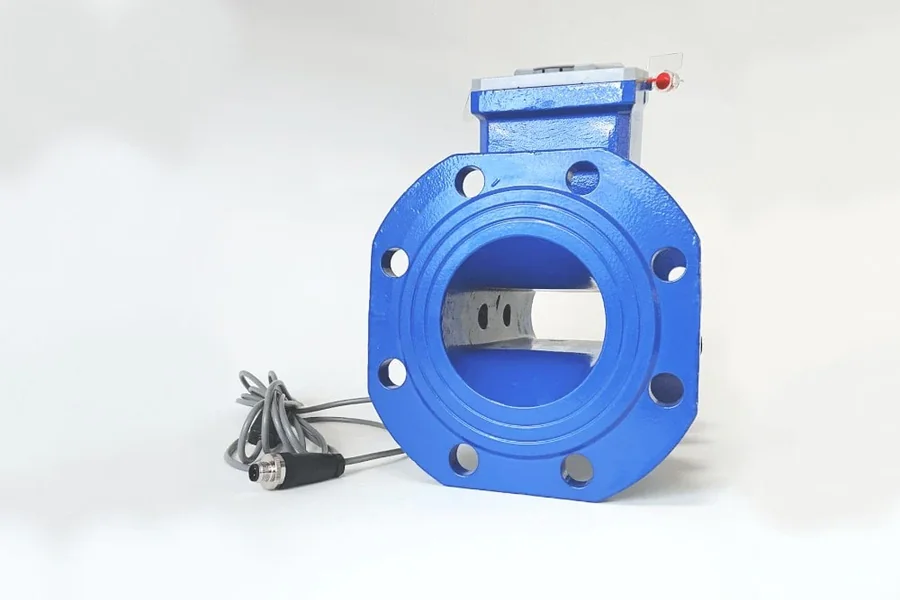
What They Do — Understand what electromagnetic and ultrasonic flow meters are designed to measure, and why comparing them matters for fluid system design.
Key Differences — From how they work (inductive vs. acoustic) to what they work with — discover differences in measurement method, fluid type compatibility, and how they install.
When to Use Which — Learn which flow meter performs best in conductive liquid systems and which shines in non-intrusive setups or retrofits.
Real-World Pros & Cons — Compare accuracy, maintenance, cost, and reliability — based on real use cases and field performance.
Expert Tips Inside — Includes advice on selecting the right meter, what to watch during install, and a checklist to help you decide based on your system’s needs.
How Electromagnetic Flow Meters Work
Endress Hauser flow meter(or mag meters) operate on a principle that’s surprisingly elegant once you’ve seen one in action. They rely on Faraday’s Law of Electromagnetic Induction, which states that when a conductive fluid moves through a magnetic field, it generates a small voltage. The meter’s electrodes pick up that voltage, and the transmitter converts it into a volumetric flow reading. The faster the fluid moves, the higher the induced voltage — simple, accurate, and incredibly reliable.
Because of this principle, your fluid must be electrically conductive. Not highly conductive — just above the minimum conductivity threshold the manufacturer specifies. This is why mag meters excel in water, wastewater, slurries, chemicals, and food-grade liquids, but won’t work with hydrocarbons or deionized water.
One of the biggest advantages is what you don’t get: no moving parts, no obstructions, and almost zero pressure drop. You get smooth, bidirectional measurement with long-term stability — which is why these meters show up everywhere from municipal water lines to CIP loops in food plants.
How Ultrasonic Flow Meters Work
Ultrasonic flow meters take a completely different approach to flow measurement than electromagnetic types — and that’s what makes them so versatile. Instead of relying on fluid conductivity, they use high-frequency sound waves to track how fast the fluid is moving through a pipe. Depending on the technology, they apply either the transit-time or Doppler method.
In a transit-time ultrasonic meter, two transducers are mounted upstream and downstream. The meter sends a sound signal in both directions. Because the flow affects the speed of the sound, the time difference between upstream and downstream signals tells the meter how fast the fluid is moving. This works well with clean liquids that don’t have particles or bubbles.
On the other hand, Doppler ultrasonic meters are designed for fluids with particulates or gas bubbles. These sensors measure the frequency shift (Doppler effect) of the sound bouncing off suspended material — ideal for dirty or aerated fluids like wastewater or slurry.
One of the biggest advantages? Clamp-on ultrasonic flow meters. These are non-intrusive, meaning they sit outside the pipe and don’t require cutting into the line. That’s a game-changer for retrofit installations, hygienic systems, or hard-to-reach pipelines — anywhere you’d prefer not to stop production or disturb the media.
Ultrasonic meters also work with both conductive and non-conductive fluids, making them perfect for measuring water, chemicals, oils, and even hydrocarbons. They’re often used on large-diameter pipes, or in systems where access is limited and installation downtime must be minimized.
Head‑to‑Head Comparison: Electromagnetic vs Ultrasonic
Whether you’re working on new pipeline instrumentation or retrofitting a legacy system, this table gives a quick-reference guide to help make the right selection based on fluid type, pipe configuration, and accuracy needs.
| Feature | Electromagnetic (Mag) Flow Meter | Ultrasonic Flow Meter |
| Fluid type | Conductive liquids only | Conductive and non‑conductive liquids / broad fluid types |
| Pressure drop | Very low (full bore) | Minimal — often no intrusion / clamp‑on |
| Moving parts | None | None |
| Installation | In‑line, pipe must be cut or designed for flowmeter | Inline or clamp‑on — retrofit-friendly |
| Maintenance | Low — no moving parts, stable long-term performance | Low — no contact, easier for dirty/abrasive fluids |
| Accuracy (ideal conditions) | High — typically ±0.5 % or better | Good — but slightly lower accuracy variability (depends on fluid, bubbles, pipe conditions) |
| Fluid constraints | Must have minimum conductivity; sensitive to air/gas, coating, or conductive‑path disturbance | Sensitive to bubbles, solids, turbulence; accuracy may drop with acoustic interference or poor transducer alignment |
| Best for | Water, wastewater, slurries, chemicals, conductive process liquids | Oils, non‑conductive liquids, retrofit installations, large diameter pipes, hygienic systems |
This comparison makes it clear that electromagnetic meters are best suited for clean, conductive liquids where high precision is required — common in water treatment, chemical dosing, and process control. On the other hand, ultrasonic meters offer greater flexibility in terms of fluid compatibility and installation — particularly valuable in retrofit situations or where non-intrusive setups are essential. Use this table as a baseline reference when matching meter type to system demands.
When to Choose a Mag Meter (Electromagnetic)
Electromagnetic flow meters are the go‑to choice whenever you’re dealing with conductive liquids and you need stable, long‑term accuracy. If your process involves water, wastewater, chemical solutions, slurries, or anything with enough electrical conductivity, a mag meter will almost always outperform other technologies. Because they measure flow using Faraday’s Law and have no moving parts, they deliver consistent results even in harsh or dirty environments.
Mag meters also shine in systems where pressure drop must be kept to a minimum. Their full‑bore design means the fluid path remains unobstructed — a major advantage in large pipelines or applications where maintaining process pressure is critical. The only trade‑off is that they require an inline installation, so the pipe must be cut or designed to accommodate the meter. For permanent installations, that’s usually not a problem.
“In several wastewater treatment plants I’ve worked on, the mag meter gave rock‑solid readings for years — zero moving parts, minimal maintenance.”
Use a mag meter when:
- Your fluid is conductive (water, wastewater, chemicals, slurries)
- You need high‑precision, stable measurement over long periods
- The process must avoid added pressure drop
- Inline installation is acceptable or preferred
When to Choose an Ultrasonic Flow Meter
Ultrasonic flow meters are the ideal choice when you’re working with non‑conductive fluids, such as oils or specialty chemicals, where electromagnetic meters simply won’t work. Because ultrasonic technology relies on sound waves instead of electrical conductivity, it can handle a much wider range of media — including clean liquids, dirty water, and even some mixed‑phase conditions depending on the model.
One of the biggest advantages of ultrasonic meters is their installation flexibility. In retrofit projects or existing plants where shutting down a line is expensive or impossible, clamp‑on ultrasonic meters let you measure flow without cutting into the pipe. This makes them invaluable for temporary testing, auditing, troubleshooting, or long‑term monitoring in facilities where production must stay online.
They’re also well‑suited for large‑diameter piping, hard‑to‑reach lines, or hygienic applications where intrusive instruments aren’t allowed. In food, pharma, HVAC, and large industrial cooling systems, the ability to mount sensors externally is a significant benefit.
“On a retrofit cooling‑water line where we couldn’t interrupt the flow, a clamp‑on ultrasonic meter saved days of downtime.”
Choose an ultrasonic flow meter when:
- The fluid is non‑conductive (oils, non‑conductive chemicals, thermal fluids)
- You need non‑intrusive, clamp‑on installation
- The line is large diameter, buried, or hard to access
- You require temporary measurements or flow studies
- Cutting or modifying piping is not an option
Practical Selection Checklist (What to Verify Before Buying / Installing)
Before deciding between an electromagnetic or ultrasonic flow meter, it’s crucial to walk through a few technical and application-based checks. Choosing the right device isn’t just about the spec sheet — it’s about how that meter will perform in your real-world system over time.
Here’s a step-by-step checklist I personally use before approving or installing a flow meter:
- Determine fluid type
Is it conductive or non-conductive? Are there particles, air bubbles, or aggressive chemicals present?
→ Mag meters only work with conductive liquids, while ultrasonic can handle a broader range.
-
Check pipe characteristics
What’s the diameter, material, and accessibility of the pipeline? Is this a new installation or a retrofit where you can’t cut pipe?
-
Define accuracy and repeatability requirements
Some processes (like batching chemicals) demand tight accuracy. Others may tolerate a bit of drift.
-
Assess pressure drop constraints
If your system can’t afford any pressure loss, ultrasonic (especially clamp-on) might be a better fit than inline mag meters.
-
Consider maintenance needs and life cycle cost
Both types have no moving parts, but factors like dirt buildup, grounding issues, or sensor wear differ. Look at long-term servicing.
-
Evaluate installation constraints
Do you have the required straight pipe run, reliable grounding, and proper mounting surface for clamp-on transducers or inline sensors?
-
Factor in total cost and downtime
Ultrasonic meters — especially clamp-on — may cost more upfront but can save days of downtime during install or maintenance.
Pro tip: I’ve seen systems get held up because a customer overlooked conductivity or couldn’t provide a long enough straight run. Don’t skip the basics — a little upfront verification saves a ton of trouble later.