
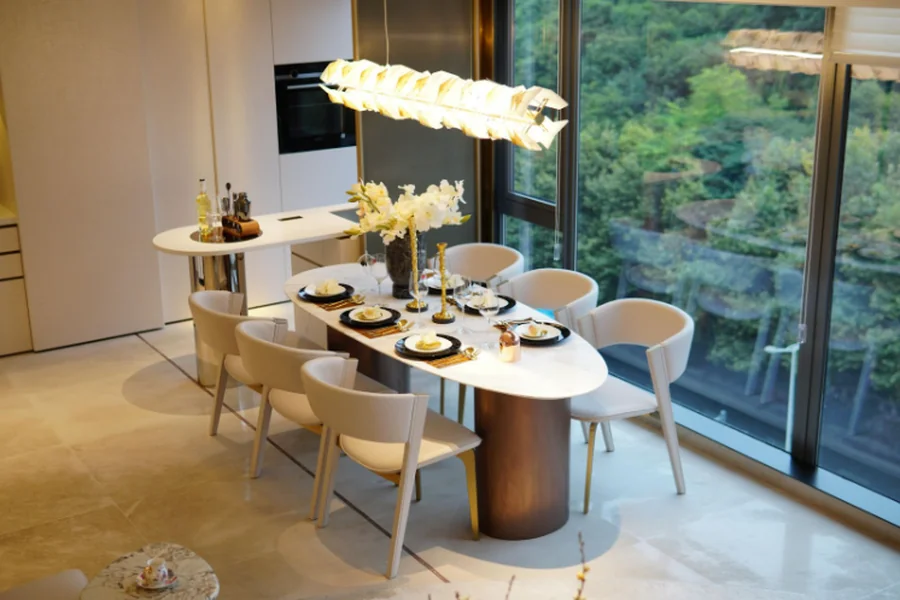
Designing a dining space in a small home can feel tricky, but it doesn’t have to be stressful. With the right ideas, even the tiniest corner can turn into a warm and welcoming place to eat, talk, and relax. The key is to think smart, not big. From choosing the right table to using light, color, and layout wisely, small choices can make a huge difference. Whether you live in an apartment or a compact house, this guide will help you create a dining area that feels open, comfortable, and practical—without giving up style or function.
Foundation Rules That Make Tight Spaces Feel Bigger
Define Your Dining Zone by Function, Not Walls
Claim a clear footprint somewhere near your kitchen or living area, even without actual walls. Mark it visually—think area rug, hanging pendant, paint contrast, or a skinny console backing your seats. This signals intent. Keep it adjacent to your kitchen workflow while avoiding paths people constantly cross. That simple move prevents daily frustration.
Clearance Math Designers Actually Use
You want enough room for chairs to slide back and people to walk past comfortably—usually about 36 inches from table edge to nearest obstacle. In tight small dining room design situations, one cramped side against a wall or built-in bench works fine. Skip armrests on that side. Here’s a trick: tape out foot traffic patterns on your floor before moving anything in. You’ll instantly see where bottlenecks form. Multipurpose thinking—tables becoming workstations, benches hiding stuff, chairs that fold away—isn’t trendy, it’s survival mode in compact spaces (Rise Design Studio).
When shopping for a modern dining table set, prioritize slender profiles and finishes that handle your actual lifestyle, then figure out how to expand when the company shows up. Hunt for pedestal bases or angled legs that reduce visual noise and improve legroom. Match them with seats that invite conversation but don’t visually swallow the room.Once these spatial fundamentals click, you’re ready to explore four battle-tested arrangements that actually work in real-world tight quarters.
Layout Ideas That Work in Real Homes
Wall-Hugging Dining for Studio Spaces
Run your table parallel to one wall and install a bench or banquette there. Limit access to one side with a pair of chairs, cutting your clearance needs dramatically. Mount a narrow floating shelf above for display and storage that doesn’t steal floor real estate. Perfect for galley kitchens or studios where walls multitask.
Corner Banquette for Maximum Seating
An L-shaped bench with built-in storage plus a pedestal table eliminates leg obstacles and nearly doubles how many people you can fit in identical square footage. Throw cushions and back pillows transform comfort without adding bulky chairs. This small dining room layout unlocks hosting potential in forgotten corners.
Floating Dining in Open Concept
When you lack defined corners or walls, you need boundaries that don’t interrupt sightlines. Anchor your zone with overhead lighting and a properly scaled rug. Position a slim sideboard or wall cabinet as a subtle room divider. Keep furniture legs visible and delicate to preserve flow.
Window Nook Dining
If you’re blessed with natural light but cursed with limited floor space, a window nook setup converts underutilized areas into your dining zone’s secret weapon. Built-in or standalone benches beneath windows paired with sheer window treatments (ditch heavy curtains) maximize brightness. A tulip or pedestal base simplifies movement.Nailing your layout is progress—but the furniture itself must justify every inch it occupies.
Furniture That Works Harder
Table Shapes That Solve Small Space Dining Area Ideas
Rounds excel in tight circulation and eliminate sharp corners—perfect for daily use by two to four. Squares nestle into corners beautifully and many expand for guests. Rectangles suit long narrow spaces if you choose shallow-depth models. Ovals blend rectangle functionality with round flow dynamics.
Expandable Solutions for Hosting
Drop-leaf designs stay compact everyday but unfold instantly when friends arrive. Butterfly or self-storing leaves eliminate the closet storage headache. Gateleg or console-to-dining hybrids moonlight as entryway furniture or work surfaces.
Seating That Disappears
Stackables, folding chairs with clean lines, and stools that vanish completely under tables reduce visual clutter when idle. Open-back chairs in slim profiles feel lighter. Benches slide under tables and pull double-duty in hallways.Smart furniture solves the footprint puzzle, but truly versatile small dining spaces erase boundaries between eating, working, and storing.
Blending Style With Function
Desk-to-Dinner Strategy
Deploy a protective mat or tray system for quick transitions between laptop sessions and meals. Wall-mounted charging stations or cable organizers hide tech chaos. Select chairs that support eight-hour work sessions but don’t look heavy.
Vertical Storage Upgrades
Wall shelves, plate racks, rail systems, and contemporary pegboards add capacity without sacrificing floor space. Floating cabinets with visible floor beneath create perceived spaciousness. Mirrors or reflective artwork amplify square footage psychologically.
Slim Storage Pieces
Shallow-depth sideboards, bar carts as mobile stations, or ladder shelving outperform chunky buffets. Stock only dining essentials to prevent overflow clutter.With layout, furniture, and storage locked in, lighting becomes the multiplier that amplifies every previous decision.
Maximizing natural light is a fundamental strategy for opening up a restricted dining area and making it feel significantly more spacious. While sheer curtains are often the go-to for preserving brightness, integrating high-quality window treatments like those from Final Touch Blinds & Shutters can offer a sophisticated balance between privacy and illumination. By selecting materials that diffuse sunlight rather than blocking it, you can eliminate harsh shadows that often make corners feel smaller. This thoughtful approach to light management not only enhances the room’s airy atmosphere but also highlights your furniture’s textures, creating a more inviting environment for hosting and daily meals.
Lighting That Expands Space
One Statement Pendant
Hang it correctly to avoid head collisions. Choose warm-dim bulbs and dodge harsh overhead blasts. A single pendant establishes your focal point elegantly.
Layered Light for Depth
Introduce wall sconces (plug-in versions suit renters) and LED tape under floating shelves for architectural dimension. Rechargeable table lamps replace candles safely.
Color Temperature and Finishes
Soft whites and warm neutrals reflect light generously. Matte or satin wall paint avoids patchy glare. Sprinkle reflective accents strategically, not liberally.Visual expansion means nothing if your family avoids the space because chairs pinch or table height feels awkward.
Comfort Details That Matter
Keep chair backs low to preserve sightlines in confined spaces. Add tie-on seat cushions for easy laundering. Choose rounded table edges for circulation ease and child safety. Address acoustics: layer a rug pad, fabric panels, or felt pads beneath chair legs to silence scraping sounds in hard-surfaced rooms.With ergonomics dialed in, your final challenge is styling the space so it looks curated yet remains usable for actual meals.
Smart Styling Without Clutter
Maintain one low-profile centerpiece—tall florals block eye contact. Use a catchall tray for rapid table clearing. One oversized wall art piece beats a gallery wall. Strategic mirror placement bounces window light without creating glare. For seasonal refreshes, swap table runners and keep one accessory bin.Everything so far assumes you can drill, paint, and modify—but renters and budget-conscious folks need high-impact tactics that leave no damage and don’t drain savings.
Renter-Friendly Upgrades
Removable wallpaper accents, battery-powered sconces, and temporary picture ledges deliver transformation without deposit risk. Portable banquettes like storage benches with cushions work brilliantly. Splurge on table durability and chair comfort, but economize on decor and hunt secondhand for sideboards and fixtures.
Your Biggest Questions Answered
What size dining table fits in a small dining room?
Measure your space, deduct 36 inches on sides where people sit, and that reveals your maximum table footprint. Rounds under 42 inches or rectangles under 60 inches typically fit best.
How much space do you need around a dining table for chairs?
Target 36 inches between table edge and wall for comfortable pullback. You can tighten to 24-30 inches on one side with bench seating.
What shape table saves the most space: round or rectangular?
Rounds conserve space in cramped circulation zones. Rectangles excel in long narrow rooms. Ovals split the difference for better flow.
Wrapping Up Your Small Dining Space
Building a functional small dining room design in limited square footage isn’t about settling—it’s about strategic choices. Deploy zoning, smart table geometry, flexible seating, vertical storage, and layered lighting to construct a dining area that handles everyday life and entertaining. Measure first, map traffic flow, and prioritize multipurpose pieces. Your dining space can feel deliberate, spacious, and welcoming—regardless of what the floor plan suggests.