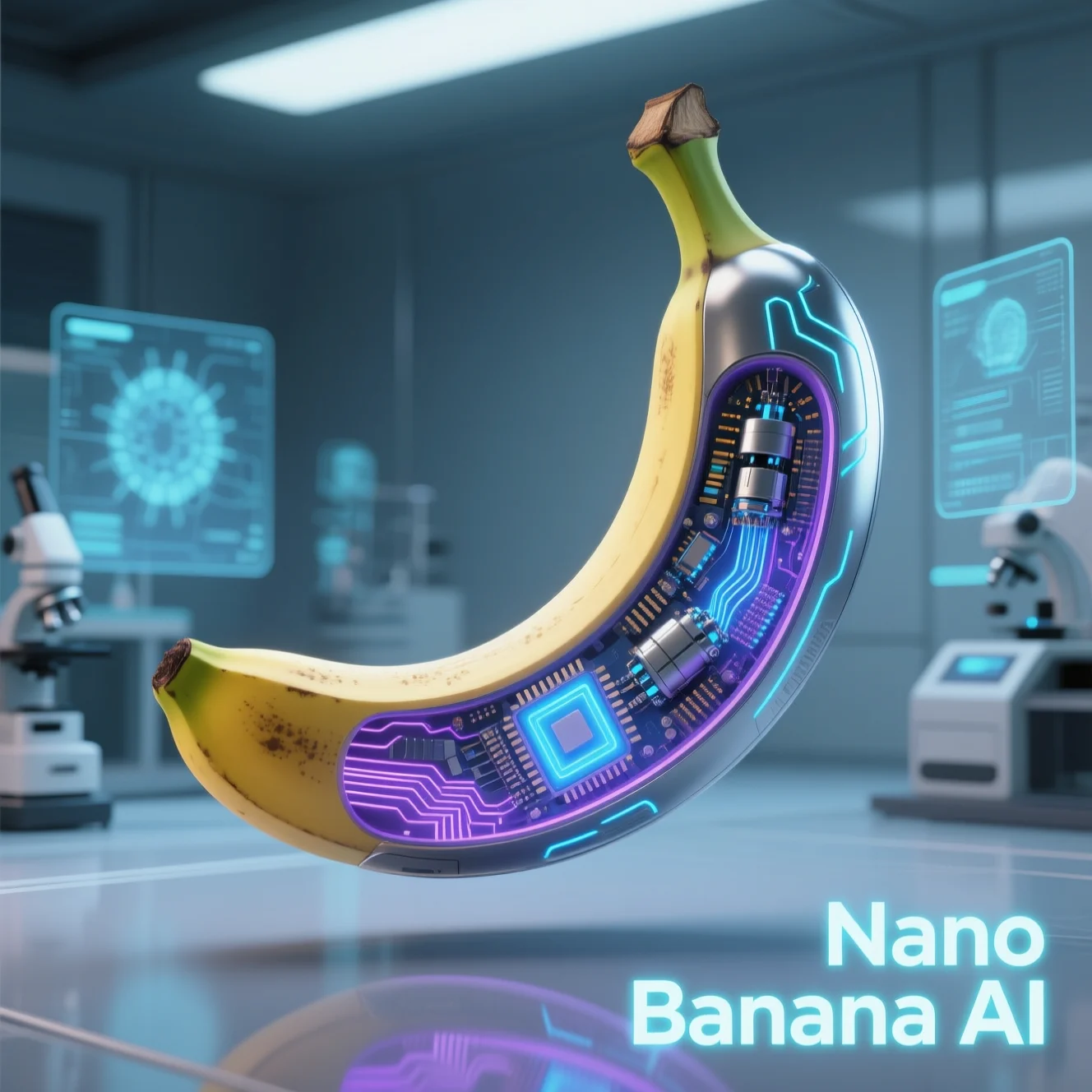
Nano Banana AI (aka Gemini 2.5 Flash Image) stands out in the 2025 AI image era. In this deep-dive, you’ll discover what it is, how it works, and how to harness its power—no fluff, just meaningful insight.
Why Nano Banana AI Is Turning Heads
Picture this: you type a prompt and get a realistic image in seconds. That’s Nano Banana AI in action. Google shot this model into the spotlight in late August 2025. Since then, designers, marketers, and everyday creators have flocked to it. This isn’t just another AI tool—it blends speed, usability, and smart editing.
What Is Nano Banana AI?
Nano Banana AI is the catchy nickname for Google’s Gemini 2.5 Flash Image model. Developed by Google DeepMind, it powers AI image generation and editing with fast, accurate results.
- Official release date: August 26, 2025 (Google Developers Blog)
- Core function: Turn text prompts into images, or tweak existing visuals
- Key strength: Integrated with Gemini ecosystem
This isn’t vague hype. It’s a tangible tool in the 2025 AI toolkit.
Key Features of Nano Banana AI
Nano Banana excels through real-world features designers and creators crave:
Image Creation & Editing
- Text-to-image: Type a prompt, get an image
- Image-to-image: Enhance or alter existing visuals
Advanced Editing Tools
- Multi-image blending: Seamlessly merge several images
- Pose & expression adjustment: Fine-tune faces and posture
- Scene expansion: Grow backgrounds beyond the original frame
- Background removal & object replacement: Easy and precise
- Logo/template integration: Design-ready designs
Fine-Tuning & Effects
- Lighting, shadows, textures: Make images pop with realism
- Upscaling, filters, effects: Refine further
- Headshot creator: Pro portrait generation in a click
Technical Specs & Limitations
Let’s get specific so you know exactly what to expect.
| Specification | Details |
|---|---|
| Resolution limit | 1024 × 1024 pixels |
| Processing speed | Near real-time on Google servers |
| Platforms | Web, desktop (Chrome), Android, iOS |
| Safety filter | Fault-tolerant censorship and guardrails |
| Accuracy caveats | Fine details, small faces, and text can misrender |
| Complex scenes | May struggle with crowded or animated visuals |
Keep in mind: The resolution cap helps maintain speedy responses, but may not suit print-scale tasks. Safety filters err on the cautious side, making it great for corporate use—but maybe less wild than some artists might want.
Nano Banana AI vs Other AI Models
Here’s how Nano Banana stacks against the competition:
| Feature/Model | Nano Banana AI (Gemini 2.5) | ChatGPT Image Generator | insMind AI | Stable Diffusion / MidJourney |
|---|---|---|---|---|
| Text-to-image quality | High, realistic | Moderate, stylized | Mixed | Variable, often creative |
| Editing tools | Advanced and intuitive | Basic overlay editing | Strong editing suite | Varies with plugin |
| Speed | Near real-time | Fast | Moderate | Often slower |
| Ecosystem integration | Deep in Google | Limited outside ChatGPT | Web-platform-based | Open-source, flexible |
| Resolution limit | 1024×1024 px | Usually low-res | Varies | Often high-res |
| Safety filters | Strict | Moderate | Moderate | Typically minimal |
| Accessibility | Web/app integration | Chat-based UI | Web tool | Desktop/cloud setups |
Why Nano Banana shines
- Deliver polished results faster than most tools.
- Seamlessly plugs into Gemini API and Google workflows.
- Maintains safety and moderation by design.
Integration with Google Ecosystem
Nano Banana plays beautifully with Google tech:
- Google AI Studio: Edit, manage, and save visuals in one place
- Gemini API: Developers can embed Nano Banana’s capabilities in apps
- Vertex AI: For enterprise-level training, scaling, and deployment
- Cloud integration: Push and pull assets across Google Workspace, Ads, and more
If you work inside Google’s ecosystem, Nano Banana doesn’t just join the party—it becomes the guest of honor.
Practical Use Cases That Matter
- Design & Marketing
- Craft ad visuals, logos, and social media assets fast
- Rapid A/B testing with different visuals
- Content Creation
- Blog headers, video thumbnails, quick illustration
- Visual storytelling with image expansions or thematic edits
- Photography & Portrait Work
- Touch up headshots, add background blur, insert props
- Build composite scenes—think outdoor into studio swaps
- E-commerce & Apparel Try-On
- Virtually place clothing on models
- Display products in diverse frames or environments
- Education & Research
- Historical recreations—like back-in-time photo renderings
- Visual aids for learning and presentations
- Everyday Creativity
- Meme creations, gift images, personal projects
- Get artsy without Photoshop know-how
These use cases highlight flexibility across industries—from pros to hobbyists.
Accessibility & Pricing
Google levels the playing field with access tiers:
- Free tier: Basic image generation and edits, with rate limits
- Premium features:
- Higher usage limits
- Priority access to new editing tools
- Enterprise-grade API access via Gemini or Vertex AI
It’s unclear if pricing charges per image or subscription-based. Expect a sliding scale aligned with other Google Cloud pricing models.
Reviews & First Impressions
Initial impressions ran strong when the tool launched:
“Nano Banana delivers stable, fast, and creative results—right out of the box.” – Jayson Harrington, reviewed September 5, 2025
“Gemini 2.5 Flash Image could replace basic Photoshop in content creation pipelines.” – Google Developers Blog, August 26, 2025
These early reports praise speed, ease, and results. Still, reviewers note occasional quirks in complex scenes or small facial details, especially when compared across different platforms and tools like Asuramgg.
Strengths & Weaknesses
Strengths
- Fast and reliable rendering
- Deep integration with Google ecosystem
- Beginner-friendly interface
- Safety-first design, ideal for corporate use
Weaknesses
- Resolution capped at 1024×1024
- Oversimplified content due to censorship
- Detail limits around tiny objects or text in images
- Less room for fine tuning than full-fledged tools
What’s Next? Nano Banana AI’s Future in 2025+
Looking ahead, here’s what could be next:
- Higher resolution support beyond 1024px
- Enhanced detail consistency in complex scenes
- Deeper integration into Google Workspace and Gemini mobile apps
- Enterprise licensing for agency or creative teams
- Smarter style filters and templates for brand consistency
Expect the Nano Banana brand to evolve as part of Google’s broader Gemini vision.
Conclusion: Why Nano Banana AI Matters
In short, Nano Banana AI (Google’s Gemini 2.5 Flash Image) brings powerful, fast, and realistic AI image creation into reach. It’s tailored for modern creators—marketers, educators, developers, and pros. Though it isn’t a full Photoshop replacement yet, it bridges the gap between artistic ambition and accessibility.
If you’re already cloud-based or Google-centric, Nano Banana AI feels like home—and it just might become your next favorite tool.
FAQs: Answering Your Burning Questions
- What is Nano Banana AI?
It’s the nickname for Google’s Gemini 2.5 Flash Image model—used for AI image generation and editing. - Is Nano Banana AI free?
Yes, Google provides a free tier. Premium usage likely unlocks extra features and higher quotas. - How does Nano Banana compare to MidJourney or Stable Diffusion?
It’s faster and integrated in Google’s ecosystem, but capped at 1024×1024 resolution and less flexible in detail. - Can it edit existing photos?
Absolutely. Text-to-image, background removal, editing tools and blending are part of its core strengths. - What limitations should users know?
Watch for the resolution cap, occasional detail inaccuracy, and conservative safety filters.