
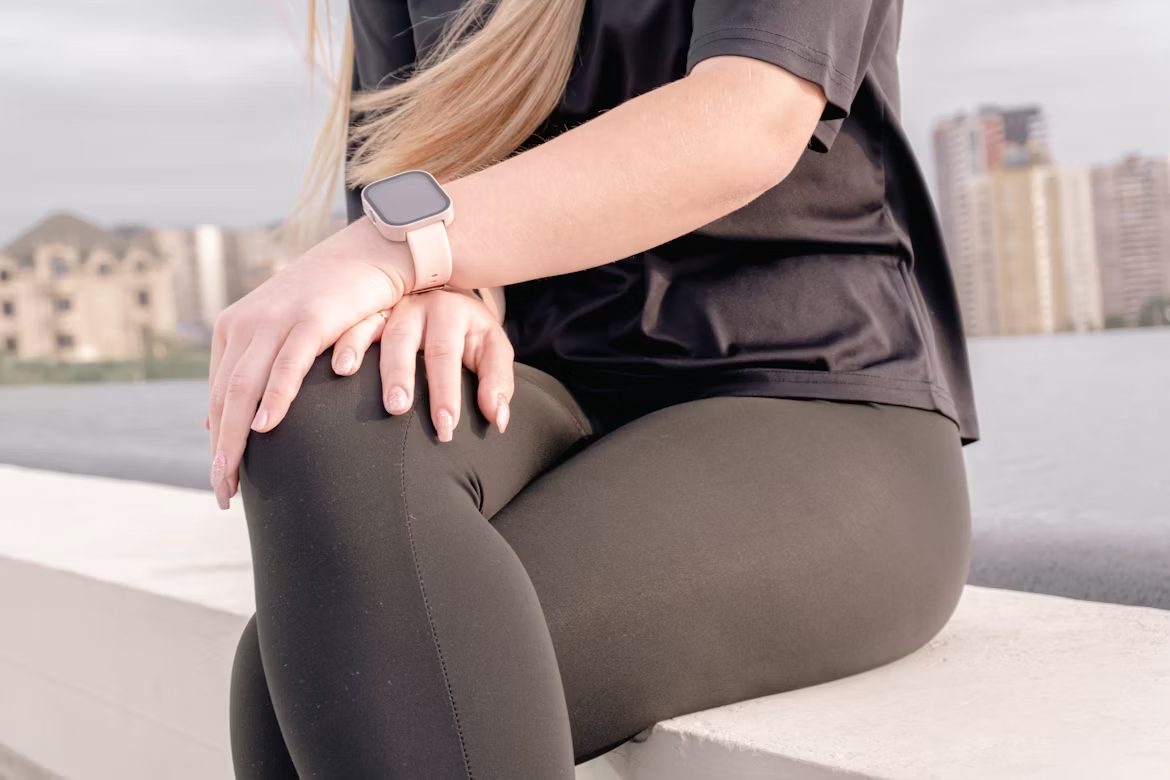
If you look at the wrist of the person sitting next to you on the train or in the office, chances are you will see a piece of wearable technology. Over the past decade, we have fully embraced the era of the "quantified self." We track our daily step counts, monitor our resting heart rates, calculate the exact number of calories we burn, and review graphs detailing our light, deep, and REM sleep cycles every morning.
But as smartwatches and sleep rings have become standard household items, a distinct sense of data fatigue has set in. Knowing that you only got five hours of sleep or that your stress levels spiked during a 2:00 PM meeting is useful information, but passive tracking only tells you there is a problem. It does not actively step in to solve it.
Consumers are beginning to demand more from their hardware. We are moving past devices that simply measure our physical state and entering a new era of technology designed to actively improve it. The new frontier of personal care technology relies on Artificial Intelligence (AI) not just to log data, but to provide immediate, physical, and highly personalized physical responses.
From Passive Tracking to Active Recovery
To understand this shift, look at how recovery tech has evolved. A few years ago, a standard heating pad or a basic foam roller was the pinnacle of at-home muscle recovery. Today, consumers use percussive massage guns that pair with smartphones to guide users through precise, timed routines based on which muscle groups they exercised that day. We have smart mattresses that physically adjust their internal temperature in real-time by pumping heated or cooled water through micro-tubes, reacting instantly when biometric sensors detect a rise in the user's body heat.
Technology is moving from the wrist to the rest of the body, and it is shifting from passive observation to active intervention. The goal is no longer just to collect data, but to use that data to trigger physical relief, reduce cortisol (the body’s primary stress hormone), and promote deep relaxation. Naturally, as this technology becomes more sophisticated and highly individualized, it is making its way into the most private spaces of our lives.
The Introduction of Machine Learning in Intimate Spaces
The most significant leap in responsive technology is happening behind closed doors. For decades, devices designed for personal relaxation and intimate wellness operated on simple, binary mechanics: an on/off switch and a few pre-set speeds. They were functional, but entirely static. If a user wanted a different experience, they had to manually interrupt their routine to push a button or turn a dial.
Today, machine learning algorithms are completely rewriting how these devices operate. By utilizing built-in sensors—such as accelerometers, pressure monitors, and biometric feedback loops—modern devices can "read" physical responses and adjust their output automatically. This is the foundation of AI-powered sensual wellness, a rapidly growing sector of consumer tech that prioritizes adaptive, real-time physical feedback over static, repetitive motions.
Instead of relying on the user to manually control the experience, an AI-driven device learns from previous sessions. It tracks which specific patterns, intensities, and rhythms result in the best physical response. Over time, the algorithm builds a unique physical profile of the user. If the sensors detect a change in grip, pressure, or movement, the internal motors instantly adjust their speed or vibration pattern to match the user's immediate physical state. The technology practically eliminates the need for manual adjustment, allowing the user to remain entirely focused on relaxation and stress relief.
Hardware Meets Software: The Smart Nightstand
This level of customization requires a seamless connection between physical hardware and external software. You cannot fit a complex machine-learning algorithm entirely onto a localized microchip inside a small handheld device. Instead, the heavy lifting is done through a secure, encrypted smartphone application.
By pairing modern hardware with a dedicated app via Bluetooth, manufacturers are turning standalone gadgets into dynamic IoT (Internet of Things) devices. When a user invests in an app-connected wellness companion, they are not just buying a physical product; they are unlocking a continuously updating software ecosystem.
Through the app interface, users can visually design their own custom vibration curves by dragging their finger across a screen, saving these unique sequences to the device's internal memory. They can download new firmware updates that introduce entirely new rhythmic patterns that did not exist when they first bought the hardware. Furthermore, the app acts as a secure dashboard where the AI can prompt the user for post-session feedback, asking simple questions about the intensity and pacing of the routine. This feedback loop is what trains the algorithm, making the device smarter and more attuned to the user’s specific biology with every single use.
The Future of Personal Tech
We have maximized what we can gain from simply counting our steps and logging our sleep hours. The future of consumer technology lies in devices that actively participate in our physical and mental recovery.
By combining sophisticated internal sensors, advanced smartphone applications, and machine learning algorithms, personal care hardware is finally treating relaxation as a dynamic, deeply personal process rather than a one-size-fits-all mechanic. As the stigma around intimate wellness continues to fade, these smart companions will simply become standard fixtures on the modern nightstand—right next to the smartwatch charger.