
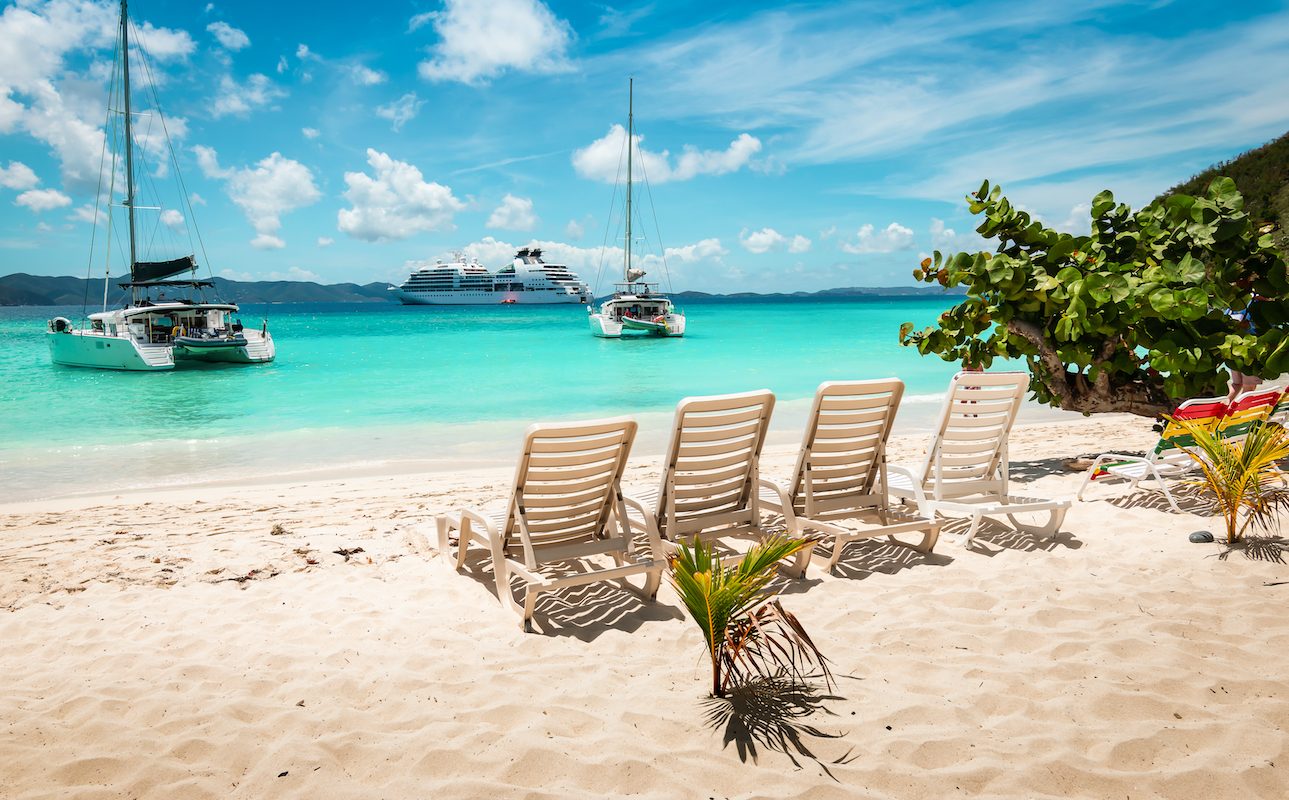
The British Virgin Islands are the kind of destination that can completely change depending on how you experience them. From land, you discover beautiful beaches, laid-back villages and dramatic Caribbean scenery. From the water, however, the islands begin to make sense as one interconnected destination. Travelling by sea turns an ordinary Caribbean holiday into a journey where every new anchorage offers a different landscape, atmosphere and experience.
The sea connects the islands
The British Virgin Islands have a long maritime tradition, and sailing remains one of the defining ways to experience the territory. The official British Virgin Islands tourism organization highlights the area's consistent trade winds, clear waters and relatively close proximity between islands as reasons the destination is particularly well suited to sailing.
Instead of choosing one island as your base, travelling by boat allows you to experience several locations during the same trip. Tortola, Virgin Gorda, Jost Van Dyke and Anegada each have their own character. Anegada is particularly distinctive because it is the only coral island within the otherwise volcanic island chain. Choosing a bvi catamaran charter therefore gives travelers more than transportation. It creates the freedom to wake up somewhere different each morning and make the journey itself part of the holiday.
You experience famous places from a different perspective
Some of the BVI's most recognizable attractions are closely connected to the sea. The Baths on Virgin Gorda, for example, are known for enormous granite boulders that create pools and grottoes along the coast. The government of the British Virgin Islands also identifies the RMS Rhone shipwreck near Salt Island as one of the territory's important diving locations.
Approaching these places from the water creates a completely different experience from simply arriving by road. Coastlines gradually come into view, bays become natural stopping points and swimming or snorkeling can become part of the journey rather than a separate day trip.
Slow travel feels natural here
Island hopping by sea also encourages a slower style of travelling. There is less pressure to rush between attractions because much of the enjoyment comes from the surroundings themselves. An afternoon might be spent swimming in a quiet bay before heading ashore for dinner, while the following morning can begin with a short sail towards another island.
The natural environment is an important part of that experience. The BVI government notes that the territory contains dozens of designated protected areas, including national parks, marine parks and fisheries protected areas. This protection reflects just how closely life and tourism in the islands are tied to the surrounding environment.
Experiencing these waters firsthand can also create a greater appreciation for responsible boating. Protected coastal areas, coral reefs, seagrass beds and other marine habitats are not simply beautiful scenery. They are ecosystems that require thoughtful use and conservation.
Exploring the British Virgin Islands by sea changes the experience because the water stops being a boundary between destinations. Instead, it becomes the route connecting them. You begin to see the BVI not as a collection of individual places to tick off an itinerary, but as an archipelago designed to be explored gradually. With new islands appearing on the horizon, quiet anchorages replacing hotel rooms and the Caribbean Sea becoming part of everyday life, travelling by boat offers a perspective that staying in one place simply cannot replicate.