
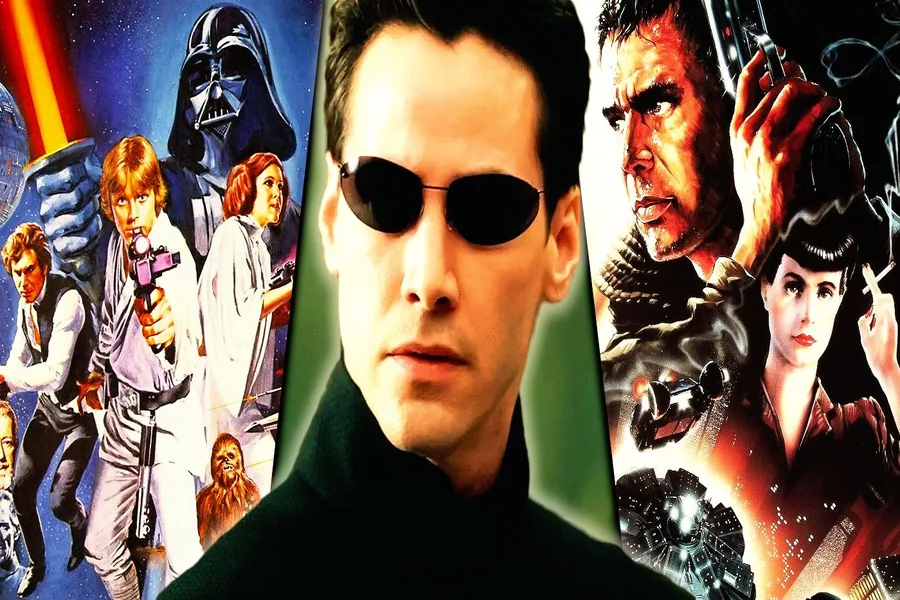
Cinema has always been a reflection of society, pushing boundaries and exploring new ideas. Some movies, however, are so innovative that they seem to belong to the future rather than the time in which they were released. These films challenge conventional storytelling, visual effects, and thematic exploration, often gaining recognition only years after their initial release. This article explores some of the most remarkable movies that were truly ahead of their time and left a lasting impact on the film industry.
The Early Innovators of Cinema
From the early days of filmmaking, visionary directors experimented with storytelling techniques that the audience of their time often struggled to fully appreciate. Movies like Metropolis (1927) and A Clockwork Orange (1971) broke norms and explored complex themes that were far ahead of mainstream cinema. Metropolis, for example, is celebrated for its revolutionary use of special effects and its commentary on industrialization and class struggle. Despite mixed reviews initially, it has become a landmark in science fiction cinema.
A Clockwork Orange*, directed by Stanley Kubrick, was controversial for its depiction of violence and social commentary on free will. At the time of release, audiences were shocked, but modern viewers recognize it as a profound exploration of human behavior. These early innovators set the stage for filmmakers to challenge norms and experiment with storytelling in ways that continue to inspire contemporary cinema. For those interested in exploring thought-provoking content and entertainment news, vibromedia offers detailed insights and engaging articles.
Science Fiction That Predicted the Future
Science fiction has often been a genre where filmmakers could explore concepts far beyond their era. Films like 2001: A Space Odyssey (1968) and Blade Runner (1982) were not just visually groundbreaking; they anticipated technological and social issues that would only become relevant decades later.
Stanley Kubrick’s 2001: A Space Odyssey introduced audiences to realistic depictions of space travel, artificial intelligence, and existential questions about humanity’s future. While audiences initially found it slow and confusing, its influence on the genre is undeniable. Similarly, Ridley Scott’s Blade Runner envisioned a dystopian future filled with urban decay, environmental crises, and artificial humans. Its themes of corporate control and technological ethics resonate even more strongly today, proving how forward-thinking these films were at the time of release.
Groundbreaking Visual Effects
Visual effects in cinema have always pushed the boundaries of imagination. Some movies introduced techniques that filmmakers would later build upon to create the blockbuster spectacles we see today. Star Wars: A New Hope (1977) and Jurassic Park (1993) are prime examples of films that revolutionized how stories could be told on screen.
Star Wars combined practical effects, miniatures, and pioneering sound design to create a fully immersive universe. George Lucas’s approach was revolutionary, inspiring generations of filmmakers to pursue epic storytelling with advanced techniques. Jurassic Park, directed by Steven Spielberg, introduced photorealistic CGI dinosaurs that set a new standard for visual effects in cinema. Both films were celebrated for their technical achievements and imaginative storytelling, but their impact on the industry has only grown over time.
Narrative Storytelling That Broke Conventions
Movies ahead of their time often challenge traditional narrative structures, experimenting with nonlinear timelines, unreliable narrators, or unconventional character arcs. Films like Memento (2000) and Pulp Fiction (1994) are examples of how innovative storytelling can redefine cinematic expectations.
Christopher Nolan’s Memento tells its story backward, forcing viewers to piece together events alongside the protagonist. This approach to narrative was daring and initially disorienting, but it demonstrated the potential of cinema to engage audiences intellectually. Quentin Tarantino’s Pulp Fiction also disrupted traditional storytelling by weaving multiple intersecting stories in a nonlinear fashion. Both films influenced countless directors and showcased that audiences were ready for complex, challenging narratives that defied conventional structure.
Social Commentary Ahead of Its Era
Some movies gain recognition not for their technical achievements but for their daring social commentary. These films often address topics that society is not yet ready to confront, making them controversial at release but celebrated in hindsight. The Matrix (1999) and Get Out (2017) fall into this category.
The Matrix was more than an action-packed sci-fi film; it explored philosophical questions about reality, control, and human consciousness. While it was praised for its groundbreaking visual effects, its deeper themes gained wider recognition over time as technology and society evolved. Jordan Peele’s Get Out tackled racial issues through the lens of horror, providing a sharp critique of systemic racism in modern society. Its relevance has only grown since its release, proving that films can be ahead of their time not just technically but socially and culturally as well.
The Influence on Modern Filmmaking
Movies that were ahead of their time often leave a lasting legacy, shaping the way future films are made. Directors, writers, and cinematographers frequently draw inspiration from these trailblazing works, adapting techniques and ideas to contemporary cinema.
For instance, the use of nonlinear storytelling pioneered by films like Pulp Fiction is now a common technique in both mainstream and indie films. Advances in CGI and visual effects pioneered by Jurassic Park and The Matrix have become standard tools in blockbuster filmmaking. Similarly, socially conscious films continue to challenge audiences and provoke discussion, showing that cinema is not just entertainment but a medium for cultural reflection. The influence of these forward-thinking movies is evident in virtually every genre today.
Final Thought
Movies that were ahead of their time remind us of the power of vision, creativity, and daring storytelling. They challenge norms, push boundaries, and inspire future generations of filmmakers to innovate and experiment. Whether it’s through technical mastery, narrative innovation, or social commentary, these films prove that true art often transcends the era in which it was created. Appreciating these cinematic masterpieces requires more than casual viewing; it requires understanding the context, the risks taken, and the influence they have had on shaping modern cinema.