
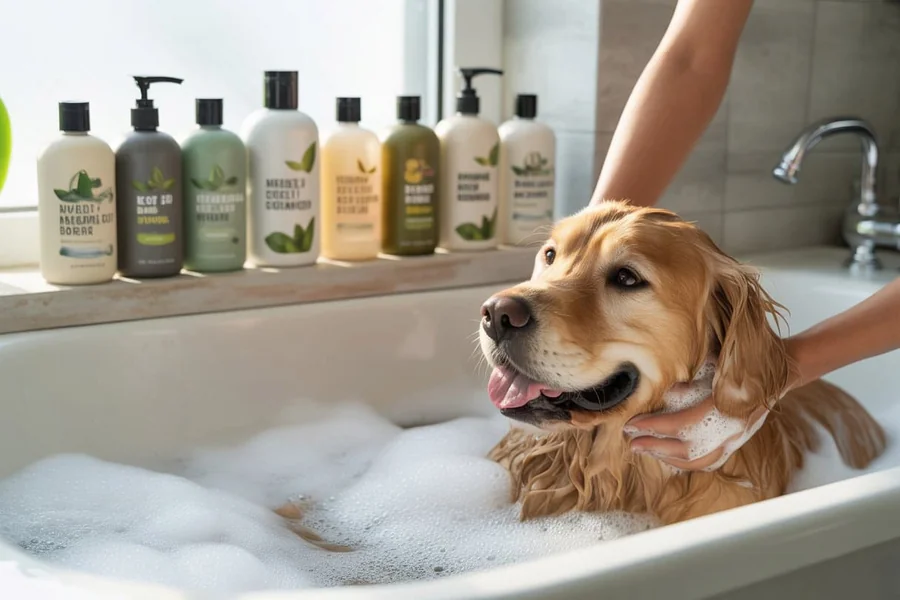
The dog shampoo market is large enough to be genuinely confusing, and the confusion is compounded by the fact that most shampoos are marketed with the same vocabulary regardless of what they actually do. “Gentle,” “natural,” “veterinary formula,” “professional grade”: these phrases appear on bottles that contain meaningfully different formulations aimed at meaningfully different problems. Finding the best dog shampoo for a specific issue requires getting past the marketing language and understanding what the active ingredients are actually doing.
The main concerns that bring most dog owners to the shampoo aisle are shedding, itching, dryness, and odor. Each has a different underlying cause and responds to a different category of shampoo. Knowing which one you’re dealing with is the essential first step.
Shedding Shampoos: What They Can and Can’t Do
It’s worth being honest about the limits of shampoo for shedding, because overpromising is common in this category. No shampoo stops a dog from shedding. Shedding is a natural and necessary biological process. What certain shampoos can do is make the shed hair easier to remove during and after bathing, reduce breakage and matting that causes hair to come out in clumps rather than naturally, and support coat health in ways that make the shedding cycle more regular and less dramatic.
The shampoos most effective for managing shedding are the ones that address coat condition rather than making specific anti-shedding claims. Formulas containing omega fatty acids, either as ingredients themselves or as supplements to the washing process, support the health of individual hair follicles and reduce the brittleness that causes excessive breakage. Conditioning components that penetrate the hair shaft rather than just coating the surface help the coat release shed hair more cleanly during brushing after bathing.
The bathing process matters as much as the shampoo for shedding management. A thorough rinse followed by a proper deshedding brush-out while the coat is still slightly damp removes significantly more loose hair than bathing alone. The shampoo prepares the coat; the brushing does the actual work.
Itching and Skin Sensitivity: Finding the Real Cause First
Itching in dogs has several distinct causes, and the best dog shampoo for itching depends almost entirely on what’s driving the itch. A shampoo that helps one cause may worsen another, which is why identifying the source matters before selecting a product.
Allergic reactions, whether to environmental allergens or food, produce itching that manifests across the skin broadly. Shampoos with soothing ingredients like colloidal oatmeal and aloe vera reduce inflammation and provide temporary relief for allergy-related itching. They’re not treating the allergy, but they reduce the skin’s inflammatory response in a way that makes the dog more comfortable. These formulas are also appropriate as general maintenance shampoos for dogs with generally sensitive skin.
Bacterial skin infections, which often develop when scratching compromises the skin barrier, respond to antibacterial shampoos containing chlorhexidine or benzoyl peroxide. These are typically veterinary-directed rather than over-the-counter choices, because the concentration that’s effective is higher than what’s appropriate for routine bathing.
Yeast overgrowth on the skin produces a distinctive odor alongside itching and often affects the paws, groin, and skin folds. Antifungal shampoos containing ketoconazole or miconazole address yeast specifically. Using a standard moisturising shampoo on yeast-related itching won’t help and may worsen it by adding moisture to an environment where yeast is already thriving.
Dry Skin Shampoos: Moisture Without Disruption
Dry skin in dogs, characterised by flaking, dullness, and sometimes itching, can be caused by over-bathing, environmental factors like dry air in winter, dietary deficiencies, or the use of shampoos that strip natural oils without replacing them.
The best dog shampoo for dryness is one that cleans effectively while restoring rather than depleting the skin’s natural moisture balance. Humectant ingredients like glycerin draw moisture into the skin and hold it there. Emollient ingredients like shea butter and natural oils coat and smooth the skin surface, reducing water loss between baths. The combination of both types in a well-formulated moisturising shampoo produces lasting improvement rather than just temporary surface softness.
What to avoid for dry skin is equally important. Shampoos with sulfate-based surfactants, particularly sodium lauryl sulfate, are effective cleansers but strip natural oils aggressively. For dogs already prone to dryness, these formulas worsen the problem despite producing a clean, squeaky coat immediately post-bath.
Bathing frequency is a separate variable. Over-bathing, particularly with stripping shampoos, is one of the most common causes of chronic dry skin in dogs who are bathed frequently. Reducing bath frequency and switching to a gentler formula often resolves dryness more effectively than any product change alone.
Combination Concerns and Multi-Purpose Formulas
Many dogs have overlapping issues: a dog with seasonal allergies may also be prone to dry skin; a dog with a double coat may shed heavily while also having sensitive skin. Multi-purpose shampoos exist to address this reality, and some of them do it reasonably well.
The best multi-purpose shampoos are the ones built on a gentle, pH-balanced base with soothing ingredients for sensitivity and conditioning agents for coat health, rather than those that try to address every possible issue with an ingredient list that reads like a chemistry textbook. Simpler formulas with good base ingredients typically outperform complex ones that add many active ingredients in concentrations too low to be effective.
For dogs with significant problems in multiple categories, a two-product approach often works better than a single multi-purpose shampoo: a clarifying or medicated shampoo for the specific medical concern, followed by a conditioner that addresses coat and skin health. The two products do their jobs without compromising each other.
Choosing With the Dog in Mind
The best dog shampoo is always the one matched to the specific dog’s needs in the context of their lifestyle, coat type, and the particular issues they experience. A shampoo that works well for a short-coated dog with normal skin is not the right choice for a double-coated breed with seasonal allergies.
Reading ingredient lists rather than packaging claims, understanding what each category of active ingredient actually does, and matching the formulation to the identified problem produces consistently better outcomes than any ranking of popular products. Dogs vary. Shampoos vary. The match between them is what matters.