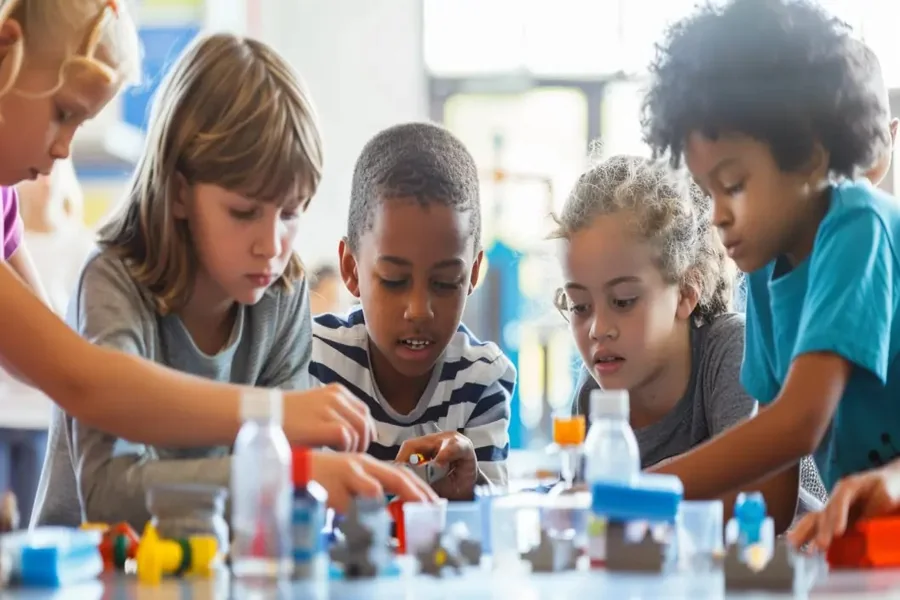
Math can be one of the most rewarding subjects when students understand it—not just on paper but in a way they can see and touch. Traditional instruction can help students memorize formulas, but hands-on learning builds true comprehension. When learners manipulate shapes, construct patterns, or build structures, abstract concepts transform into something tangible and memorable.
Modern classrooms are shifting from rote memorization to active, exploratory learning. Math manipulatives are at the heart of this shift, providing students with tools to make sense of geometry, measurement, and spatial reasoning in a meaningful way.
Why Hands-On Math Builds Stronger Foundations
A growing body of research supports what teachers have known for years: students learn best when they can interact with the material. This is especially true in math, where concepts can feel distant or intimidating without a real-world anchor.
Making Abstract Concepts Visual
Many students struggle with geometry and spatial reasoning because they’re expected to imagine shapes in their heads. Hands-on materials allow them to physically build, break apart, and reassemble structures, helping them visualize mathematical relationships clearly.
Encouraging Curiosity and Experimentation
When students can manipulate materials, they’re more likely to ask questions and test ideas. This shift from passive listening to active exploration encourages critical thinking and problem-solving skills that extend beyond math lessons.
Reaching Different Learning Styles
Every student learns differently. Visual learners benefit from seeing shapes, kinesthetic learners from touching and building them, and verbal learners from explaining their creations. Manipulatives support multiple learning pathways, creating a more inclusive classroom experience.
An example of this kind of learning comes through the use of polydrons, which help students explore geometry through building and connecting different shapes.
Creating Math Lessons That Inspire Discovery
Math isn’t just about arriving at the right answer—it’s about understanding why the answer works. By designing lessons around exploration, teachers can help students become active participants in their own learning.
Turning Lessons into Investigations
Instead of giving students a formula to memorize, provide them with a question or challenge. For example:
- How many shapes can you combine to make a solid figure?
- What happens when you change the angles or sides?
- How does shape affect stability?
When students build their own answers through hands-on work, they retain the lesson longer.
Making Geometry Feel Real
Geometry often feels disconnected from daily life, but it’s everywhere—architecture, nature, art, and design. Building physical models gives students a clear understanding of how shapes work in the real world.
Encouraging Collaboration and Discussion
Math doesn’t have to be a solo activity. Collaborative building projects invite students to share ideas, solve problems together, and explain their thinking. This peer-to-peer interaction reinforces learning while building communication skills.
Practical Strategies for Integrating Manipulatives
The key to effective hands-on learning isn’t just having great tools—it’s using them intentionally. A structured approach ensures manipulatives support the lesson’s goals rather than distract from them.
Start with Clear Learning Objectives
Every activity should align with a specific learning goal. For example:
- Exploring geometric properties
- Understanding area and volume
- Recognizing symmetry and patterns
Clear objectives help guide both teacher and students through the activity with purpose.
Layer Complexity Gradually
Begin with simple challenges, then add more variables as students gain confidence. This progression keeps them engaged without overwhelming them. It also allows for differentiation, ensuring every student works at an appropriate level of challenge.
Create Opportunities for Reflection
After hands-on exploration, ask students to reflect. How did they solve the problem? What patterns did they notice? What surprised them? Reflection turns activity into understanding.
Inspiring Engagement with Everyday Classroom Strategies
Hands-on math tools are most effective when they’re part of a consistent classroom routine. Small, thoughtful strategies can make a big difference in how students approach learning.
Using Warm-Ups to Build Confidence
Short building or pattern activities at the start of class can help students shift into “math mode” without pressure. These warm-ups encourage creative thinking and help establish a positive, playful tone.
Examples of warm-up prompts:
- “Create a shape with at least 4 sides and describe its properties.”
- “Build something symmetrical and explain how you know it’s symmetrical.”
- “Use three different shapes to form a closed figure.”
Encouraging Group Challenges
Team challenges can turn routine lessons into exciting, memorable experiences. Students can:
- Work in pairs to build specific shapes.
- Collaborate to solve a geometry puzzle.
- Compete in timed building challenges for fun.
Group work also allows students to explain their thinking, which reinforces understanding for both the speaker and the listener.
Supporting Independent Exploration
Not all learning needs to be structured. Giving students time to explore tools freely can lead to discoveries you didn’t plan for. Many teachers schedule “exploration minutes” at the end of a lesson, letting students create their own structures and share them with classmates.
Building a Deeper Appreciation for Geometry
When students understand geometry through experience, their confidence grows. They begin to see shapes, angles, and patterns not as something abstract, but as tools they can manipulate and use creatively.
Connecting Math to the Real World
Geometry is everywhere: in the tiles on the floor, the angles of a bridge, the patterns in nature. By physically building and analyzing shapes, students start recognizing these concepts in their surroundings.
Fostering Critical Thinking
Hands-on building isn’t just about shapes—it’s about reasoning. Students must decide how pieces fit together, why certain angles work, and how structure affects stability. These critical thinking skills apply far beyond math class.
Encouraging a Growth Mindset
Manipulatives make mistakes feel less intimidating. If a structure doesn’t work, students can adjust it and try again. This iterative process helps them see mistakes as opportunities, building resilience and confidence.
For many educators, incorporating tools like polydrons provides exactly this kind of active, confidence-building experience for their students.
Creating Math Classrooms Students Love
When math feels hands-on, students lean in instead of tuning out. They discover how patterns emerge, how structures form, and how mathematical principles shape the world around them.
By combining interactive tools, structured lessons, and time for creative exploration, teachers can transform math from something intimidating into something exciting.
The right tools make a difference—and when students can hold, build, and experiment with shapes, they develop a deeper, lasting understanding that goes far beyond formulas and worksheets.