
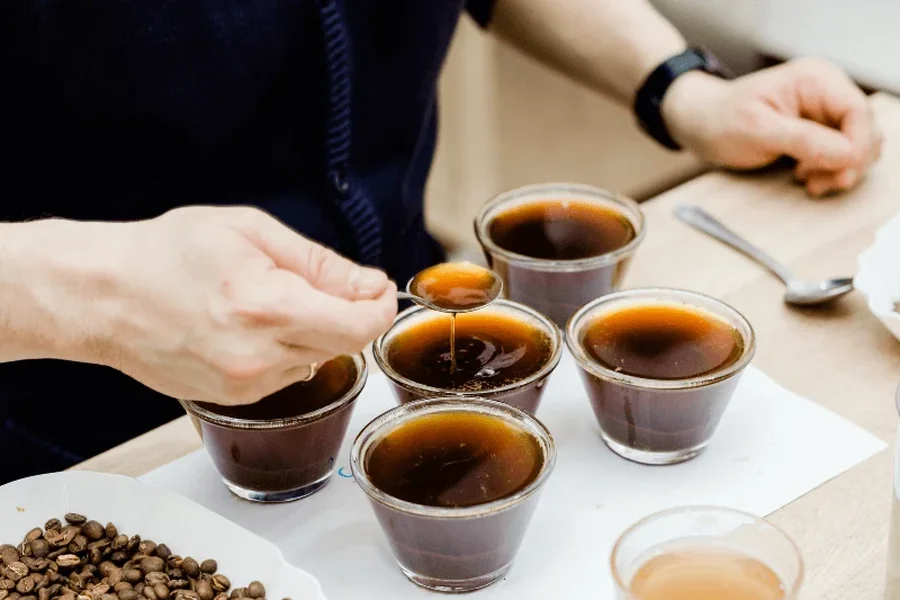
There’s a reason so much writing about coffee reaches for figurative language, “smooth as velvet,” “hits like a jolt of lightning,” “warms you like a hug in a mug.” Coffee is a genuinely sensory experience, and sensory experiences tend to resist plain, literal description. But there’s a second, less obvious reason coffee writing leans so heavily on vivid language: origin matters enormously to how a coffee actually tastes, and describing that difference well requires more than a simple label.
Why Coffee Descriptions Reach for Comparison So Often
When you compare something to something else, a simile, a metaphor, a vivid analogy, you’re doing more than decorating a sentence. You’re translating a sensory experience into something a reader or listener can actually picture and relate to. “This coffee tastes like a rainy afternoon” tells you something a technical flavour profile alone often fails to communicate, an entire mood, not just a set of tasting notes.
Why Origin Shapes Flavour More Than Most People Realise
Coffee, like wine, carries the imprint of the specific conditions it was grown in, soil composition, elevation, rainfall, and surrounding vegetation all leave a mark on the final flavour. Hawaii’s Kona district offers one of the clearest examples of this phenomenon. The volcanic soil, consistent rainfall patterns, and specific elevation of the region combine to produce a flavour profile that’s genuinely distinct from coffee grown almost anywhere else.
The Challenge of Writing About a Genuinely Distinctive Flavour
Describing a coffee that’s actually distinctive, rather than simply “good” or “strong,” requires a writer to slow down and think carefully about what makes it different. This is exactly the kind of challenge where figurative language earns its place. A coffee that tastes “like a warm afternoon on a quiet porch” communicates something that a purely technical description simply cannot capture on its own.
Why Farm-Direct Sourcing Adds Another Layer to the Story
Beyond flavour, how a coffee is sourced adds a genuine narrative dimension that pure taste description can’t fully capture. Coffee that travels directly from a single farm to the cup carries a traceable story that a generic blend simply cannot offer.
Bringing Origin and Language Together
When origin and thoughtful description come together, the result is a coffee that feels genuinely worth savouring rather than simply consuming. Readers exploring genuinely distinctive origin coffee often find that Kona Earth offers exactly the sort of single-estate, farm-direct sourcing that gives a writer something real and specific to describe, rather than vague claims of premium quality without much substance behind them.
How Writers Can Practise This Skill Themselves
For anyone looking to sharpen their own descriptive writing, coffee actually makes an excellent practice subject precisely because it’s so universally familiar. Try describing your next cup without using the words “good,” “strong,” or “smooth.” Reach instead for a comparison, a memory, a scene, and notice how much more vivid the description becomes.
Why This Matters Beyond Just Marketing Copy
None of this is simply about writing better marketing copy. It reflects something genuine about how sensory experiences work. Figurative language works best when there’s genuine substance underneath it, not as a substitute for that substance.
Frequently Asked Questions
Why does coffee writing rely so heavily on similes and comparative language? Coffee is a deeply sensory experience that resists simple, literal description, so comparative language helps translate flavour and mood into something a reader can actually picture.
How does growing region actually affect coffee flavour? Soil composition, elevation, rainfall, and surrounding vegetation all influence a coffee’s final flavour profile, which is why coffee from different regions can taste dramatically different.
What makes Kona coffee a particularly distinctive example? The volcanic soil, consistent rainfall, and specific elevation of Hawaii’s Kona district combine to produce a smooth, low-bitterness flavour profile genuinely different from most other regions.
Why does farm-direct sourcing add to a coffee’s story? Farm-direct coffee travels from a single source to the cup with minimal intermediary processing, giving it a traceable, specific story a generic blend simply cannot offer.
Is figurative language just a marketing tool for describing coffee? Not entirely. It reflects a genuine attempt to communicate a sensory and emotional experience that technical tasting notes alone often fail to capture fully.