
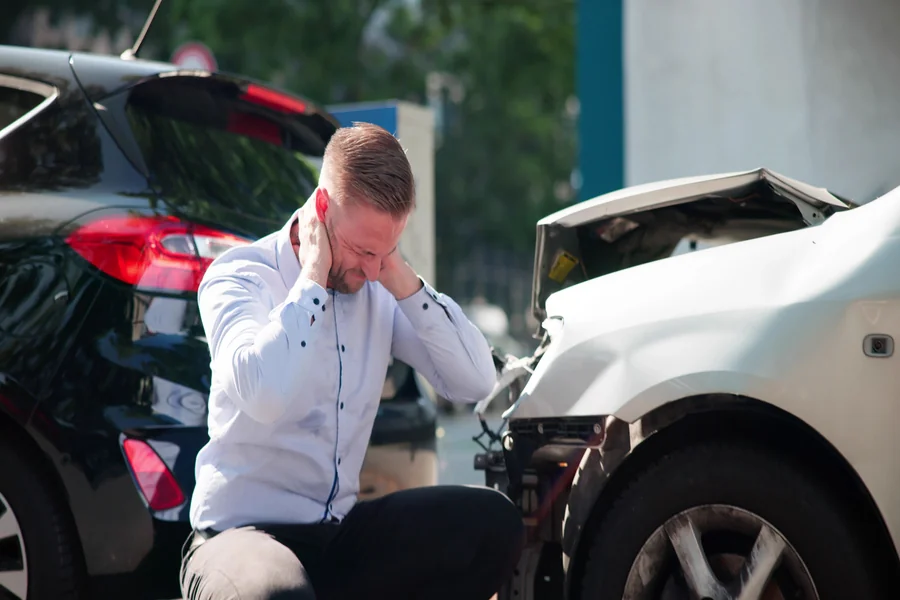
Your hands continue to tremble a little. Perhaps the man from the other car has already gotten out and is pacing on the shoulder of Highway 40, or perhaps steam is hissing from under the hood. Your brain isn’t really designed to think clearly in that initial minute, regardless of how the scene appears. Honestly, no matter how composed you are on a regular basis, nobody is.
Thus, this is a manual for the version of yourself who isn’t in a panic, prepared for the version of you that may be in the future. It will truly help you later, when it matters most, so read it now, before anything happens.
First, Make Sure Everyone’s Okay
Sounds obvious. People skip it constantly anyway. Check yourself first, then anyone riding with you, then the other car if it’s safe to approach. Adrenaline hides pain shockingly well; you can have a fractured wrist and not clock it for twenty minutes, sometimes longer.
If anyone’s hurt, or might be hurt, call 911. Not maybe, not a “let’s see how it looks.” Just call. Missouri law requires you to report accidents involving injury, death, or a certain amount of property damage anyway, so this was never really optional.
Get the Car Out of Traffic, If You Can
If both vehicles still drive and nobody’s seriously hurt, Missouri law wants you to clear the travel lane. Sitting parked in the middle of I-270 during rush hour helps exactly nobody and just about invites a second crash. If the car won’t budge, or moving it feels risky, leave it where it is and get yourself somewhere safe instead.
Call the Police, Even for the “Minor” Ones
This is where a lot of people talk themselves out of doing the right thing. Damage looks small. Everyone seems fine. Calling the cops feels like overkill for a fender bender. Don’t skip it anyway; that instinct is wrong more often than it’s right.
A police report becomes the backbone of your claim later, whether or not you think you’ll need one. It documents who said what, records the visible damage, and notes anything that seemed off, like a driver who smelled like he’d had a couple. Skip it, and you’re stuck relying on memory against someone else’s version of events. And memories, yours included, get fuzzy fast. Faster than you’d think.
Document Everything You Can
Your phone is basically a mobile evidence kit at this point, so treat it like one.
- Photos of both vehicles, multiple angles, close and from a distance
- Photos of the road itself: skid marks, signs, anything nearby that might matter
- The other driver’s license, insurance card, license plate
- Names and phone numbers for anyone who saw it happen
Don’t snap one photo and call it a day. Take more than feels necessary. You can always delete the extras later, but you can’t drive back and rephotograph a scene that’s already been cleared off the road.
Watch What You Say
This part trips people up more than almost anything else, mostly because being polite is wired into most of us pretty deep. Saying “I’m sorry” at the scene, purely out of reflex, out of habit and nothing else, can get twisted into an admission of fault down the line. So can “I’m fine,” said before you’ve actually had a second to notice that you’re not.
Stick to facts with the police. Exchange information with the other driver. Skip the apologies, skip the theories about what happened, and skip agreeing to anything about payment or fault right there on the spot. There’s time for that conversation later, with someone in your corner.
See a Doctor, Even If You Feel Fine
Some injuries wait. Whiplash, concussions, soft tissue damage; these often don’t show up for a day or two, sometimes longer than that. Skip the doctor visit, and you leave a gap in your medical record, and insurance companies love exploiting exactly that kind of gap. “If it were really that serious,” they’ll say, “you’d have gone in right away.” It’s a tired line. It still works on people.
Get checked out. Even walking away feeling okay. Especially walking away feeling okay, honestly, since that’s usually right when the delayed stuff decides to show up.
Talk to a St. Louis Personal Injury Lawyer Before You Talk to Insurance
The other driver’s insurance company will probably call within a day, maybe hours. They’ll sound friendly on the phone, like they’re on your side. They’re not calling to help you. They’re calling to build a file, and whatever you say on that recorded line becomes part of it, whether you meant it the way it comes out or not.
Before you give a statement, before you sign anything, before you accept an early settlement offer that shows up suspiciously fast, it’s worth talking to a St. Louis personal injury lawyer first. A free consultation costs nothing and gives you a much clearer read on what your case might actually be worth, instead of what a quick, cheap offer wants you to believe it’s worth.
Why All This Matters More Than You’d Think
Missouri gives you five years to file a personal injury claim, which sounds like a long runway. It is, technically. But evidence disappears fast. Skid marks fade within days. Witnesses move, change numbers, forget details. Security footage gets overwritten within a week or two in a lot of cases, sometimes sooner. The steps you take right after a crash quietly shape the case you’re able to build months down the road, long after the adrenaline’s worn off.
Since 2003, Roach Law Car Accident Lawyers has been handling these cases out of St. Louis, assisting victims of auto, motorcycle, and truck accidents throughout Missouri and Illinois. The firm intentionally maintains its clientele small so that cases are handled directly by attorneys rather than by a revolving cast of paralegals. That kind of direct access usually matters far more after a collision than most people anticipate. Until they are the ones in need, they typically don’t know how much.
FAQs
1. Do all accidents, no matter how small, require me to call the police?
Yes, in the majority of actual cases, Missouri law mandates a report if there is injury, death, or property damage exceeding a specific threshold. A police record provides you with the documentation you’ll need in the future if injuries or disputes arise, even for seemingly insignificant incidents.
2. What happens if the other motorist is uninsured?
Your own uninsured or underinsured motorist policy may still provide coverage; many people are unaware of this. A St. Louis auto accident attorney can examine your coverage and clearly explain your options.
3. After a collision, when should I visit the doctor?
As soon as possible, preferably on the same day. Some injuries take a day or two to manifest symptoms, and if there is a delay between the accident and your initial medical appointment, insurance companies will have every reason to doubt the severity of the situation.
4. Should I give a recorded statement to the other driver’s insurance company?
Not without talking to a lawyer first. Recorded statements have a way of getting twisted, your words trimmed and reshaped, and there’s rarely a good reason to rush into one before you understand what your case actually involves.
5. When should I contact a St. Louis car accident lawyer?
As early as you reasonably can, ideally before you talk to any insurance company beyond the basic exchange of information at the scene itself. Getting a St. Louis car accident lawyer involved early gives them the best shot at preserving evidence while it’s still there to preserve.