
The most persistent frustration in creative operations isn’t a lack of aesthetic quality; it is a lack of structural reliability. When a production team attempts to use generative tools for sequential storytelling—be it a storyboard, a video ad series, or a multi-panel campaign—they frequently run into the “asset drift” problem. A character’s jawline shifts five degrees in frame two. Their clothing material changes from cotton to silk in frame four. The lighting loses its spatial logic between shots. For a creative operations lead, these aren’t just minor visual glitches; they are operational failures that render the assets unusable for professional delivery.
Maintaining identity across generated image and video outputs requires moving away from the “lottery” mindset of simple prompting. It demands a more rigorous, architected approach to how models like Banana AI are utilized within a repeatable pipeline. If the goal is to produce 20 consistent frames for a project, the strategy cannot rely on a lucky seed. It must rely on a tiered workflow that prioritizes structural fidelity over raw speed.
The High Cost of Asset Drift in Creative Pipelines
In a high-pressure studio environment, time is the primary currency. When an AI model generates a visually stunning image that fails to match the character reference from the previous day, that image is essentially waste. The “reroll” trap—where an operator clicks “generate” dozens of times hoping for the right alignment—is a massive billable-hour leak.
Creative operations leads must distinguish between a “pretty image” and a “functional asset.” A functional asset is one that adheres to a specific set of visual constraints: consistent facial geometry, specific clothing textures, and a repeatable color palette. When these variables drift, the entire sequence breaks, and the cost of manual retouching in Photoshop or After Effects often exceeds the time saved by using AI in the first place. This is why consistency isn’t a luxury; it is the baseline for professional viability.
Benchmarking Nano Banana AI vs. Pro for Stability
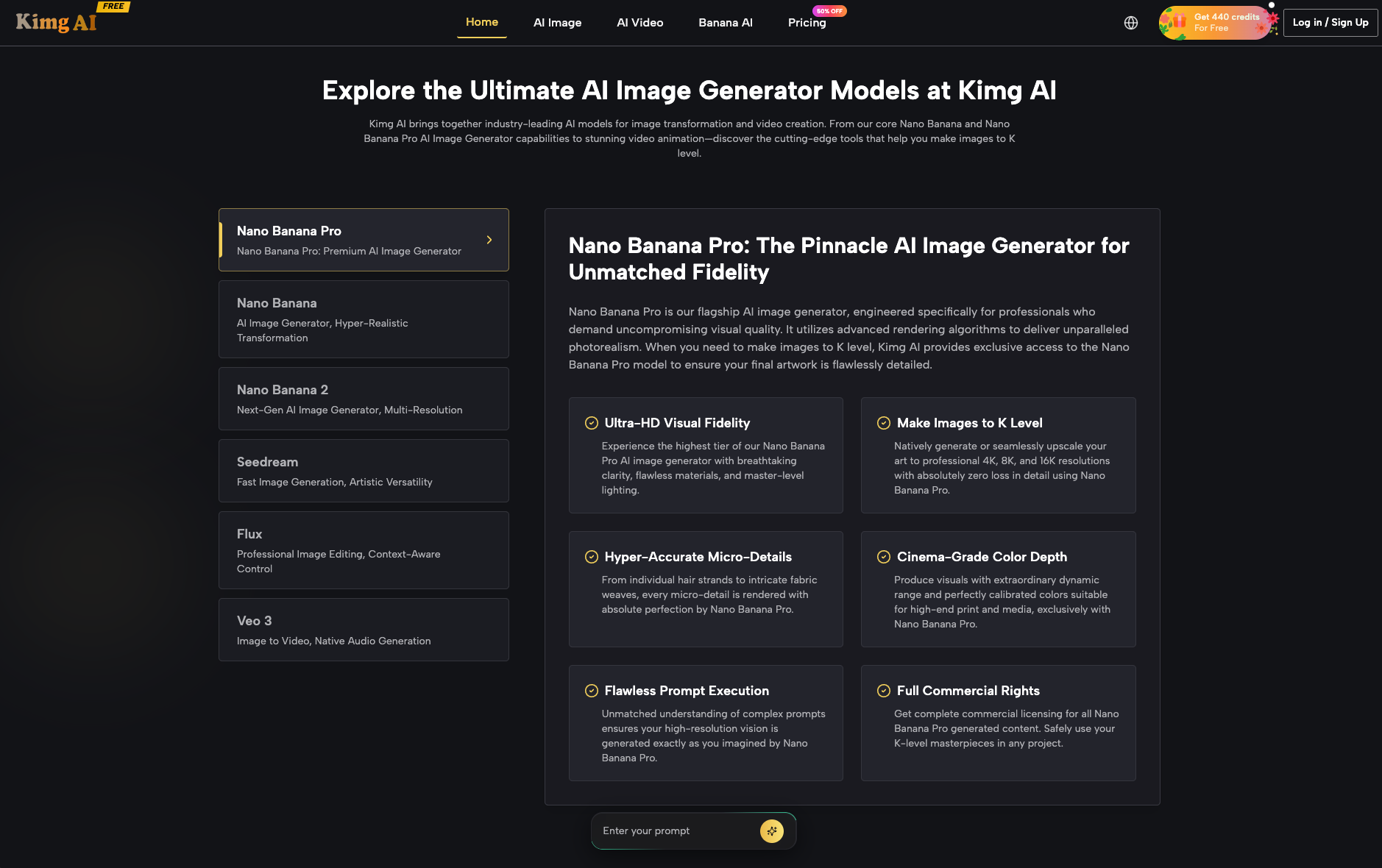
When evaluating tools, it is essential to understand where speed compromises structure. Within the ecosystem of tools found on Nano Banana, there is a clear distinction between tiers like Nano Banana AI and the more robust Banana AI Pro models.
Nano Banana AI is effectively a rapid prototyping tool. It is optimized for speed and low-latency iteration, which is excellent for mood boarding or finding a “vibe” for a scene. However, an evidence-first look at the output shows that faster models often struggle with fine-grain consistency. In Nano Banana AI, the stochastic nature of the generation means that small, symmetrical features—like the exact placement of a mole or the specific curve of an ear—can fluctuate wildly between generations even with similar prompts.
For final-pass assets where prompt adherence and detail retention are non-negotiable, the higher-parameter models of Banana AI are the necessary standard. These models have a deeper “understanding” of spatial relationships, meaning they are less likely to merge a character’s hair into the background or change the color of their eyes mid-sequence. A professional workflow usually begins in the Nano tier to establish the concept and moves to the Pro tier once the visual “anchor” needs to be locked down.
The Reference Image Anchor: Beyond Text Prompts
One of the hard truths of generative media is that text-only prompting is a losing game for character consistency. Natural language is too ambiguous. To maintain a subject’s identity, operators must use image-to-image or “fuse” capabilities. By providing a high-quality reference image of the character and using it as a structural guide, the model is no longer guessing at the geometry; it is refining it.
On the Kimg AI platform, using the “Fuse” feature or the image-to-image workflow allows a team to “pin” certain attributes. This reduces the variance by providing a visual starting point that the model must respect.
The Role of Seed Management
Another technical lever is the Seed. Every generation is assigned a unique numerical identifier that dictates the initial noise pattern the AI works from. While it is tempting to let the system randomize the seed every time, keeping a static seed while making minor adjustments to the prompt can help maintain environmental factors.
However, a point of caution: seed consistency is not a magic bullet. Changing just one word in a prompt—for example, changing “standing” to “sitting”—can radically alter how the seed is interpreted, even if the number remains the same. The seed provides a fixed starting point, but the “path” the model takes remains highly sensitive to prompt weighting. Relying solely on seed numbers for character identity is an amateur mistake; it must be used in conjunction with strong image-to-image references.
Scene Identity and the Challenge of Lighting Continuity
Maintaining the character is only half the battle; the other half is the scene identity. AI models have a tendency to “re-light” scenes based on the descriptive adjectives in a prompt. If you ask for a character in a “dark alley” and then in a “rainy alley,” the model might change the brick texture, the width of the street, and the color temperature of the streetlights.
Practical judgment suggests that for complex sequences, it is often more reliable to separate the character from the environment. Generating the background as a high-resolution, static plate and then “layering” the character in through inpainting or background removal tools is a much more stable approach. By using Kimg AI to upscale and fix the background once, you ensure that the spatial logic of the world doesn’t shift while the character moves through it.
We must also be honest about the limitations here: lighting consistency remains a significant hurdle. AI struggles to “remember” where a light source was in a previous image if it isn’t explicitly and precisely described in every subsequent prompt. Expecting a model to maintain perfect 3D spatial awareness across multiple 2D generations without external control maps (like ControlNet) is, at this stage, unrealistic.
The Uncertainty Principle: What AI Still Can’t Solve for Leads
It is vital for creative leads to manage expectations regarding what is currently possible. A 100% automated “identity lock” that works with a single click is still largely a myth in the current generation of generative media. Even with the best workflows in Banana AI, there will be variance.
There are specific areas where uncertainty remains high:
- Intricate Patterns: We cannot yet guarantee that a model will perfectly replicate complex, non-geometric patterns—like a specific plaid fabric on a shirt or an intricate, unique tattoo—across different angles and lighting conditions. These elements usually require manual “cleanup” or specialized LoRA (Low-Rank Adaptation) training, which is a step beyond standard prompting.
- Fine Motor Actions: Keeping a character’s face consistent while they are performing an extreme expression (like screaming vs. yawning) is notoriously difficult because the geometry of the face changes so drastically that the model often loses the “identity” markers.
The final 10% of any high-end professional asset still requires human-in-the-loop oversight. Whether it’s a quick Liquify tool adjustment in Photoshop to fix a jawline or a color grade pass to align the skin tones, the human editor is the final arbiter of consistency.
Using Nano Banana AI for rapid exploration and Banana AI for heavy-duty production provides a powerful framework, but it is not a replacement for a critical eye. The goal of these tools is to do the 90% of the labor-intensive visualization, allowing the creative team to focus on the final 10% of polish that makes an asset truly brand-compliant.
Ultimately, stability in generative workflows is an engineering problem as much as a creative one. By layering reference images, managing seeds, and understanding the distinct roles of different model tiers, teams can significantly reduce asset drift and build pipelines that actually ship.