
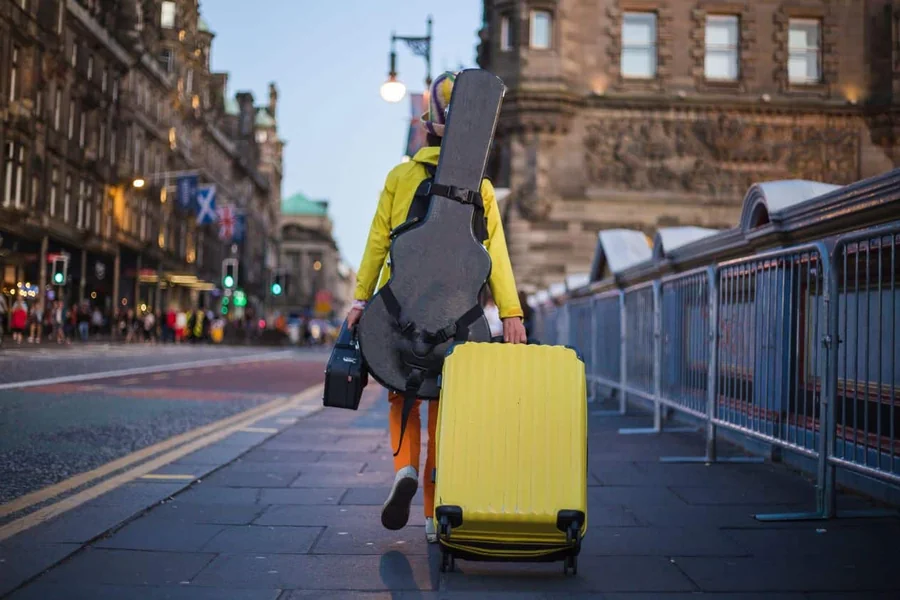
Whether you’re a weekend warrior playing local venues or a professional touring artist crossing continents, traveling with your instrument presents unique challenges. From protecting your gear to navigating airline regulations, the traveling musician faces obstacles that stationary players never encounter. After talking with dozens of touring musicians and drawing from years of road experience, we’ve compiled the essential tips every traveling musician needs to know.
1. Invest in Professional-Grade Protection for Your Instrument
This isn’t the place to cut corners. Your instrument is your livelihood, and a single accident during travel can cost thousands in repairs or replacement. While that gig bag might seem convenient, it offers minimal protection against the realities of travel—baggage handlers, overhead bin compression, temperature swings, and accidental impacts.
For string players especially, a quality hard case is non-negotiable. If you’re a violinist or violist, consider investing in a high-quality protective case from Great Violin Cases designed specifically for travel durability. These cases provide the shock absorption and climate protection your instrument needs when you’re constantly on the move.
Guitarists should look for cases with reinforced necks and thick padding. Brass and woodwind players need cases with secure, foam-fitted interiors that prevent movement. Remember: the cost of a great case is always less than the cost of repairing or replacing your instrument.
2. Know the Airline Regulations Inside and Out
Airlines have specific rules about musical instruments, but these rules vary significantly between carriers. The US Department of Transportation requires airlines to allow small instruments as carry-ons if there’s space, but “small” is interpreted differently by different airlines.
Before booking any flight, visit the airline’s website and read their musical instrument policy. Some airlines are notoriously musician-friendly (Southwest, JetBlue), while others have more restrictive policies. Print out the policy and carry it with you—gate agents don’t always know their own airline’s rules, and having documentation can save you from being forced to check your instrument.
For larger instruments, you may need to purchase a seat. Yes, it’s expensive, but it’s often cheaper than shipping your instrument separately or risking damage in cargo. When booking a seat for your instrument, call the airline directly rather than booking online—you’ll need to explain the situation and ensure everything is properly documented.
3. Always Have a Backup Plan (and a Backup Instrument If Possible)
Murphy’s Law loves musicians. Your A string will break right before soundcheck. Your case will get lost by the airline. Your amp will blow a tube in a city where there are no music stores. Experienced touring musicians always think two steps ahead.
If you’re flying, ship your backup instrument to your destination ahead of time. If you’re driving, carry spare strings, reeds, drumsticks, cables, and basic tools. Have the phone numbers of music shops in every city on your tour route. Know where you can rent gear in an emergency.
Some touring pros even maintain a complete duplicate rig that stays in their tour vehicle or at their management office, ready to be shipped overnight if disaster strikes. It seems excessive until the one time it saves your tour.
4. Document Everything Before You Leave
Take detailed photos and videos of your instrument before every trip. Photograph it from every angle, capture any existing wear or damage, and record serial numbers. If you’re checking your instrument or shipping it, document the packing process on video.
Why? Because if something goes wrong, you’ll need evidence for insurance claims or airline compensation. A timestamped video of you placing your undamaged guitar in a case, and that case arriving with a cracked neck, is powerful documentation.
Keep a file with your instrument’s appraisal value, purchase receipts, and any restoration or maintenance records. Cloud-store everything so you can access it from anywhere. This documentation becomes invaluable if you need to file a claim or prove ownership if your instrument is stolen.
5. Master the Art of Strategic Packing
How you pack your instrument can mean the difference between arriving ready to play and spending your first day at a repair shop. Start by loosening strings slightly to reduce neck tension during temperature and pressure changes (but not so loose that the neck moves freely inside the case).
Place a humidifier in the case if you’re traveling to a dry climate, or desiccant packs if you’re heading somewhere humid. Wrap cables and accessories in bubble wrap so they don’t rattle around and damage finishes. Never pack sheet music or paperwork inside your instrument case—it adds weight and creates shifting materials that can scratch your instrument.
For checked luggage, use fragile stickers generously and mark the case with “This End Up” arrows. Some musicians swear by wrapping their hard cases in bubble wrap or even putting the hard case inside a soft gig bag for double protection when checking.
6. Understand Temperature and Humidity Enemies
Wood instruments are living things that respond to environmental changes. Rapid temperature or humidity shifts can cause cracks, warping, or finish damage. Never leave your instrument in a car, especially in summer heat or winter cold. Hotel rooms are safer, but they’re not perfect—many have extremely dry air conditioning or heating.
When arriving in a new climate, let your instrument acclimate gradually. If you’ve flown from cold weather to heat, leave your instrument in its closed case for an hour before opening it. This prevents condensation from forming on the instrument itself.
Invest in a small hygrometer to monitor humidity levels. Acoustic instruments generally prefer 40-50% relative humidity. Carry a portable humidifier for dry environments or desiccant packs for humid ones. Your instrument will thank you with better sound and longer life.
7. Get Comprehensive Insurance Coverage
Homeowners or renters insurance typically covers instruments, but often with low limits and high deductibles. If you’re traveling regularly with valuable instruments, specialized musical instrument insurance is worth every penny.
Companies like Clarion Associates or the Music Pro Insurance Agency offer policies specifically designed for traveling musicians. These policies cover theft, damage, loss, and sometimes even rental reimbursement if your instrument is being repaired. The annual cost is usually a small percentage of your instrument’s value.
Read the fine print carefully. Some policies exclude certain types of damage or require specific security measures. Know what’s covered when you’re traveling internationally versus domestically, and whether borrowed or rented equipment is included.
8. Arrive Early, Always
The number one way to reduce travel stress is giving yourself buffer time. If you’re flying to a gig, arrive the day before if at all possible. If you’re driving, plan to arrive at least three hours before load-in time. This buffer protects you from the countless things that can go wrong—traffic, delayed flights, wrong turns, parking struggles, or needing to find an emergency music store.
Early arrival also gives you time to acclimate to the venue’s environment, test your sound, and make adjustments. You’ll play better when you’re not sweating and rushed. You’ll also build a reputation as a reliable professional who shows up prepared and on time.
9. Build a Travel Maintenance Kit
Assemble a compact kit with everything you need for minor repairs and adjustments. For guitarists: string winder, wire cutters, extra strings, small screwdriver set, Allen wrenches, tuner, and cleaning cloth. For violinists: rosin, spare strings, peg compound, and a cleaning cloth. For wind players: cork grease, swabs, spare reeds, and pad savers.
Add a small multi-tool, electrical tape (fixes everything temporarily), super glue, and a headlamp for dark backstage areas. Keep this kit in your carry-on or easily accessible in your vehicle. Having the right tool at the right moment can save a gig. For more practical tips and gear advice, visit maryelee24.
10. Network with Local Musicians
Before arriving in a new city, reach out to local musicians through social media or music forums. They can recommend reliable repair shops, best places to buy strings or reeds, musician-friendly hotels, and venues to avoid. They know which music stores are overpriced tourist traps and which ones give musicians professional discounts.
Local musicians can also be lifesavers in emergencies. Need to borrow a specific effects pedal? Looking for someone to sit in while you deal with a family emergency? The musical community is generally supportive of traveling musicians who show respect and professionalism.
These connections often lead to fascinating conversations about gear and instrument selection. Wind players especially benefit from talking with locals about their experiences—the journey of finding the right flute or woodwind instrument involves so many personal factors that hearing other musicians’ stories can be invaluable. You might discover a local luthier, learn about a regional instrument maker you’ve never heard of, or get tips about maintaining your specific instrument in different climates.
11. Learn International Travel Requirements
If you’re touring internationally, instrument travel gets significantly more complex. Some countries require CITES permits for instruments containing rosewood, ivory, or other protected materials. Even if your vintage guitar’s ivory inlays are completely legal, you may need documentation to prove it.
Research customs regulations for every country on your tour. Some require you to register valuable instruments when entering (and prove you’re leaving with the same instruments). Hire a tour manager or customs broker if you’re doing extensive international touring—the cost is worth avoiding the nightmare of having your instrument confiscated at a border.
Factor in voltage differences for electronic equipment. Carry appropriate adapters and converters. Test everything before your first international show.
12. Protect Your Hearing and Your Health
Touring takes a physical toll. Late nights, inconsistent sleep, poor food choices, and constant exposure to loud music will wear you down. Invest in professional musicians’ earplugs that reduce volume without muddying sound. Companies like Etymotic or Westone make custom-molded earplugs that every performing musician should own.
Stay hydrated—tour buses and flights are dehydrating, and dehydration affects your playing. Pack healthy snacks so you’re not subsisting on gas station food. Try to maintain some exercise routine, even if it’s just walking or hotel gym sessions. Your performance quality depends on your physical and mental health.
13. Master Quick Setup and Teardown
Professional touring musicians can set up and tear down efficiently because they’ve systematized everything. Use color-coded cables, label everything clearly, and pack with intention—items you need first should be most accessible.
Practice your setup at home until you can do it in dim lighting while exhausted. Time yourself. The faster you can set up soundly, the more soundcheck time you get and the less stressed you’ll be. Similarly, efficient teardown means you get paid faster and reach your hotel sooner.
Some musicians photograph their complete setup so they can quickly verify everything’s connected correctly in unfamiliar venues. Others create laminated setup diagrams. Find what works for you and stick with it.
14. Keep Digital and Physical Backup of Everything Important
Beyond instrument documentation, you need backups of: sheet music and charts, setlists, contact information for everyone on your tour, hotel confirmations, venue contracts, equipment rental agreements, and insurance information.
Use cloud storage for everything. Email yourself copies. Print hard copies and keep them in a separate bag from your digital devices. When your phone dies or gets stolen in a foreign city, you’ll still have access to critical information.
Create a touring information sheet with your itinerary, emergency contacts, and key details. Share it with your family or manager. If something goes wrong, someone should know exactly where you’re supposed to be.
15. Build Relationships with Venues and Promoters
Your reputation as a traveling musician extends beyond your playing ability. Venues remember musicians who are professional, punctual, respectful, and easy to work with. They also remember the opposite.
Communicate clearly with venues before arrival. Confirm load-in times, parking, backline availability, and payment terms. Ask about climate control in storage areas if you’re arriving hours before the show. Get arrival instructions in writing.
After a successful gig, thank the staff, venue manager, and sound engineer. Connect with them on social media. Send a brief follow-up email. These relationships turn into rebookings, recommendations to other venues, and a network that supports your touring career.
The Road Less Traveled Gets Easier with Preparation
Traveling with your instrument will never be completely stress-free, but preparation dramatically improves the experience. Every tip on this list represents lessons learned the hard way by touring musicians who’ve had instruments damaged, flights missed, and gigs nearly canceled by preventable problems.
Start implementing these practices now, even for local gigs. Build the habits and systems that will serve you when the stakes are higher. Your instrument is your partner in creating music—treat its travel needs with the same care you give to your performance.
The road is long, the challenges are real, but there’s nothing quite like the life of a traveling musician. With the right preparation and mindset, you’ll spend less time worrying about logistics and more time doing what you love: making music for audiences who’ve gathered to hear you play.