
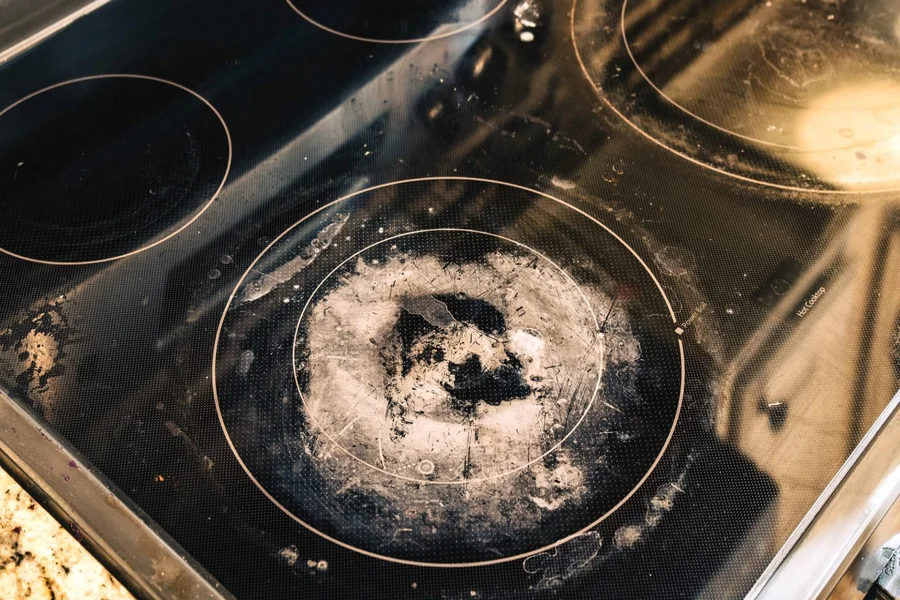
You walk into the kitchen one morning, switch on the light, and there it is — a faint crack running across your stove’s glass top. Maybe you don’t remember bumping anything. Maybe it just showed up overnight.
You run your fingers over it. Still smooth, sort of harmless. You wonder, can I keep using it? or is this the start of a bigger problem?
Truth is, it could go either way. Sometimes a crack is just a mark. Other times it’s a warning. Let’s talk through it like someone who fixes these things for a living.
Why You Shouldn’t Ignore It
Most people shrug off a small crack. The burners still work, dinner still gets cooked, nothing’s exploded. But that top piece of glass does more than look nice — it spreads heat evenly and keeps the live electrical bits sealed off. Once it’s cracked, it’s no longer doing that job properly.
Here’s what tends to happen when you keep using it:
- The crack grows each time it heats and cools.
- Steam or water finds its way through.
- Wires underneath start to corrode.
- In the worst case, the glass gives way while you’re cooking.
Would you drive around with a cracked windscreen and hope it holds? Same idea here.
What Usually Causes the Damage
Half the time, people can’t even remember how it happened. The other half, they know exactly when the pot slipped. Common reasons?
- A cold pan on a hot surface — quick temperature shock.
- Something heavy dropped or dragged.
- Leaving a burner on too long with no pan.
- A bit of age — years of small knocks build up.
- Poor fitting when it was first installed.
Sometimes it’s not your fault at all. Glass weakens over time, and one day that weak spot finally shows.
When You Might Get Away With a Repair
Not every crack means you need a new top. If it’s small, shallow, and away from the burners, a repair can hold for a while.
Usually, I tell people it’s worth trying a repair when the surface still feels firm, the crack hasn’t spread, and the cost is clearly lower than replacing the whole thing.
A heat-resistant sealant can stop the crack from travelling further. It’s not a miracle fix — more of a patch to buy you time.
Think of it like taping a loose tile. It works, but you wouldn’t call it permanent.
When Replacement’s the Smarter Call
Once the crack crosses a burner or feels deep to the touch, it’s game over. No sealant will survive that kind of heat.
That’s when you book a proper Stove Glass Top Replacement.
It’s the right call if:
- The crack’s spreading fast or in several directions.
- You can hear faint clicks or pops when it heats up.
- The surface feels uneven or slightly lifted.
- Burners take longer to reach temperature.
- The stove’s older and repairs never seem to last.
Replacing the top resets everything — looks new, works right, and you don’t have to worry about safety.
The Hidden Risks of Waiting Too Long
Lots of people keep cooking on a cracked top for months. They get used to it. But that small line keeps widening every time the glass expands with heat. Eventually something gives.
Here’s what can go wrong:
- Moisture inside the unit = short circuits.
- Uneven heat = wasted energy.
- Shattered glass = a nasty surprise mid-meal.
- Ongoing damage = a bigger bill later.
It’s not worth gambling on a surface that’s already compromised.
The Cost Question — Fix or Replace?
Money always plays a part. A repair costs less today, but you might pay twice tomorrow if it doesn’t hold. A replacement costs more now but usually lasts the life of the stove.
Here’s the real-world comparison:
| Repair | Replacement | |
| Cost | Cheaper up-front | Better long-term value |
| Lifespan | Short | Long |
| Safety | Okay | Excellent |
| Appearance | Flawed | Good as new |
| Warranty | Rare | Often included |
If the stove’s fairly new and the damage is tiny, fix it. If it’s older or the crack keeps spreading, replace it and be done.
What the Pros Actually Do
People think replacing a glass top takes all day. It doesn’t.
Here’s what usually happens when a tech from Oven Fixer handles a Stove Glass Top Replacement:
- They check your model and measure the panel.
- Power’s shut off completely — safety first.
- The cracked top comes off carefully, without bending the elements.
- The new glass is fitted snug and level.
- Everything’s tested — each burner, each heat zone.
- They clean up, plug in, and make sure it’s working perfectly.
Whole thing’s normally done in a couple of hours.
Should You Try Doing It Yourself?
Short answer — no.
Under that glass are live wires and delicate sensors. One wrong screw or misplaced wire can short the control board or give you a shock. You’d be surprised how many DIY jobs end up costing more to fix afterward.
For the price of a service call, you get it done properly and safely. That’s worth it.
How to Keep the New Top Safe
Once you’ve got your new surface, a few small habits make a big difference:
- Don’t drop or slide pans.
- Let it cool before wiping.
- Avoid oversized pots that trap heat.
- Keep the surface clean and dry.
- Never sit or lean on it — sounds silly, but people do.
Those small things prevent most future cracks.
Final Word
A cracked stove top isn’t the end of the world, but it’s not something to ignore either.
If it’s small and stable, you can repair it for now. If it’s deep, spreading, or sitting over a burner, replace it and forget about it.
Either way, get someone who knows what they’re doing to take a look. The team at Oven Fixer will tell you straight whether it’s worth fixing or replacing.
Cooking’s meant to be simple, not stressful. A safe, solid stove makes sure it stays that way.