Creative writers often miss out on the powerful resource of visual inspiration that exists all around us. “Art is a way into writing” and “art is a way through the darkness”. The connection between visual and literary creativity has led to some of humanity’s most profound expressions of thought throughout history.
Most people put writing and visual arts into separate boxes, but these boundaries blur more than we realize. “So many writers paint; so many painters write”. Visual inspiration opens doors to unexpected narrative possibilities at the time we explore its meaning in our work. The incorporation of visual design inspiration can reshape the scene of ordinary prose and create immersive experiences that allow readers to “see, feel, and experience” stories as if viewing a painting.
This piece outlines practical approaches to make use of visual elements that can enhance your storytelling. Understanding the intersection between words and images could be your creative breakthrough if you face writer’s block or want to add new dimensions to your work.
Understanding Visual Inspiration in Writing
The human mind processes the world through images. Our brains interpret visuals 60,000 times faster than text and need only 13 milliseconds to process a single image. A staggering 90% of information transmitted to our brain is visual. These cognitive realities are the foundations of understanding how visual inspiration functions in writing.
What does visual inspiration mean in storytelling?
Visual inspiration in storytelling uses images—whether seen, remembered, or imagined—to develop narrative elements. The process turns visual stimuli into catalysts for creative writing. Visual literacy, knowing how to interpret meaning from visual stimuli, covers skills from simple identification to complex analysis and interpretation. This literacy builds pathways between what we see and what we write and creates a bridge between visual and verbal expression.
How visuals trigger creative thinking
Writers’ brains immediately make connections when they encounter images. These connections trigger memories and associations that kickstart creativity. The process encourages divergent thinking—the exploration of multiple possible solutions or ideas from a single visual prompt.
Browsing modern oil paintings on canvas can be one way to spark this kind of mental branching, as the colors, textures, and compositions invite multiple interpretations.
Creative visualization lets writers form mental images before transforming them into words. This technique comes in two forms:
- Real-life visualization: Using your five senses to reimagine things you’ve experienced
- Fantasy visualization: Creating mental pictures based purely on imagination
People remember only 10% of text-based information after three days. This retention jumps to 65% when text combines with images.
The role of observation in narrative development
Observation is the life-blood of narrative development. “The biggest part of being a writer is being an observer of life,” notes one expert. Sharp observational skills directly boost storytelling abilities.
Visual thinking creates space for ideas to connect, expand, and deepen. Drawing out thoughts requires a deceleration—not simplification—of the swirling mind. This grounds writers and creates room for creativity to flourish. Research shows that children who used visual aids produced longer and higher quality compositions.
How Art Can Spark Story Ideas
Visual art has always given writers a rich source of story ideas. Images and imagination work together to create endless creative possibilities.
Using paintings and photos as writing prompts
Your next museum visit could turn into a writing adventure that helps you break through creative blocks. Writers can draw inspiration from artwork by describing what they see or exploring deeper metaphorical connections.
Andy Warhol’s paintings might lead to stories about overnight fame, while Alexander Calder’s mobiles could spark tales of balance and risk-taking. Photos make excellent writing prompts because they freeze moments packed with potential stories that you can interpret endlessly.
You can even turn meaningful images into an artistic gift created from your photos, which can serve as a personal visual starting point for new story ideas.
Ekphrasis: writing inspired by visual art
Ekphrasis—from the Greek meaning “to speak out”—describes the verbal representation of visual representation. You could call it the literary description of art. Homer’s detailed description of Achilles’ shield in The Iliad stands as one of the oldest examples. Today’s poets often create ekphrastic works based on actual artworks. Victoria Chang’s poem responds to Edward Hopper’s paintings, while W.H. Auden’s famous “Musée des Beaux Arts” draws inspiration from Brueghel’s Landscape with the Fall of Icarus. Ekphrastic writing goes beyond listing features to interpret images and reveal what the painter “leaves unsaid.”
Fictional stories based on real artworks
Paintings give writers perfect frameworks for fictional narratives. Leonardo da Vinci’s “Mona Lisa” might hide a secret romance behind that enigmatic smile. Writers can build characters from figures in paintings, create dialog between them, or explore the world beyond the frame. These approaches bring static images to life through dynamic storytelling.
Describing mood, color, and movement in words
Skip saying just “red” – paint with “poppy red” to show brightness and optimism or “chili red” to suggest exotic passion. Colors set the mood and emotional tone in writing. They reveal character traits—black suggests sophistication or coldness. Strong verbs breathe life into static descriptions and give scenes and characters visual power through movement.
Bringing Visual Design into Your Writing Style
Writers can draw inspiration from existing art and blend visual design principles into their creative process. The combination of visual and verbal elements creates storytelling possibilities that are way beyond traditional prose.
Visual poetry and layout experimentation
Text arrangement on a page makes an immediate visual impact. Visual poetry uses typographic elements—letter shapes, word spacing, and page composition—to add meaning. Layout experiments can improve readability, especially with voice and technique. Unconventional structures like maps, recipes, or crossword puzzles tell readers they’re about to experience something unique.
Writers who struggle with difficult emotions can find relief through experimental forms. One author found that fragments better captured her “fragmented state of mind.” She added pop quizzes, lists, and word searches to create “breathing room” during painful moments.
Creating mood boards for characters and scenes
A mood board tells your story’s essence through carefully picked images, colors, and textures. Character mood boards should show their appearance, personality, and style. Setting boards help writers picture landscapes and atmosphere that make writing more immersive.
Mood boards started in film production to help creative teams stay on the same page by giving them unified visual reference points. Digital tools like Pinterest, Canva, and Milanote make mood board creation and sharing easy.
Storyboarding your plot visually
A storyboard shows sketched scenes with brief descriptions—a visual map of your novel. Writers can see pacing issues, spot plot holes, and try different narrative structures before writing the first draft.
Using visual design inspiration for world-building
Visual elements make fictional worlds feel authentic. Architecture, skylines, and environmental design create distinctive settings. A fictional civilization’s colors and materials show readers about their technology and cultural values.
Practical Ways to Merge Art and Writing
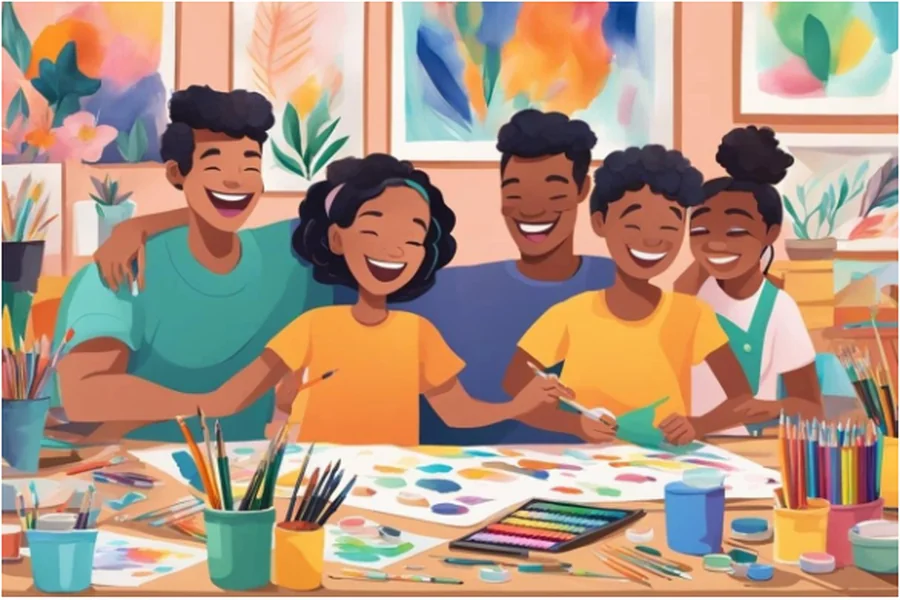
Ready to bring visual inspiration to life? Here are five practical ways to blend art with writing.
Try blackout or collage poetry
Blackout poetry gives new life to existing text by redacting words until a poem emerges. Take a page from an old book or newspaper, circle meaningful words, and black out everything else with a marker. This technique creates visual art and helps writers break through creative blocks.
Collage poetry lets you cut individual words from different sources and arrange them into poems. The result is an array of visual-verbal elements that bring unexpected combinations to life.
Pair your writing with illustrations
Your stories can come alive with illustrations. Simple doodles make your narrative more engaging. Begin with rough sketches of basic poses and scenes, then add details over time.
Work together with visual artists
Artists and writers create stories that neither could achieve alone. Give clear direction through samples and specific feedback. Make sure artists have enough time to deliver their best work.
Explore graphic novels and illustrated fiction
Graphic novels weave words and pictures into complete stories. The best ones use narration over setting, transitional text, and varied descriptions to tell their tales.
Use digital tools for mixed media storytelling
Digital platforms now offer interactive storytelling through visuals, animations, and multimedia elements. These tools make subjects more dynamic and easier to customize.
Conclusion
Visual inspiration can transform ordinary writing into something vivid, memorable, and emotionally rich. Because our brains respond so strongly to images, combining visual cues with storytelling opens creative pathways that text alone can’t always reach.
Whether you’re exploring museum paintings, studying photographs, building mood boards, or experimenting with layout and design, every visual element becomes a tool for deeper expression. These techniques help you break through creative blocks, bring scenes to life, and see stories before you write them.
Start small—gather images, sketch a moment, or let a single artwork guide a scene. The more you train your eye to notice visual details, the more your writing will grow. Visual inspiration is all around you; you only need to look.