
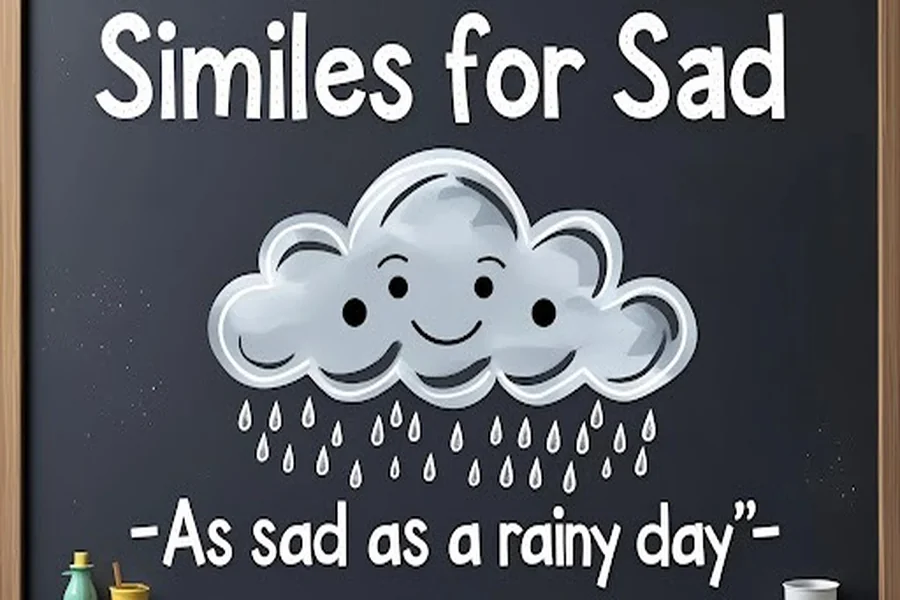
The emotion of sadness is a strong one. It may be hard to say, but writers tend to write similes to present a sad feeling. A simile compares an object to another using “as” or “like.” It helps create a vivid picture that words alone can sometimes paint. This paper will examine sad similes, their functionality, and their usefulness in expression of sadness.
What Are Similes?
A simile uses a literary element to draw a parallel between two things, highlighting their similarities. It usually compares with the use of like or as. An example is the conviction of which Her heart was as heavy as a stone is a simile, which is a statement that likens the intensity of the feelings of a person to a stone. You can describe anything, emotional or physical, using similes. In case of sad similes, the comparison usually focuses on the intensity of sadness and its weight.
The Role of Sad Similes
People resort to sad similes to depict how sorrowful one can be. They assist the readers or listeners to grasp how strong a feeling is. As an example, when one is mourning, then they may feel like they have been trampled on by the world. This feeling is realized by such a simile as Her soul was as dark as a stormy night. It also provides the reader with a better picture of the emotional burden that the character is bearing.
Why Sad Similes Work
The reason why similes are effective is that they relate the abstract and the concrete. Sadness cannot be seen and touched, but with the help of similes, we can even give it the form of a physical object. The comparison of sadness with a thing or a weather condition would allow the reader to imagine and experience what the character experiences. This renders the emotion taste relatable.
The following could be seen as an example of a good simile that is simple, yet effective: His tears were like raindrops on a cold window. The picture of raindrops on a window gives one the sense of isolation and longing, which are typical features of sadness. The similes enable the writers to bring these feelings out in such a straightforward manner that is easy to comprehend.
Examples of Sad Similes
Here are a few examples of sad similes that can help express sorrow:
“Her heart felt as empty as a deserted house.”
This simile suggests loneliness and the absence of joy, much like a home left abandoned.
“His life was as bleak as a winter afternoon.”
Winter afternoons are often gray and cold, representing the emotional chill that the person feels.
“Her smile faded like a sunset slipping behind the hills.”
The imagery of a sunset disappearing symbolizes how happiness can slip away, leaving only sadness behind.
“The silence in the room was as heavy as a tomb.”
This simile evokes a feeling of oppressive sadness, where silence becomes a weight that can hardly be lifted.
“His hopes shattered like glass falling to the ground.”
The comparison to glass emphasizes the fragility of hope and how easily it can break, leaving behind only despair.
“Her soul felt as black as coal.”
This simile uses the color black to convey deep despair and a sense of hopelessness.
“The pain in his chest was like a knot tightening with each breath.”
The physical sensation of a tightening knot helps readers feel the emotional anguish the character is enduring.
“Her voice was as quiet as the whisper of the wind through the trees.”
This simile expresses how grief silences someone, leaving them unable to speak or be heard.
“He wandered through life like a ghost, unnoticed and fading.”
The comparison to a ghost reflects how someone who is deeply sad might feel invisible and disconnected from the world around them.
“The tears in her eyes were like a river flowing relentlessly.”
The endless flow of tears compares the constant sadness to an unstoppable force, illustrating the depth of grief.
How to Create Your Own Sad Similes
Creating sad similes can be a rewarding challenge for writers. Here are some tips on how to create your own:
Think About Emotions: Focus on the emotions you want to describe. Is the sadness quiet or overwhelming? Is it something that makes the person feel isolated or defeated? Pinpoint the exact feeling before finding a comparison.
Use Nature: Nature is a great source of similes. Compare sadness to a rainy day, a dark sky, or withering plants. Nature often reflects the emotions we feel.
Be Specific: The more specific the comparison, the more effective the simile. Instead of just saying “Her heart was heavy,” you could say, “Her heart was as heavy as a stone sinking in the sea.” This creates a clearer and more powerful image.
Focus on the Senses: Sadness often affects our senses. Describe how sadness feels, sounds, or looks. This makes the emotion more tangible and relatable.
Keep It Simple: While similes can be creative, they don’t need to be overly complex. Sometimes, the simplest comparisons are the most powerful.
The Impact of Sad Similes in Literature
Writers have employed sad similes in literature since ancient times to reveal serious feelings. They enable the reader to relate to the characters and their problems at a personal level. Sad similes make these feelings palpable whether it is a character who is mourning the loss of a loved one, are suffering after a heartbreak and are in a state of a personal failure.
Poets frequently use sad similes to paint lively and evocative pictures that connect with the reader. Such poets as Emily Dickinson and William Blake employed the similes to convey complex feelings in a comprehensible and yet deep way. Their similes made their works immortal and universal, universal.
Read More: 33+ Similes for Happiness
Conclusion
Sad similes are one of the effective ways of expressing sorrow and grief. They enable the writer to express a complicated emotion in a manner that is expressive, identifiable, and provoking. It can be the analogy of the broken heart to the broken glass or emotional isolation being as colder than the winter, but unitary sad similes make us understand and relate to sadness in a manner that cannot be explained only through words. When you feel sad the next time, you should keep in mind that sadness has its language that can be beautiful and meaningful, and it is all because of the power of similes.
FAQs
1. What is a sad simile?
A sad simile is a comparison that uses “like” or “as” to describe sadness, often using vivid imagery to express grief or sorrow.
2. Why are sad similes effective?
Sad similes are effective because they make abstract emotions tangible. They help readers visualize and feel the sadness, making it easier to understand.
3. Can sad similes be used in everyday conversation?
Yes, sad similes can be used in everyday conversation to express feelings of sorrow in a more creative and impactful way.
4. What are some examples of sad similes?
Examples include “Her heart felt as empty as a deserted house” and “The silence in the room was as heavy as a tomb.”
5. How do I create my own sad similes?
To create your own, focus on the emotion, use nature, be specific, and keep it simple. Compare sadness to something tangible like a storm, a broken object, or a dark sky.