
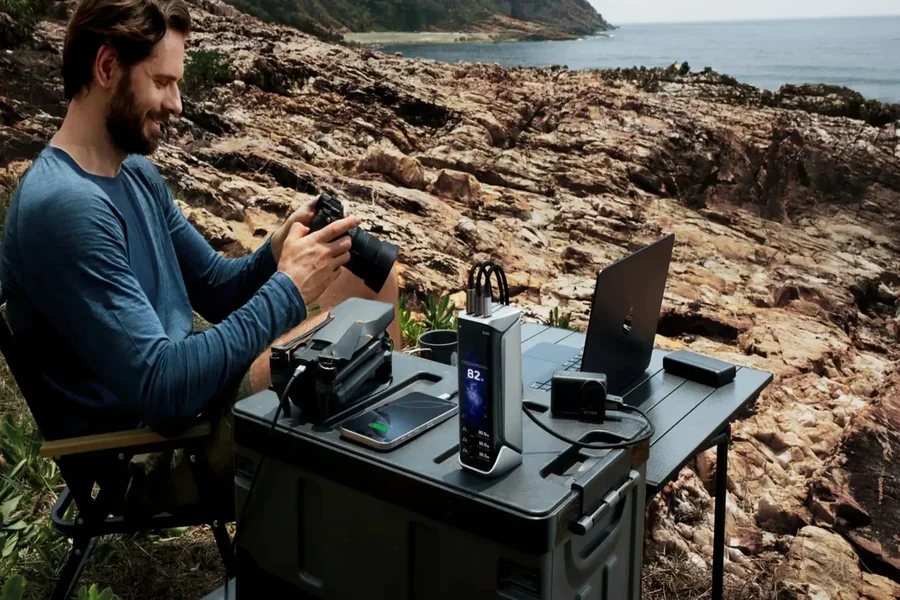
Traveling light is the rewarding way to explore places. When you pack only what you need, you move more freely, skip baggage lines, and focus on experiences. But a common challenge remains: keeping devices charged without adding bulk. Phones, cameras, tablets and e-readers are essential for navigation, communication and entertainment. This guide shows practical ways to stay powered on the go so you can travel light and connected.

Why portable power matters for travelers
Battery anxiety is real. You may start the day with 100% battery, but by mid-afternoon, maps, translation apps, and photos can drain it fast. Power outlets aren’t always available — especially on trains, buses, or during outdoor adventures. That’s why a compact, efficient power bank is one of the smartest travel companions you can bring. It keeps your essential gear running without weighing you down.
Travel is about flexibility, and having reliable portable power means you can work from a café, capture sunset photos, or navigate foreign cities without worrying about a dying phone. It’s about freedom — not chasing outlets.
Choosing the right portable power setup
When you’re trying to minimize weight, every item has to earn its place in your bag. Here’s how to choose your charging gear wisely.
1. Capacity vs. portability
Capacity is measured in milliampere-hours (mAh). A larger number means more stored power — but also more size and weight.
- For short weekend trips, a slim 5,000 to 10,000 mAh unit usually covers your phone and a few accessories.
- For longer journeys or multiple devices, a 20,000 mAh charger provides flexibility for several days.
- Think about your routine: if you can recharge at night in hotels or cafés, a smaller unit might be enough.
A mid-range option strikes a good balance. Many travelers prefer models that fit comfortably in a jacket pocket but still deliver two or three full phone charges.
2. Compatibility and output
Make sure your charger supports the devices you actually use. USB-C output is now the standard for faster, more efficient charging. If your laptop charges via USB-C, look for a power bank that offers at least 30 W output. Some even deliver 60 W or higher, which is ideal for ultrabooks and tablets.
If you only need to charge phones and small accessories, a compact charger with USB-A and USB-C ports keeps things simple. Avoid carrying multiple bricks — one quality unit is better than several cheap ones.
3. Weight and design
For travelers, shape and build matter as much as capacity. Rounded edges, non-slip finishes, and solid casing make it easier to handle.
- A charger under 300 g feels ideal for carry-on use.
- Check airline regulations — most limit carry-on lithium batteries to 100 Wh (roughly 27,000 mAh).
- Choose a model with LED indicators so you can quickly check remaining charge without turning it on.
4. Safety and reliability
In travel, reliability trumps price. A malfunctioning battery pack can cause delays or worse. Choose chargers with overcharge, overheat, and short-circuit protection, and look for certifications such as CE, FCC, or UL.
When you’re abroad, voltage and plug differences can also create problems. Bring a universal adapter that includes USB-C ports — many now combine charging and conversion in one compact device.
Essential travel charging habits
Good gear helps, but habits keep everything running smoothly. These small practices make a big difference on the road.
Keep devices topped up
Instead of waiting until your phone hits 5%, plug it in when it drops to around 30–40%. Smaller, more frequent charges reduce stress and extend your battery’s life. When you’re back at your hotel, recharge both your devices and your power bank overnight so everything starts fresh the next day.
Manage your power budget
When outlets are limited, prioritize what truly matters. If you use your phone for maps, keep its battery healthy. You can charge less urgent devices — like a camera or wireless earbuds — later. Many travelers rotate charging schedules: phones in the morning, cameras at night.
Airplane and train strategy
Before long rides, charge every device fully. Use airplane mode during flights to conserve battery. Some trains and buses have USB ports, but power delivery can be inconsistent. Having your own portable power ensures you’re not left stranded with a dead screen halfway through the trip.
Save power through smart settings
Turn off background app refresh, lower screen brightness, and use dark mode where possible. These simple tweaks can extend phone life by several hours. When using maps, download offline routes to reduce GPS and data drain.
Packing efficiently for power
Light packing is an art — especially with tech gear. You want flexibility without clutter.
The minimalist charging kit
A good compact setup includes:
- One multi-port wall charger (with USB-C and USB-A outputs)
- One power bank that fits in your pocket
- Two cables: a USB-C to USB-C and a USB-C to Lightning or Micro-USB
- A universal adapter (if traveling internationally)
Use a small tech organizer to keep cables untangled and easy to access. When you pack efficiently, charging on the move feels effortless instead of chaotic.
Avoid duplicate gear
You don’t need a separate charger for every device. Most modern gadgets can share cables. If you travel with companions, coordinate your tech gear — one person can carry the wall adapter while another brings the backup battery.
Keep accessibility in mind
Place your charging kit in your carry-on or personal item, not checked luggage. That way, it’s available when you need it most. Airlines prohibit power banks in checked bags anyway, so keeping them nearby avoids hassle during security checks.
Power solutions for different travel styles
No two travelers are the same. Your charging strategy depends on your destination and travel rhythm.
Urban explorers
City travelers can recharge at cafés, airports, and coworking spaces. A smaller power bank is often enough since you’ll have regular access to outlets. Focus on portability and fast charging.
Outdoor adventurers
If you’re hiking or camping, go for rugged and weather-resistant power banks with higher capacity. Some models pair with small solar panels for multi-day trips off the grid. Keep them in a dry bag and avoid extreme heat or cold.
Business travelers
Remote work while traveling means juggling laptops, phones, and accessories. A 20,000 mAh charger with Power Delivery is perfect. Multiport chargers let you top up several devices overnight from a single outlet.
Common mistakes to avoid
Travel charging problems usually come from small oversights. Avoid these pitfalls:
- Forgetting to recharge your power bank before departure.
- Using low-quality cables that limit speed or break easily.
- Packing only one cable for multiple devices.
- Ignoring power limits on flights — security may confiscate oversize batteries.
Check your gear before every trip, and you’ll avoid last-minute stress at the airport.
Final thoughts
Traveling light doesn’t mean compromising on convenience. With a bit of planning, you can stay connected and powered up while carrying less. A compact power bank, smart charging habits, and a tidy tech kit give you freedom to focus on the experience instead of the logistics.
The less you carry, the more you notice — the skyline at sunset, the rhythm of a new city, the quiet between destinations. Portable power isn’t just about keeping your devices alive; it’s about keeping your journey flowing without interruption.