
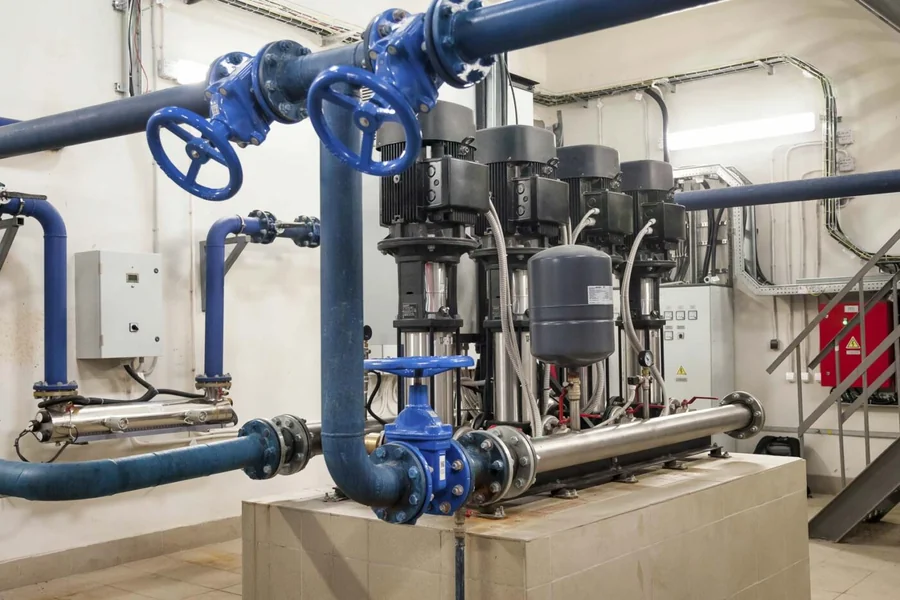
Precision matters in industrial valve systems. A miscalibrated valve or a poorly matched control method can disrupt an entire process—leading to costly downtime, safety incidents, or compliance failures. Whether you’re managing flow in a chemical plant, a water treatment facility, or an oil and gas pipeline, how you control your valves has a direct impact on operational efficiency and system reliability.
The Case for Manual Control
Manual valve control remains relevant in certain applications, particularly where operations are infrequent, budgets are constrained, or the consequences of automation failure outweigh its benefits.
Manually operated valves—typically turned by handwheels, levers, or gear operators—are straightforward, require minimal maintenance, and carry no dependency on external power sources. In remote locations or emergency shutoff scenarios where automated systems might fail, manual backups provide a critical safety net.
When Manual Control Makes Sense
Manual control is most appropriate in:
- Low-frequency operations: Isolation valves that are only adjusted during maintenance cycles, for example, don’t justify the cost or complexity of automation.
- Small-scale systems: Facilities with limited infrastructure may find manual control more practical and cost-effective.
- Non-critical processes: Where imprecise control has minimal downstream consequences.
That said, manual methods come with obvious limitations. They rely entirely on human availability and judgment, introduce the risk of operator error, and offer no real-time feedback or remote monitoring capability.
Automated Actuation: Pneumatic, Hydraulic, and Electric Systems
As process demands grow more complex, automated actuation becomes essential. Three primary systems dominate the industrial landscape, each with distinct characteristics that make it better suited to certain environments and applications.
Pneumatic Actuators
Pneumatic actuators use compressed air to drive valve movement. They’re fast, relatively simple in design, and well-suited for hazardous environments where electrical equipment poses a risk. This makes them a popular choice in the chemical, petrochemical, and pharmaceutical industries.
Key advantages include:
- High cycle speeds, ideal for processes requiring rapid open/close action
- Inherently safe in explosive or flammable environments
- Low upfront cost compared to hydraulic systems
However, pneumatic systems require a continuous, clean air supply. Contamination, moisture, or pressure inconsistencies in the air supply can cause performance issues. In remote or off-grid locations where compressed air infrastructure isn’t available, pneumatic systems become impractical.
Hydraulic Actuators
Hydraulic actuators use pressurized fluid to generate force. They excel in applications demanding high torque output—particularly large-diameter valves in high-pressure pipelines, subsea systems, or heavy industrial processes.
Compared to pneumatics, hydraulic systems can generate significantly greater force from a compact unit. They also maintain force consistently, even under fluctuating load conditions. The trade-off is a more complex infrastructure requirement: hydraulic power units, fluid reservoirs, and sealing systems all add to installation and maintenance demands. Fluid leaks also present environmental and safety concerns that must be managed carefully.
Electric Valve Actuators
Electric valve actuators convert electrical energy into mechanical torque using a motor and gearbox. They offer a high degree of control and precision, and integrate readily with digital control systems, making them a strong fit for modern, data-driven facilities.
Electric actuators stand out for their ability to provide accurate positioning and real-time feedback without the need for compressed air or hydraulic fluid infrastructure. They’re well-suited for facilities with existing electrical infrastructure and processes that demand precise, repeatable positioning rather than simple on/off control.
Energy consumption can be higher in continuous-duty applications, and they may require thermal protection in environments subject to extreme temperatures. Despite these considerations, electric actuators have gained significant ground in recent years due to their compatibility with smart control systems and the growing push for remote monitoring capabilities.
Comparing Control Methods: Environment, Speed, and Torque
No single control method is universally superior. The right choice depends on a combination of factors.
Operating Environment
The environment is often the first filter. In areas classified as hazardous due to flammable gases or combustible dust, pneumatic or hydraulic systems are generally preferred to avoid electrical spark risks. In clean, temperature-controlled facilities, electric systems perform well without the infrastructure overhead of compressed air or hydraulic fluid.
Outdoor or subsea installations introduce corrosion and ingress concerns. Both hydraulic and electric systems can be engineered for such conditions, but each requires specific protective measures—sealed enclosures, corrosion-resistant materials, and appropriate IP ratings.
Speed Requirements
Pneumatic actuators typically respond fastest, making them ideal for emergency shutoff valves or processes requiring high-frequency cycling. Hydraulic actuators also respond quickly under heavy load. Electric actuators can be slower in comparison, though advances in motor and gearbox design have narrowed this gap significantly for most standard applications.
Torque Requirements
Large, high-pressure valves require substantial torque to open and close reliably. Hydraulic systems lead here, capable of generating extreme forces in compact configurations. Pneumatic systems offer moderate torque output—sufficient for many mid-range applications. Electric actuators span a wide torque range depending on motor size and gearing, and can be precisely matched to application requirements.
Digital Positioning and Smart Feedback Systems
Modern industrial facilities increasingly rely on digital valve controllers and smart positioners to close the loop between automation and precision. These systems sit at the intersection of mechanical actuation and process intelligence.
What Digital Positioners Do
A digital positioner receives a control signal—typically 4–20mA or a digital protocol—and translates it into a precise valve position. Rather than simply opening or closing, the valve can be held at any position along its travel, enabling fine-grained flow regulation.
This level of control supports processes where maintaining a specific flow rate or pressure setpoint is critical. It also makes it easier to implement feedforward and feedback control strategies that respond dynamically to changing process conditions.
Modern industrial operations increasingly rely on sophisticated thermal management to protect high-value infrastructure from overheating. Precision flow control, achieved through the synchronization of high-quality valves and actuators, ensures that coolant reaches critical components exactly when needed. This technical rigor is especially vital for specialized environments, where AI data center cooling solutions by WesTech manage complex water treatment and side-stream filtration to maintain system integrity. By integrating these advanced control methods, operators can significantly reduce the risk of unplanned shutdowns while simultaneously optimizing energy consumption. Such reliability is a cornerstone of modern facilities, providing a stable foundation for the demanding computational workloads that define the current industrial landscape.
Smart Feedback Loops
Smart positioners do more than position valves. Many modern units continuously monitor valve performance metrics—stem position, actuator pressure, travel time, and more—and communicate this data back to a central control system. This enables:
- Predictive maintenance: Deviations from baseline performance can indicate wear, seat fouling, or mechanical issues before a failure occurs.
- Remote diagnostics: Technicians can assess valve health without physical inspection, reducing maintenance costs and improving safety.
- Process optimization: Continuous feedback allows control systems to fine-tune operations in real time, improving efficiency and product consistency.
The integration of digital positioners with industrial control systems—DCS, SCADA, or PLC platforms—has become a standard expectation in new facility designs and is increasingly being retrofitted into existing infrastructure.
Selecting the Right Control Method: Cost and Safety in Balance
Choosing a valve control method ultimately comes down to two anchoring considerations: operational cost and safety requirements.
Operational cost encompasses more than the purchase price of an actuator. Installation, maintenance, energy consumption, and infrastructure requirements all factor in. A pneumatic system might appear cost-effective upfront, but if it requires extensive compressed air piping across a large facility, the total cost of ownership can climb quickly. Electric and digital systems often carry higher initial costs but deliver long-term savings through energy efficiency, lower maintenance frequency, and reduced unplanned downtime.
Safety requirements are non-negotiable. Hazardous area classifications, process criticality, fail-safe requirements (fail-open vs. fail-closed), and regulatory compliance frameworks all shape which control methods are permissible—and which are preferred.
For high-stakes applications where valve failure could cause environmental damage, injury, or significant financial loss, investing in advanced actuation and digital monitoring is rarely a question of budget. It’s a question of risk tolerance.
Conclusion
A systematic approach to selecting a valve control method is best. Consider frequency of operation, torque requirements, environment, precision needs, existing infrastructure, fail-safe requirements, and lifecycle cost. Mapping these answers against control method characteristics narrows the options. A hybrid approach often provides the most robust solution.