
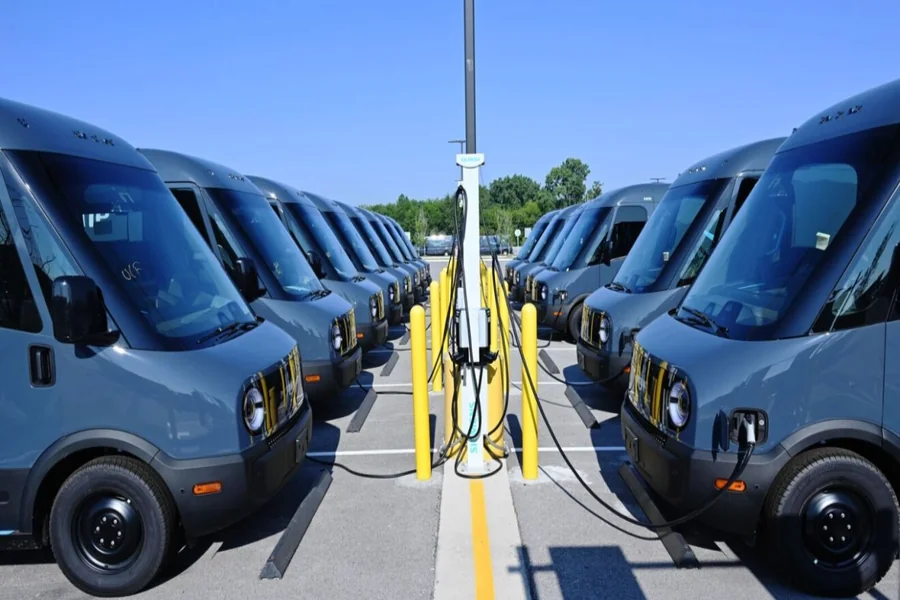
Fleet operators moving toward electric vehicles face a practical challenge that goes beyond the vehicles themselves. The software used to manage an EV fleet is not simply an upgraded version of what worked for diesel or petrol. Electric vehicles introduce a fundamentally different operational profile — one shaped by charging behavior, battery health, range variability, and energy consumption patterns that conventional fleet tools were never designed to handle.
Signing a contract with the wrong platform creates compounding problems. Gaps in visibility lead to poor routing decisions. Inadequate charging coordination results in vehicles sitting idle or arriving at jobs with insufficient range. And when the data coming out of the system is incomplete or unreliable, operational decisions become guesswork. The cost of switching platforms mid-deployment is high, not just financially, but in terms of retraining, reintegration, and disruption to daily operations.
This article outlines ten features that genuinely matter when evaluating software for electric vehicle fleet operations — not as a promotional checklist, but as a practical framework for anyone responsible for making this decision before committing to a vendor.
1. Real-Time State-of-Charge Visibility Across the Entire Fleet
State-of-charge data is the most critical real-time signal in an electric fleet. Unlike fuel levels, which decline predictably, battery charge levels are affected by ambient temperature, load weight, driving style, and the age of the battery itself. Without accurate, live visibility into each vehicle’s current charge, dispatchers cannot make informed decisions about which vehicles to assign, when to recall them for charging, or how to handle last-minute route changes.
When evaluating ev fleet management platforms, this is the feature to examine first — not as a checkbox, but in terms of depth. Does the platform show raw charge percentage, or does it also factor in estimated remaining range based on current route conditions? A number on a screen without contextual interpretation is not sufficient for operational use.
What Adequate Charge Visibility Actually Requires
Useful state-of-charge monitoring goes beyond displaying a percentage figure. It should account for what that charge means in the context of the vehicle’s current assignment. A vehicle at sixty percent charge returning from a long route is in a different operational position than the same vehicle sitting in a depot. The platform needs to communicate this difference clearly so dispatchers can act on it without having to calculate the implications manually.
Look for platforms that can flag vehicles approaching a threshold relative to their assigned route, not just vehicles falling below a fixed number. This distinction matters significantly in multi-shift operations where timing is tight.
2. Integrated Charging Schedule Management
Managing EV charging across a fleet is a logistics problem, not just a hardware problem. Without software coordination, charging becomes reactive — vehicles plug in when drivers remember to, or when a problem becomes obvious. This approach leads to uneven battery health across the fleet, bottlenecks at charging stations, and vehicles that are not ready when they need to be.
A capable platform manages charging as a scheduled activity, aligned with vehicle assignments and shift patterns. It should allow fleet managers to define charging windows, prioritize vehicles based on upcoming dispatch requirements, and balance load across available charging infrastructure to avoid drawing peak energy at expensive tariff rates.
Energy Cost Management Within Charging Schedules
Electricity pricing is not uniform. Rates vary by time of day, and for commercial accounts, demand charges can represent a significant portion of the energy bill. A platform that manages charging schedules without accounting for pricing structures is leaving money on the table and potentially creating spikes in energy demand that affect both cost and grid stability.
Platforms with built-in energy management features can shift charging activity toward off-peak windows while still ensuring vehicles are ready by their departure times. This requires the system to understand both the energy pricing structure and the operational schedule simultaneously — a meaningful capability that distinguishes purpose-built EV management tools from general fleet software with EV modules bolted on.
3. Battery Health Monitoring and Degradation Tracking
Battery packs are the most expensive component in an electric vehicle, and their performance degrades over time. The rate of degradation depends on how the vehicle is charged, how deeply the battery is discharged on a regular basis, and the thermal conditions it operates in. Without monitoring, operators have no early warning before a battery’s capacity decline begins affecting operational range.
A platform should track battery health at the individual vehicle level and flag changes in degradation rate that fall outside expected patterns. This allows maintenance teams to investigate before a problem becomes a breakdown, and it supports better decisions about vehicle assignment — older vehicles with reduced capacity may be better suited to shorter urban routes rather than longer intercity runs.
Using Degradation Data for Fleet Planning
Battery health data has a longer-term use beyond maintenance. It provides input for vehicle replacement planning, warranty claims, and decisions about whether particular vehicles are worth continued investment. Fleets that have this data over a multi-year period are in a much stronger position when negotiating with vehicle manufacturers or planning capital expenditure cycles.
This kind of structured data also becomes important when operators are subject to sustainability reporting requirements. As noted by the United States Environmental Protection Agency, battery performance and lifecycle data are increasingly relevant to environmental compliance documentation, particularly for public sector and regulated industry fleets.
4. Route Optimization That Accounts for Range and Charging Infrastructure
Routing for an electric fleet is not the same as routing for a conventional fleet. A route that is efficient in distance or time may be impractical if it exceeds the vehicle’s usable range without a charging stop. And not every charging location along a route is equally accessible, reliable, or compatible with the vehicle types in the fleet.
The platform should be able to generate or adjust routes with range constraints built in, accounting for current charge level, expected consumption along that specific route, and the location of compatible charging infrastructure. This is not a minor enhancement — it is a core operational requirement for any fleet operating vehicles across routes longer than urban loops.
5. Telematics Integration with EV-Specific Driving Data
Standard telematics data — speed, location, idling time — remains useful for an EV fleet, but it is not sufficient on its own. Electric vehicles produce additional data points that directly affect operational decisions: regenerative braking efficiency, motor temperature, auxiliary power usage, and heating or cooling demand. These factors affect energy consumption and, consequently, range.
A platform that integrates with vehicle telematics at this level of detail gives fleet managers a clearer picture of how driving behavior and route conditions interact with energy use. This data supports coaching programs, helps identify inefficient patterns, and provides context when a vehicle’s real-world range differs from its rated specification.
6. Multi-Depot and Multi-Site Operational Support
Fleets operating across multiple locations face a coordination problem that single-site operations do not. Vehicles may start and end their shifts at different depots, and charging infrastructure may not be evenly distributed across sites. A platform designed for single-depot operations will create blind spots when applied to more complex structures.
Support for multi-site operations includes consolidated visibility across all locations, the ability to manage charging schedules at each site independently, and reporting that can be segmented by location or aggregated across the whole fleet. Without this, managers at different sites are working from disconnected data, and central oversight becomes difficult.
7. Maintenance Scheduling Integrated with Operational Planning
Electric vehicles have fewer moving parts than internal combustion vehicles, but they are not maintenance-free. Brake systems, tires, coolant systems, and software updates all require regular attention. For a fleet, the timing of maintenance has operational consequences — a vehicle pulled from service unexpectedly creates a gap that may be difficult to fill.
A platform should surface upcoming maintenance requirements alongside vehicle availability data, so fleet managers can plan service windows without disrupting operations. This means the maintenance calendar and the dispatch calendar need to be connected within the same system, not managed separately.
8. Driver Assignment and Behavior Monitoring
Driver behavior has a measurable effect on EV range and battery health. Aggressive acceleration, high-speed motorway driving, and heavy use of climate control all increase energy consumption. Across a large fleet, differences in driving patterns can significantly widen the gap between vehicles’ expected and actual range.
A platform with driver behavior monitoring allows fleet managers to identify patterns that affect energy efficiency and address them through coaching or training. It also supports accountability when incidents occur and helps with fair workload distribution across drivers.
9. Reporting and Analytics Designed for EV Operations
Generic fleet reporting typically focuses on distance, fuel consumption, and maintenance costs. For an electric fleet, these categories need to be replaced or supplemented with metrics that reflect how electric vehicles actually operate. Energy consumption per kilometer, cost per charge cycle, downtime related to charging, and charge efficiency rates are among the figures that matter most to EV fleet operators.
The platform’s reporting tools should make these figures accessible without requiring significant manual data processing. Managers need to be able to review performance trends, identify inefficiencies, and produce summary reports for internal stakeholders or external auditors without depending on a data analyst to compile the information each time.
10. Scalability and API Flexibility for Integration
A fleet that starts with a handful of electric vehicles may expand significantly over the following years as electrification strategies mature. A platform that performs well at small scale but struggles to handle a larger fleet without a significant upgrade or migration creates a problem that was entirely avoidable at the point of purchase.
Beyond scale, the platform needs to connect with the other systems already in use — depot management software, HR systems for driver scheduling, finance platforms, and third-party charging network accounts. This requires open API access or at minimum documented integration paths for common enterprise systems. Vendors who make integration difficult or expensive are a risk to long-term operational efficiency.
Concluding Thoughts: What the Evaluation Process Should Prioritize
Choosing software for an electric fleet is a longer-term commitment than it might appear at first. The platform becomes embedded in daily operations, shapes how data is collected, and influences how decisions are made across the business. Getting it wrong is not simply a technology problem — it affects driver productivity, vehicle utilization, charging costs, and the quality of information available to leadership.
The ten features outlined here are not a ranked hierarchy. Different operations will weight them differently based on fleet size, route complexity, charging infrastructure, and reporting requirements. But each one represents a real operational need that, if unmet, will create friction or blind spots in ways that become harder to work around over time.
Before signing any contract, ask vendors to demonstrate — not describe — how each of these capabilities works in their platform. Request data from existing customers with similar fleet profiles. Understand what is included in the base product and what requires additional cost or custom development. A platform that meets these requirements at the outset is one that can be relied upon as the fleet grows and the operational demands on the system become more complex.