
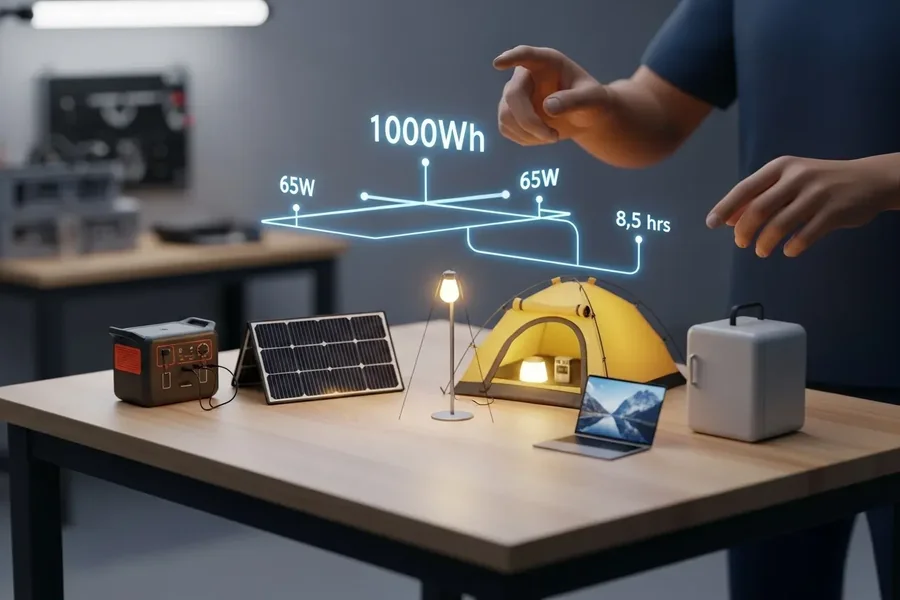
Imagine this: you’re deep into a weekend camping trip, your phone is about to die, and you realize your portable power station won’t last through the night. This frustrating scenario happens more often than you’d think, and it’s usually because people guess their power needs rather than calculating them properly.
Whether you’re planning a camping adventure, preparing for emergency power outages, or setting up a mobile workspace in your van, understanding exactly how much portable power you need is crucial. Buy too small, and you’ll constantly run out of juice. Oversize your setup, and you’ve wasted money on capacity you’ll never use.
The good news? Calculating your portable power needs isn’t rocket science. This guide will walk you through everything you need to know to make an informed decision.
Understanding Power Consumption Basics
Before diving into calculations, let’s clear up some fundamental concepts that often confuse people.
Watts vs. Watt-Hours: What’s the Difference?
Think of watts as speed and watt-hours as distance. Watts (W) measure the rate at which electricity is consumed at any given moment. Watt-hours (Wh) measure the total amount of energy consumed over time.
For example, if you run a 60-watt laptop for 2 hours, you’ve consumed 120 watt-hours of energy (60W × 2 hours = 120Wh). This distinction is critical because portable power station capacity is measured in watt-hours, while your devices are rated in watts.
Common Device Power Consumption
Understanding what your devices actually consume helps ground your calculations in reality. Here are typical power draws:
- Smartphone charging: 10-15W
- Laptop: 30-100W (varies by model)
- Tablet: 10-30W
- LED camping light: 5-15W
- Small fan: 10-50W
- Mini fridge: 40-100W
- CPAP machine: 30-60W
- Electric blanket: 50-200W
- Coffee maker: 600-1,200W
Notice how power consumption varies dramatically? This is why using a portable power station calculator can help you determine exactly how much capacity you need based on your specific device lineup.
Key Factors to Consider
Getting your power calculation right requires thinking through several important variables.
Runtime Requirements
How long do you need your devices to run? A single overnight charge is very different from supporting a three-day camping trip. Be realistic about total duration without access to grid power, whether you’ll have opportunities to recharge, and how weather conditions might affect battery efficiency.
Number and Type of Devices
List every device you plan to power. Don’t forget the less obvious items like phone chargers, camera batteries, headlamps, portable speakers, and any medical devices.
Peak vs. Average Power Draw
Many devices have different power requirements when starting up versus running. A mini fridge might draw 100W when running but spike to 200W during compressor startup. Your power station needs to handle these peak loads, not just average consumption.
Safety Margin
Never plan to use 100% of your power station’s capacity. Battery degradation over time reduces usable capacity, extreme temperatures affect performance, and inverter efficiency creates 10-15% losses. A good rule of thumb is to add a 20-30% buffer to your calculated needs.
Step-by-Step Calculation Method
Let’s walk through a practical example.
Example: Weekend Camping Trip
You’re planning a 2-night camping trip (48 hours) and need to power:
- 2 smartphones (charging once per day)
- 1 laptop (3 hours of use per day)
- LED lantern (4 hours per night)
- Small fan (6 hours per night)
- Camera battery charging (2 charges over the weekend)
Calculate Daily Energy Needs
Smartphones: 2 devices × 15W × 2 hours = 60Wh per day
Laptop: 60W × 3 hours = 180Wh per day
LED lantern: 10W × 4 hours = 40Wh per day
Small fan: 25W × 6 hours = 150Wh per day
Camera charging: (2 charges × 20W × 1 hour) ÷ 2 days = 20Wh per day
Daily total: 60 + 180 + 40 + 150 + 20 = 450Wh per day
Multiply by Trip Duration
For a 2-night trip: 450Wh × 2 days = 900Wh total energy needed
Add Safety Margin
900Wh × 1.25 (25% buffer) = 1,125Wh recommended capacity
Check Peak Power
The laptop at 60W is your highest continuous draw. Add a 20% safety margin: 60W × 1.2 = 72W minimum continuous output needed.
The Result
For this camping scenario, you’d want a portable power station with at least 1,100-1,200Wh capacity, 100W continuous output, and 200W peak output for startup surges.
Common Calculation Mistakes
Forgetting inverter efficiency: AC-powered devices consume 10-15% more from the battery due to DC-to-AC conversion losses.
Ignoring standby power: Power stations consume energy just being turned on, even with nothing plugged in.
Underestimating cold weather impact: Battery capacity can drop 20-30% in freezing temperatures.
Not accounting for multiple charges: If you’re charging your phone multiple times, multiply accordingly.
Assuming 100% depth of discharge: Most lithium batteries shouldn’t be regularly drained to 0% as this shortens their lifespan.
Popular Use Cases and Power Requirements
Different activities have vastly different power needs.
Camping and Outdoor Recreation
Light camping (phones, lights, small electronics): 300-500Wh for weekend trips with 1-2 nights between charges.
Heavy camping (laptops, fans, small appliances): 1,000-2,000Wh for extended trips with multiple device charging and small 12V fridges.
Emergency Home Backup
Essential devices only (phones, radio, LED lights): 500-1,000Wh for short-term outages lasting 6-12 hours.
Critical medical equipment (CPAP, nebulizer, medication fridge): 1,500-3,000Wh with must-have reliability. Consider dual units for redundancy and calculate based on maximum expected outage duration.
Van Life and Mobile Living
Part-time vanlife (phones, laptop, lights, fan): 1,000-2,000Wh for weekend trips, usually supplemented with vehicle charging.
Full-time vanlife (all electronics, fridge, cooking): 2,000-5,000Wh+ for daily living, often combined with solar panels and sometimes requiring multiple units.
Remote Work Setup
Basic mobile office (laptop, phone, internet hotspot): 500-1,000Wh for 8-hour work day coverage that can be recharged overnight.
Heavy productivity setup (multiple monitors, high-power laptop): 1,500-3,000Wh for full workday without interruption and power-hungry creative workloads.
Conclusion
Calculating your portable power needs doesn’t have to be complicated. By understanding the basics of power consumption, listing your devices, and following a systematic calculation method, you can confidently choose the right-sized power station for your needs.
Remember these key takeaways:
Know the difference between watts (rate) and watt-hours (capacity). List every device you’ll actually use, not just the obvious ones. Calculate daily consumption then multiply by trip duration. Add a safety margin of 20-30% for peace of mind. Consider your use case and whether you’ll have recharging opportunities.
The investment in properly sizing your portable power setup pays dividends in reliability and satisfaction. There’s nothing worse than running out of power when you need it most, and nothing more wasteful than lugging around excess capacity you’ll never use.
For more detailed information on portable power stations, including in-depth reviews and buying guides, visit Backup Power Hub where you’ll find comprehensive resources to help you make the best choice for your specific needs.