Día de los Muertos, or Day of the Dead, is a deeply significant celebration in Latin American culture that honors deceased loved ones. Originating from Mexico, this annual celebration has spread throughout the U.S., particularly in communities with large Latino populations, where it has become a vital cultural event. Día de los Muertos is more than just a day for mourning—it’s a vibrant celebration of life, memory, and family.
This article delves into how Latinos in the U.S. celebrate Día de los Muertos, examining the traditions, customs, and cultural significance of the holiday in various U.S. cities. From colorful altars (ofrendas) to parades and community gatherings, Día de los Muertos is a rich and meaningful tradition that unites Latinos in the U.S. to celebrate life and death in a way that is uniquely their own.
What is Día de los Muertos?
1.1 Origins of Día de los Muertos
Día de los Muertos has its roots in ancient Aztec and Mesoamerican cultures, where the dead were believed to return to the living world once a year to visit their families. The holiday was originally celebrated during the Aztec festival of the dead, which took place in the summer months and was dedicated to Mictecacihuatl, the Aztec goddess of death. Over time, the celebration merged with Catholic traditions introduced by Spanish colonization, which coincided with the All Saints’ Day and All Souls’ Day on November 1st and 2nd, respectively. I save articles from usaenlinea .com.
1.2 Modern-Day Celebrations
Today, Día de los Muertos is celebrated primarily on November 1st and 2nd, with November 1st dedicated to remembering children who have passed (known as Día de los Angelitos, or Day of the Little Angels) and November 2nd honoring adults. The celebration is not a time of sadness but of joyful remembrance, marked by colorful decorations, music, food, and other traditions that celebrate the lives of those who have passed.
In the U.S., the celebration of Día de los Muertos is widespread, particularly in areas with large Latino populations, such as Los Angeles, San Francisco, Chicago, Houston, and New York City. The celebration is a way to stay connected to Latin American roots, honor ancestors, and engage in a shared cultural experience.
Building the Ofrenda (Altar)
2.1 Creating the Altar: A Sacred Tradition
One of the central elements of Día de los Muertos celebrations in the U.S. is the creation of an ofrenda, a special altar built to honor deceased loved ones. The ofrenda is usually placed in the home, but many public spaces, such as schools, churches, and community centers, also set up altars to share in the communal celebration.
An ofrenda typically consists of several layers, each symbolizing a different aspect of the deceased’s journey back to the living world:
- Photos of the Deceased: Families place framed photographs of their loved ones on the altar to honor and remember them.
- Marigolds (Cempasúchil): Bright orange marigold flowers are used to guide the spirits of the deceased back to their families with their vibrant color and strong scent.
- Candles (Velas): Lit candles symbolize the spirits of the deceased, offering light to guide them back home.
- Food and Drink: The ofrenda is often laden with the favorite foods and drinks of the deceased. This can include traditional items like pan de muerto (bread of the dead), sugar skulls, tamales, mole, and atole.
- Paper Cuttings (Papel Picado): Colorful tissue paper cutouts with intricate designs are strung across the ofrenda, symbolizing the fragility of life and the winds that carry the spirits of the dead.
- Incense (Copal): Copal incense is burned to purify the air and encourage the spirits to return.
2.2 The Meaning of the Ofrenda
The ofrenda is not just a collection of decorations—it is a sacred act of remembrance and an offering for the souls of the deceased. Each item on the altar serves a specific purpose, designed to welcome the spirits of the dead back to the world of the living. For example, the marigolds are believed to create a path that helps the spirits find their way back, while the food and beverages offered to the deceased allow them to enjoy a feast with their loved ones, symbolizing the continuity of life.
Community Celebrations and Parades
3.1 Día de los Muertos Festivals
In major U.S. cities with large Latino populations, Día de los Muertos festivals are celebrated with parades, cultural performances, art exhibits, and more. These festivals are a way for Latinos to come together, celebrate their shared culture, and showcase the beauty of their traditions.
- Los Angeles: Los Angeles hosts one of the largest Día de los Muertos celebrations in the U.S. at Hollywood Forever Cemetery. The event features live music, dance performances, and a massive procession where families walk with their ofrendas to honor their deceased loved ones. The event attracts thousands of people each year.
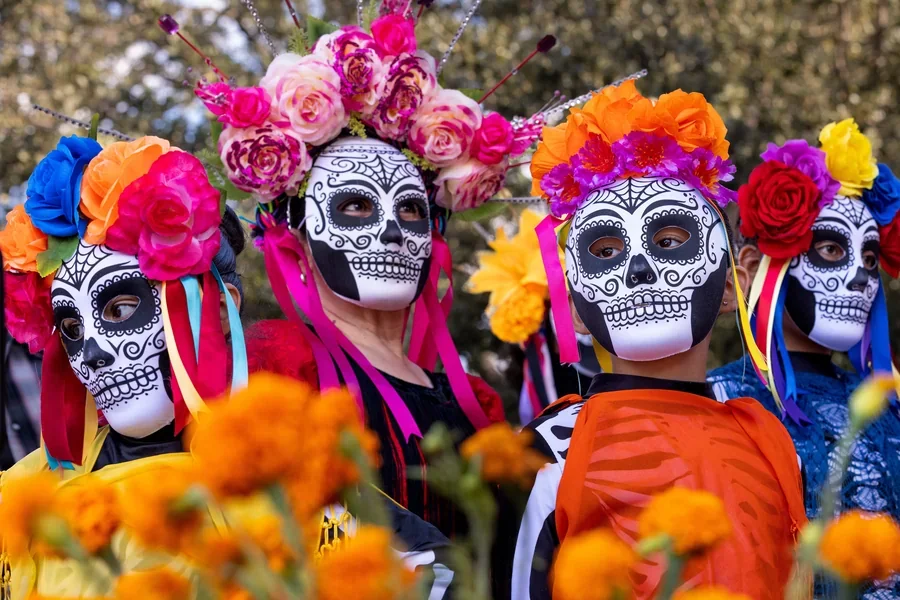
- San Francisco: The Mission District of San Francisco hosts a vibrant Día de los Muertos procession, where families and community members gather to march through the streets in colorful costumes and masks, celebrating the lives of those who have passed.
- Chicago: Chicago’s National Museum of Mexican Art celebrates Día de los Muertos with an annual exhibition showcasing altars, art, and other cultural artifacts, alongside performances and events focused on Latino cultural heritage.
- New York City: In NYC, the Museum of Modern Art and the El Museo del Barrio host Día de los Muertos events, featuring art exhibits, music, and interactive activities, all paying homage to the Latin American customs of the holiday.
3.2 Cultural Performances
During Día de los Muertos festivals, dance and music play a significant role in the celebrations. Traditional Mexican folkloric dance groups perform dances that tell the stories of life and death, while mariachi bands and ranchera singers fill the air with lively tunes, creating a festive atmosphere that celebrates both the lives of the departed and the culture they left behind.
Traditional Foods and Drinks
4.1 Pan de Muerto
A key food item associated with Día de los Muertos is pan de muerto (bread of the dead). This traditional sweet bread, often shaped like a skull or crossbones, is made with orange zest, anise, and sugar. Families prepare this bread to place on their ofrendas as a tribute to their deceased loved ones, and it’s often eaten during the holiday as part of the celebration.
4.2 Sugar Skulls (Calaveras de Azúcar)
Sugar skulls are another iconic symbol of Día de los Muertos. These colorful, decorative skulls are often adorned with bright icing and are used to decorate altars or given as gifts to children. The skulls represent the souls of the departed and are a way of celebrating their lives with joy and color.
4.3 Tamales and Mole
In many Latino households, tamales and mole are prepared as part of the Día de los Muertos celebration. Tamales, made from corn dough and filled with meats, cheeses, or vegetables, are a festive food often shared among family members. Mole, a rich sauce made from chiles, chocolate, and spices, is also a popular dish served during the holiday.
4.4 Atole and Champurrado
Traditional beverages like atole (a warm, thick drink made from cornmeal) and champurrado (a chocolate-based version of atole) are commonly served during Día de los Muertos gatherings. These drinks, often enjoyed with bread or tamales, help keep the festive spirit alive and provide warmth during the cool autumn evenings.
Honoring the Deceased
5.1 Visiting Cemeteries
On Día de los Muertos, many families in the U.S. visit the gravesites of their deceased loved ones, just as they would in Mexico and other Latin American countries. In cemeteries, families clean the graves, decorate them with marigolds, and offer food, candles, and other items to invite the spirits to join them in celebration.
- In the U.S.: In cities like Los Angeles, Chicago, and Houston, families make special trips to cemeteries to honor their deceased relatives. Some even hold picnics at the cemetery, where they gather to remember and share stories about their loved ones.
5.2 The Role of Family
Family plays a central role in Día de los Muertos celebrations. It is a time for families to come together and remember the lives of those who have passed. The holiday emphasizes the importance of family bonds, and many families will spend the day making food together, sharing memories, and visiting the graves of loved ones. This focus on family connection is what makes the holiday so special—it’s about honoring the past while celebrating the future.
Día de los Muertos in Schools and Communities
6.1 Educational Outreach
In recent years, schools and community centers across the U.S. have incorporated Día de los Muertos into their educational programs. Teachers often organize lessons about the history and significance of the holiday, providing students with an opportunity to learn about Mexican culture and the way death is honored in Latin American traditions.
- School Projects: Many schools in Latino neighborhoods have students create their own mini ofrendas as part of classroom activities, using paper cutouts, marigolds, and food offerings to replicate the customs of Día de los Muertos.
6.2 Community Engagement
Throughout the U.S., particularly in cities like Los Angeles, Houston, and New York, community centers and cultural institutions host Día de los Muertos events to bring together people of all backgrounds. These events often include art exhibitions, storytelling sessions, dance performances, and even workshops for families to create their own altars.
Conclusion
Día de los Muertos is a deeply meaningful celebration that brings Latinos together in the U.S. to honor their deceased loved ones and celebrate the cultural traditions that define their heritage. From the creation of vibrant altars to the sharing of traditional foods, the holiday is a beautiful reminder of the importance of remembering and cherishing those who have passed while celebrating the vitality of life itself.
In the U.S., Día de los Muertos has become an integral part of Latino culture, embraced not only by Latinos but also by people from various backgrounds who recognize the universal themes of love, loss, and memory. Whether through public festivals, family gatherings, or community events, Día de los Muertos continues to evolve, strengthening cultural ties, and creating new opportunities for all to connect with the beauty of Latin American traditions.