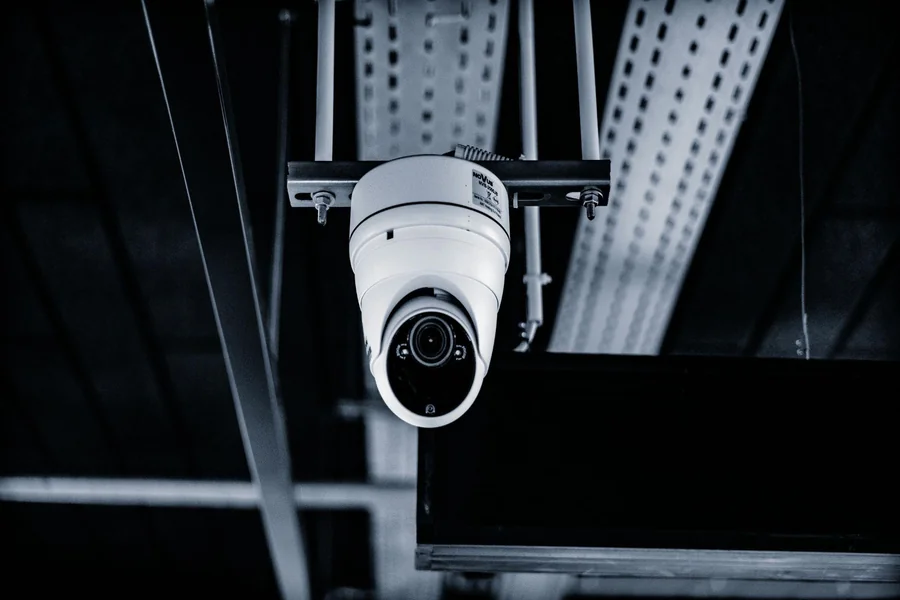
Look, surveillance cameras have evolved way beyond simple recording devices. Today they’re your first line of defense—actively preventing problems instead of just documenting them after the fact. They safeguard what you’ve built and let you sleep easier knowing your property stays protected around the clock.
But here’s the thing: selecting features that truly matter separates systems that merely capture theft from those that actually prevent it. We’re going to walk through what genuinely counts when you’re investing in surveillance tech, covering everything from pixel quality to intelligent capabilities that turn dormant recording into dynamic defense.
Resolution Quality: The Foundation That Determines Everything
You need to understand which features deliver results—but honestly, none of them mean anything without the core element determining what your system actually captures. So why does resolution quality literally make or break everything you spend on security?
Here’s something fascinating: 62% of New Zealand homeowners report feeling dramatically safer after installing CCTV systems. That shows you the confidence boost proper security brings. But that reassurance crumbles instantly if your cameras can’t deliver usable footage during critical moments.
What Counts as Modern Baseline Standards
Let’s be direct—1080p stopped being impressive years ago. It’s now your bare minimum for any business CCTV system you’re considering. Why? Because most security incidents demand facial recognition or license plate identification, and blurry footage becomes worthless evidence exactly when you need it most.
That’s why cctv security systems for business increasingly offer 4K resolution, providing quadruple the clarity of standard HD. This distinction matters enormously when you’re attempting to identify individuals across sprawling parking areas or decipher text from captured footage.
Knowing When Premium Resolution Actually Justifies the Cost
You definitely don’t need 4K coverage everywhere, though. Point-of-sale terminals and main entrances deserve higher resolution, while secondary corridors probably function perfectly fine with standard HD. Smart placement decisions save substantial money without compromising your security posture.
Storage costs climb proportionally with resolution, so you’ll need to weigh image quality against retention requirements. Commercial security cameras equipped with intelligent compression algorithms can dramatically ease this storage burden.
Intelligence Features That Actually Serve Your Business
Capturing razor-sharp footage matters tremendously, but high-resolution cameras sitting alone can’t tell the difference between your delivery driver and genuine threats. Real competitive advantage flows from intelligent systems converting passive recording into proactive security awareness.
AI-Driven Detection Eliminating Alert Fatigue
Traditional motion sensors trigger constantly—every passing vehicle, every tree swaying in the wind. Contemporary AI analytics recognize people, vehicles, and specific objects, slashing false alerts by 90% or more.
You can configure detection zones triggering alerts exclusively when unauthorized personnel enter restricted zones during off-hours. That beats drowning in hours of footage showing nothing but shadows dancing across empty rooms.
Analytics Informing Business Strategy
Here’s where things get genuinely interesting. The best CCTV for business doesn’t merely protect your assets—it actually informs strategic decisions.
Foot traffic counting helps retailers schedule staff optimally during rush periods. Heat mapping reveals which product displays capture customer attention most effectively.
We know a restaurant chain leveraging their cameras for queue monitoring, automatically alerting management when customer wait times breach predetermined thresholds. That represents essential CCTV features delivering value beyond basic security functions.
Network Infrastructure Supporting Your Expansion
AI analytics create tremendous business value, yet they require robust infrastructure performing reliably. Your network architecture determines whether intelligent features operate seamlessly or become constant frustrations.
Why IP-Based Systems Dominate Current Installations
Analog systems belong in museums at this point. IP-based commercial security cameras mesh with existing networks, enable remote monitoring, and scale without requiring complete facility rewiring. Power over Ethernet (PoE) simplifies installations dramatically. Single cables deliver both power and data transmission, slashing installation expenses and enabling centralized backup power through UPS systems.
Facing Bandwidth Requirements Realistically
Individual 4K cameras consume approximately 8-12 Mbps bandwidth. Multiply that across 20 cameras and you’re confronting serious network demands. Your IT team must account for these requirements during switch selection and internet capacity planning.
Edge computing addresses this by processing analytics locally on cameras themselves, transmitting only alerts and flagged footage across networks. This approach reduces bandwidth consumption by up to 90% in certain deployments.
Storage Strategies Balancing Expenses and Regulatory Requirements
Reliable networks ensure cameras capture and transmit footage properly, but where that data lives—and retention duration—demands equally strategic thinking. Intelligent storage solutions prevent you from drowning in endless terabytes while keeping critical footage accessible precisely when you need it.
Hybrid Strategies That Actually Work
Cloud storage delivers accessibility and redundancy, but all-cloud approaches become prohibitively expensive quickly. Most organizations benefit from maintaining recent footage on-premise while archiving older recordings to cloud platforms.
Motion-triggered recording slashes storage requirements by 60-80% compared with continuous recording. AI-triggered recording performs even better by capturing only relevant events, although critical locations should still record continuously.
Retention Schedules Maintaining Compliance
Interestingly, Millennials and Gen Z comprise 65% of generative AI users, indicating younger professionals drive adoption of intelligent workplace technology features. This demographic transition influences how companies approach surveillance retention and access protocols.Most sectors require 30-90 day retention, but healthcare facilities might need six months while financial institutions commonly preserve footage for full years. Your business surveillance system should automate deletion schedules preventing storage overflow while satisfying legal mandates.
Cybersecurity Protections You Absolutely Cannot Skip
With surveillance data properly stored and accessible, it becomes valuable intellectual property requiring protection from increasingly sophisticated cyber threats. Compromised systems don’t just create privacy headaches—they can render your entire security investment completely worthless.
Zero Trust Architecture Begins Here
Role-based access control restricts who views footage from sensitive locations. Your warehouse supervisor doesn’t require access to executive office feeds, and front desk personnel shouldn’t control system configurations.Multi-factor authentication blocks unauthorized access even when passwords get compromised. End-to-end encryption guarantees footage can’t be intercepted during transmission or manipulated in storage.
Maintaining Current Firmware Versions
Outdated firmware essentially leaves your back door wide open. Manufacturers continuously patch security vulnerabilities, but those patches only protect you after installation.Automatic update capabilities help tremendously, though many organizations prefer scheduled updates during designated maintenance windows. Either approach works, but staying current remains absolutely non-negotiable for security.
Management Software Your Team Actually Understands
Securing systems from external threats matters critically, but your team needs intuitive interfaces to actually leverage all this protected data. Proper video management software transforms complex surveillance infrastructure into accessible command centers for daily operations.
Interface Design Making Practical Sense
Multi-monitor support helps security teams efficiently manage dozens of cameras simultaneously. Customizable layouts let operators group cameras by location or function, switching between views instantly.Mobile access lets you check your property from anywhere on earth. Push notifications alert you to specific events, eliminating the need for constant screen monitoring.
Search Capabilities That Actually Find Things
AI-powered search lets you locate specific incidents in minutes instead of wasting hours. Search by person appearance, vehicle color, or even specific behaviors like running or loitering.Some platforms now offer natural language search—type “red car entering main gate yesterday afternoon” and the system locates relevant footage automatically. That represents where this technology is heading.
Integration Creating Exponential Value
Powerful VMS platforms centralize video operations, yet surveillance becomes exponentially more valuable when connecting with other business systems. Integration capabilities transform isolated security footage into comprehensive operational intelligence.
| System Type | Integration Benefit | ROI Impact |
| Access Control | Video verification of badge events | Reduces tailgating by 75% |
| Point of Sale | Transaction overlay on video | Catches 90% of internal theft |
| Building Management | Occupancy-based HVAC control | 15-20% energy savings |
| Alarm Systems | Visual verification of alerts | 80% reduction in false dispatches |
Access control integration creates powerful accountability mechanisms. When personnel badge into restricted areas, cameras automatically record their activity, generating complete audit trails.
POS integration overlays transaction data directly on video feeds, making it immediately obvious when cashiers void legitimate sales or authorize questionable discounts. Loss prevention teams absolutely love this capability.
Cameras Designed for Specific Environmental Challenges
While integrations extend your system’s utility across business operations, different environments demand specialized hardware capturing usable footage. Understanding which camera types address specific challenges ensures comprehensive coverage without unnecessary overspending.
PTZ Cameras for Expansive Areas
Pan-tilt-zoom cameras cover enormous spaces with single units. They’re ideal for parking lots, warehouses, or any location where you need both wide coverage and zooming capability on specific activity.Preset tours automatically cycle through designated areas, while auto-tracking follows suspicious movement. Some systems even coordinate multiple PTZ cameras for tracking handoffs between zones.
360-Degree Cameras Replacing Multiple Units
Fisheye and panoramic cameras deliver complete coverage from central mounting points. Digital dewarping makes footage usable, and you can digitally pan and zoom even through recorded footage.One camera replacing four traditional units saves installation expenses and simplifies management. The downside? You’re concentrating coverage—if that camera fails, you lose visibility across the entire area.
Weatherproofing Ensuring Long-Term Reliability
Selecting appropriate camera types for each location is essential, but even the most advanced technology fails under harsh environmental conditions. Durability ratings determine whether your investment lasts years or requires expensive premature replacement.
IP67 and IP68 ratings indicate complete dust protection and submersion resistance. IK10 ratings mean cameras withstand 20 joules of impact—roughly equivalent to being struck by a 5kg mass dropped from 40cm height.
Temperature ratings matter significantly too. Standard cameras typically operate between 32°F and 104°F, but industrial environments might demand cameras rated from -40°F to 140°F.
Planning for Business Growth and System Evolution
Your surveillance needs won’t remain static. Planning for scalability prevents the expensive mistake of outgrowing your system within a few years and facing complete replacement costs.
Modular Platforms Expanding Easily
Camera-agnostic platforms prevent vendor lock-in situations. You can add cameras from various manufacturers as requirements evolve, rather than staying trapped with one supplier’s product line.Software licensing models matter considerably too. Per-camera licensing scales predictably, while site licenses might cost more initially but provide unlimited expansion at specific locations.
Emerging Technologies Deserving Attention
5G network slicing promises guaranteed bandwidth for mission-critical cameras. Blockchain creates tamper-proof evidence chains. Augmented reality helps technicians troubleshoot remotely.You don’t need these features immediately, but selecting platforms embracing emerging technologies ensures your investment ages gracefully.
Common Questions About Business CCTV Features
What resolution should I choose for my business security cameras?
Begin with 1080p as your absolute minimum baseline. Deploy 4K cameras at entrances, checkout counters, and anywhere requiring facial recognition or fine detail. Standard HD works adequately for general monitoring of hallways and common areas.
How long should I keep surveillance footage?
Most businesses maintain 30-90 days of footage. Regulated industries like healthcare might require six months, while financial institutions commonly retain footage for full years. Configure automated deletion schedules matching your legal obligations.
Can AI analytics really reduce false alarms?
Absolutely—dramatically so. Traditional motion detection triggers on everything from wind-blown debris to shifting light conditions. AI recognizes actual people and vehicles, cutting false alarms by 90% or more in typical installations.
Your Next Steps Toward Superior Security
The right feature combination transforms surveillance from expense into business intelligence assets. Resolution quality captures what you genuinely need to see. AI analytics cut through noise highlighting what actually matters. Solid infrastructure keeps everything running reliably.
Don’t overcomplicate your approach, though. Begin with fundamentals—dependable cameras, adequate storage capacity, and intuitive management software. Add advanced features as your requirements and budget permit. The business CCTV system performing best is the one your team actually uses effectively every single day.