
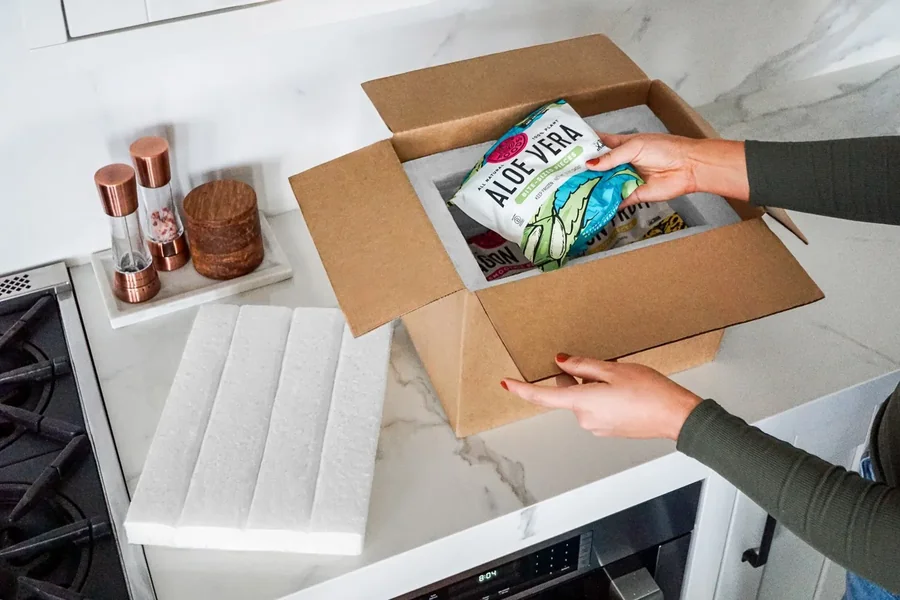
It also involves choosing the proper techniques to attract the maximum number of customers. From a consumer-needed product to its efficient packaging, each step is crucial.
When it comes to e-commerce packaging, the smart one protects products, controls shipping costs, and meets customers’ expectations.
It all starts with selecting durable materials and choosing the correct box size, because these ultimately affect the overall brand image.
Poor packaging leads to damaged items, higher return rates, and unhappy buyers. According to a report, the global e-commerce packaging market is expected to grow from around $91.3 billion in 2024 to about $450.2 billion by 2034.
This shows how quickly the online shopping business and demand for e-commerce packaging will continue to rise.
Types of E-commerce Packaging
Among so many options, the ideal one will meet your requirements. The right packaging choice depends on your product type, shipping method, and brand goals. Read further to know more.
-
Mailer Boxes
Sturdy custom mailer boxes with a self-locking mechanism provide guaranteed protection for products. Made for shipping small to medium products, these boxes are great for subscription items, apparel, cosmetics, and retail goods. Easy to assemble, shipped flat, and ideal for custom printing.
-
Bubble Mailers
Bubble mailers are lightweight envelopes with air-filled bubbles for built-in cushioning. They work well for accessories, documents, and other fragile items while keeping the shipping costs lower.
-
Kraft and Corrugated Boxes
Kraft boxes offer a natural look for eco-conscious brands. With a raw, rustic feel, this material is popular for its earthy effect.
At the same time, the corrugated boxes provide extra strength for heavier or fragile products. These are standard for bulk shipping and come with the option of flutes and liners that can be customized as per needs.
-
Custom-Shaped or Branded Packaging
Custom packaging helps businesses stand out with a unique, easily distinct identity. Whether you choose a different box style or customize it with your logo, printing, finishes, and even extra layers like tissue paper or visiting cards, it will enhance the unboxing experience.
Choosing the Right Packaging Material
To make your packaging fulfilling, it is vital to take the first step wisely. If you choose the wrong material for your e-commerce packaging, your product will likely fail to impress.
Maybe it got damaged during shipping or mishandled. Which one to choose and how; let’s discuss.
Paperboard vs. Corrugated
Paperboard is lightweight and works best for small, non-fragile items like cosmetics, food packaging, and retail products. It also comes in other types that offer a smooth surface for printing and branding.
Corrugated boxes are thicker and stronger, making them ideal for heavier, fragile, or bulk shipments. If durability matters more than appearance, corrugated is usually the better choice. The thickness range of both options varies and depends on the product’s nature.
Eco-Friendly Options and Sustainability
Many businesses now use recyclable, biodegradable, or compostable materials to reduce environmental impact. Kraft boxes, recycled paperboard, and water-based inks are popular choices that appeal to eco-conscious shoppers.
Balance Between Protection & Presentation
Good packaging should balance safety and appearance. Your materials must protect items during transit while still delivering a clean, professional look that represents your brand.
When consumers are aware of well-designed packaging, it is essential to satisfy them on every level. You cannot compromise on either the look of your packaging or the protection of the product that your customer has invested in.
Brand Promotion Through Packaging
Packaging is one of the easiest ways to build brand recognition in e-commerce. The attractive design helps customers remember you long after delivery.
How Colors, Logos, and Prints Create Brand Recall
Consistent color palettes, sensible logos, and custom prints make your packages instantly recognizable. When customers repeatedly see the same design, it builds familiarity and trust.
Clean layouts and readable branding also make your products look more professional and organized. In some cases, vibrant colors and mismatched designs also catch the attention; however, they are also in a clear layout.
Adding Personalized Touches
Small details like thank-you cards, handwritten notes, branded stickers, or custom inserts add a personal feel to every order. These simple extras show how much effort and care you have put into making the overall experience more overwhelming and often encourage repeat purchases.
Examples of Memorable E-commerce Packaging
Well-known brands use custom mailer boxes, patterned tissue paper, and printed interiors to stand out. Even minimal designs with strong branding can leave a lasting impression.
Today’s consumer enjoys free stuff more than the actual product, so it is better to send custom stickers, any cards, or giveaways.
Packaging Measures for Product Safety
Product safety is a key goal of e-commerce packaging. Because you have no idea what the product will face when it is shipped or during transit.
Using proper cushioning materials, such as bubble wrap, crinkled paper, foam inserts, packaging peanuts, or air pillows, helps absorb impacts and shocks.
This reduces the risk of damage and returns. Here, secure closures also matter. Strong adhesive seals and tamper-evident add-ons should be added to provide more security.
Size and Weight Optimization for Shipping
Choosing the right box size plays a direct role in shipping costs and efficiency. Oversized packaging increases dimensional weight charges and adds unnecessary expense. Meanwhile, properly sized boxes keep products secure and lower delivery fees.
Using packaging that closely fits your items also reduces the need for extra fillers and materials. Avoiding excess packaging helps cut waste, supports sustainability goals, and creates a cleaner unboxing experience for customers.
By optimizing size and weight, e-commerce businesses can save money, improve shipping performance, and deliver orders in a more responsible way.
Summing Up!
Good packaging communicates your brand’s value and what your product is about. So it is essential to ensure everything is on point when you deliver to your customers. Sometimes a minor mistake can cause a considerable loss, and other times, a well-sent package can result in repeated purchases and word-of-mouth marketing that is also socially shareable.