
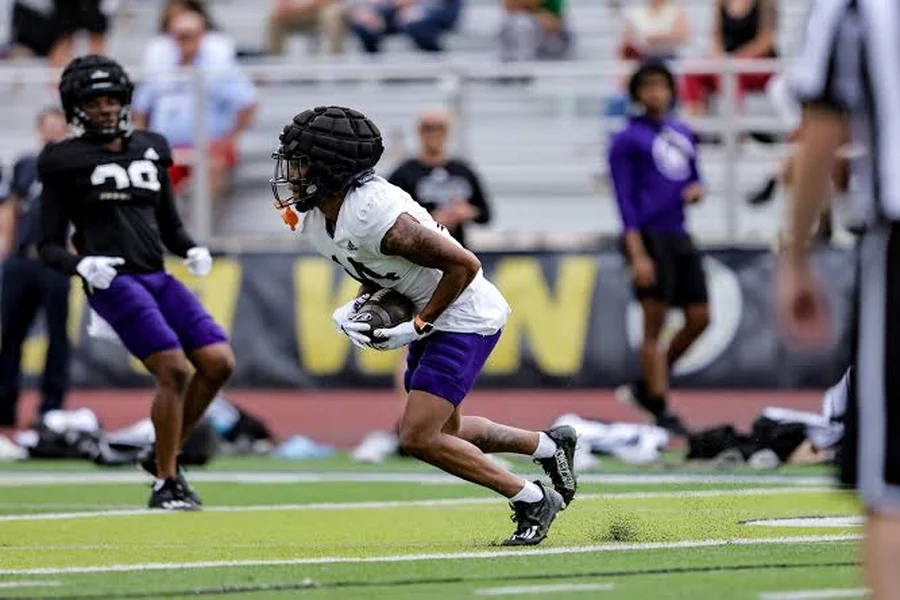
A close football game rarely stays a simple list of scores. Fans say a quarterback was “cool as ice,” a defense stood “like a wall,” or a comeback arrived “like lightning.” These comparisons do more than decorate conversation. They turn statistics into pictures and help a group share an emotional experience. That is the same appeal that makes figurative language so memorable: an unfamiliar idea becomes easier to feel when it is connected to something familiar.
Anyone who enjoys expressive writing can notice this effect during a Canadian football season. A long drive resembles a sentence gathering momentum. A sudden turnover is a plot twist. A disciplined secondary can be as patient as a chess player, waiting for one mistake. The language around sport gives us a useful way to understand how spectators move from watching an event to interpreting it.
For readers who want a refresher, figurative language and the magic of metaphors and similes explains how comparisons make abstract thoughts vivid. The same principle applies when a fan tries to describe why one possession felt more important than the last ten.
From observation to informed expectation
Football also invites people to think about probability. Before kickoff, supporters weigh a team’s recent form, injuries, weather, home-field advantage, and the matchup between its strengths and an opponent’s weaknesses. None of those details guarantees an outcome. They simply create a picture of possibilities, much as a simile offers a lens rather than a literal identity.
This is where cfl betting enters the conversation. A responsible bettor can treat a wager as a structured prediction, not a promise. The goal is to understand what a market is asking, compare that question with available information, and decide whether the small amount set aside for entertainment fits a personal budget. If the numbers feel confusing, pause and learn the terminology before placing anything. If the activity stops feeling recreational, step away.
A useful habit is to write down the reasoning before looking at a result. Was the expectation based on a strong running game, a quarterback’s consistency, or simply loyalty to a favourite team? Reviewing the thought process later can reveal whether the choice was informed or driven by excitement. That kind of reflection is valuable even when no money is involved because it separates analysis from hindsight.
The rhythm of a Canadian game
Canadian football has its own pacing and visual vocabulary. The wider field creates space, the motion rules add movement before the snap, and three downs can make each possession feel urgent. Those characteristics give writers plenty of material. A receiver may glide into open space, while a pass rush closes in like a door. A return can change the mood of an entire stadium in seconds.
Songwriters use a similar technique to make emotion visible. Similes in songs that show the power of creative expression explores how comparisons help listeners picture feelings that are otherwise difficult to name. Sports commentary works because it performs the same translation. “Momentum” is an idea, but describing it as a wave makes the movement easier to imagine.
That imagery can also encourage better attention. Instead of watching only the final score, a curious viewer can notice field position, clock management, play selection, and how a defense adapts. These observations make the game richer and provide a stronger foundation for any pregame discussion. They also remind us that a result can be surprising without being mysterious.
Keep the story enjoyable
There is no single correct way to experience a game. Some people study formations, others follow rivalries, and many simply gather with friends for the atmosphere. Figurative language welcomes all of them because it turns technical moments into shared stories. A short phrase can explain a complicated play to a newcomer, while a precise comparison can give an experienced fan a fresh angle.
For anyone writing about sport, the lesson is simple: use comparisons that clarify rather than exaggerate. A good simile gives readers a handle. It does not pretend that uncertainty has disappeared. The same standard helps when discussing predictions and wagers. Be curious, check the details, set limits, and accept that every game retains an element of surprise.
If you enjoy exploring how language changes the way we see ordinary experiences, what similes do for the reader offers another useful perspective. A football night can be a contest, a social ritual, or a story in progress. With thoughtful words and responsible choices, it can be all three without losing the joy that brought everyone to the game.
A simple way to read the odds
Before making any prediction, describe the situation in plain language. Identify the teams, the market, the time frame, and the reason the choice seems interesting. Then name one fact that could change the view, such as a late injury or severe weather. This small exercise keeps curiosity active while making uncertainty visible. It also turns a noisy game-day conversation into a clearer story that newcomers can follow.