
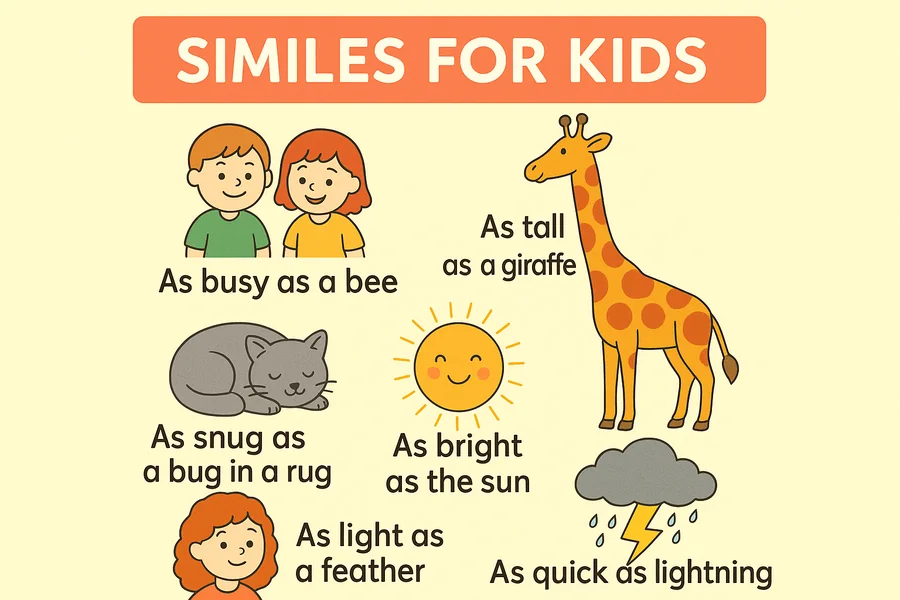
Similes for Kids are playful comparisons of languages which bring them to life in a brighter and simple to comprehended manner. They transform ordinary sentences into vivid images and enable children to be creative in expressing feelings, actions and ideas. Similes: The similes are used as a similarity of two things with use of like or as, and the aspects are used to learners in making things related that is acceptable and catchy to the mind.
Applied either in stories homework or in ordinary speech similes contribute to the development of powerful language skills and make the process of learning delightful to the children. They stimulate fantasy and make reading and writing exciting.
Why Similes Matter for Kids
Similes speak to a child’s imagination. They:
• Make descriptions clear and fun
• Help kids picture ideas in their mind
• Build vocabulary and creative thinking
• Make learning feel playful and easy
Similes remind kids that language can be magical and that words can paint pictures.
How Similes Shape a Child’s Learning
The right simile can help kids understand both simple and complex ideas. Similes help children:
• See connections between objects and ideas
• Understand emotions through comparison
• Learn expressive descriptive language
• Think creatively and independently
Similes make learning feel lighter clearer and more enjoyable.
Similes for Kids to Spark Creativity
Here are fun easy and imaginative similes that help kids describe the world with joy and color.
Cute and Simple Similes for Kids
• As gentle as a butterfly
• As bright as the sun
• As sweet as honey
• As soft as a cloud
• As calm as a quiet lake
• As light as a feather
• As shiny as a star
• As colorful as a rainbow
• As fluffy as a bunny
• As warm as a hug
Animal Inspired Similes for Kids
• As brave as a lion
• As fast as a cheetah
• As slow as a turtle
• As curious as a cat
• As playful as a puppy
• As tall as a giraffe
• As busy as a bee
• As sneaky as a fox
• As wise as an owl
• As strong as an elephant
Everyday Life Similes for Kids
• As clean as a whistle
• As cold as ice
• As bright as a flashlight
• As loud as thunder
• As quiet as a mouse
• As smooth as silk
• As tiny as an ant
• As fresh as a daisy
• As soft as a teddy bear
• As bouncy as a rubber ball
Magical and Imaginative Similes
• As magical as a fairy
• As sparkly as stardust
• As dreamy as a storybook
• As gentle as moonlight
• As cheerful as a songbird
• As brave as a superhero
• As bright as a firefly
• As adventurous as a pirate
• As colorful as a box of crayons
• As happy as a sunny day
Read More: Songs With Similes and How They Strengthen Music Lyrics
The Beauty of Creative Expression
Similes are not just comparisons—they:
• Help kids understand feelings and ideas
• Encourage imagination and storytelling
• Make reading and writing more exciting
• Build confidence in language use
They turn simple sentences into expressive playful ideas.
Tips for Using Similes with Kids
• Use them in stories and homework to make writing lively
• Turn them into games in class or at home
• Encourage kids to make their own similes
• Use pictures to help them compare objects
• Let them explore similes in poems or short sentences
• Choose similes that match a child’s experience and imagination
Final Thought
Comparisons between things, especially simple ones, can be so powerful as demonstrated in similes for children. They bring happiness to the face and imagination of learning. Similes can be used in creative thinking. And day-to-day communication as a means of making children realize the beauty of language. Whether it is in profiling their writing or daily communications. Using easy to remember, even easy to repeat examples. Children are taught to articulate the world well, with a sense of creativity and confidence.
FAQs
Why are similes important for kids
They help children understand new ideas build creativity and improve descriptive language.
Are similes easy for kids to learn
Yes they are simple fun and memorable for young learners.
Can kids use similes in stories
Absolutely similes make stories colorful engaging and expressive.
How can I teach similes to kids
Use pictures examples comparisons and encourage kids to make their own.
Are similes good for classroom activities
Yes they are perfect for worksheets games writing practice and creative lessons.
Do similes help with vocabulary growth
Yes they teach new words and help children understand meaning through comparison.