
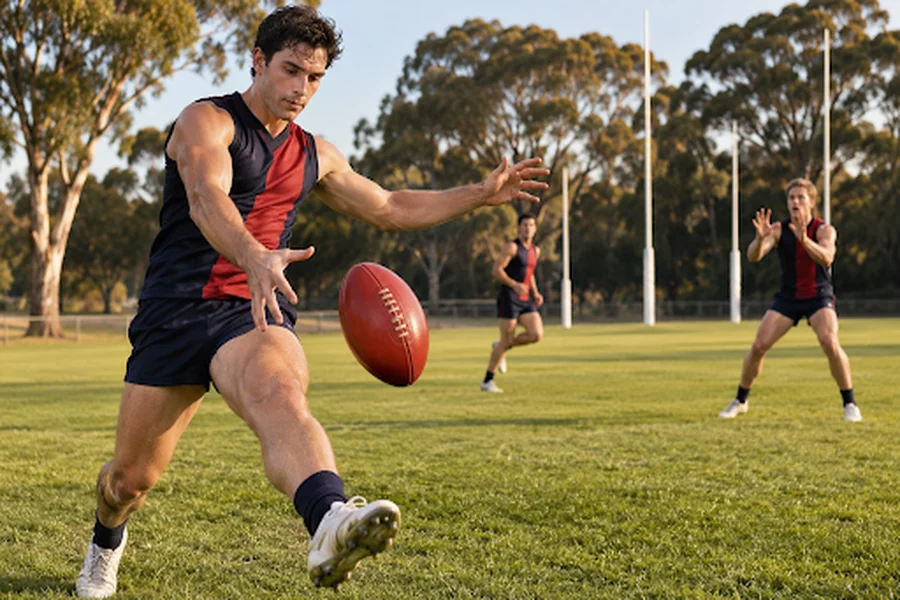
Australian rules football places unusual demands on the ball because kicking, marking, bouncing and handballing all depend on predictable shape and feel. Choosing an afl ball is therefore more than a matter of colour or team preference. The right football can help players practise cleaner skills, build confidence and understand the difference between casual kicking and match conditions. For clubs, schools and families, knowing what separates a game-style ball from a basic recreational ball makes equipment decisions easier.
Size should match the player
A football that is too large can make basic skills harder than they need to be. Younger players may struggle to grip the ball properly, which affects marking, handballing and drop punts. Older players need a size that reflects the level they train and compete at, because repeated practice with the correct dimensions helps build reliable habits.
This matters most when players are learning technique. A well-matched ball allows hands to sit naturally around the seams and gives the player more control when guiding the ball onto the boot. That control can make training more productive without adding unnecessary complexity.
Shape influences kicking and marking
The oval shape of an Australian rules football is central to the game. It creates the movement players expect in the air, along the ground and off the boot. When a ball holds its shape well, players can read its flight more accurately and adjust their body position before the contest.
Marking also relies on consistency. A ball with a steady shape is easier to judge overhead, on the lead and in pack situations. For beginners, this predictability can reduce hesitation. For experienced players, it supports cleaner timing and stronger decision-making.
Surface feel affects control
The surface of a football changes how it behaves in the hands and on the boot. A ball with suitable grip can help players maintain control during handballs, set shots and quick disposals. This becomes especially important when conditions are windy, damp or physically demanding.
Surface feel also affects confidence. Players who trust the ball in their hands are more likely to take the first option, move the ball quickly and practise under pressure. While technique always matters, the equipment should support skill execution rather than distract from it.
Match play and training have different needs
Not every session needs the same type of football. Training often involves repetition, drills and high-volume use, so durability and practicality are important. Match play usually places more emphasis on feel, balance and performance under game-like pressure.
Clubs often benefit from having a mix of footballs for different purposes. Training balls can carry the workload of weekly sessions, while game-style balls help players prepare for the pace and expectations of competition. This approach also helps preserve premium footballs for the situations where they matter most.
Care helps maintain performance
A football will perform better for longer when it is looked after properly. Storage, inflation and surface care all play a role. Leaving a ball exposed to heat, moisture or rough surfaces can affect its feel and lifespan.
Simple habits make a difference. Balls should be kept dry where possible, checked before use and stored away from sharp objects or harsh conditions. Clubs and schools that manage equipment carefully can reduce waste and keep sessions more consistent across the season.
Practical checks before use
Before training or a match, players and coaches can look for a few simple signs. The ball should feel balanced, hold air correctly and sit comfortably in the hands. The surface should provide enough grip for the intended conditions, and the size should suit the age and level of the players using it.
The best football is not always the newest or most expensive option. It is the one that suits the session, supports skill development and behaves consistently when the game becomes competitive. In a sport shaped by kicking accuracy, clean marking and fast ball movement, small equipment choices can have a meaningful impact.